
- $282 billion: Moutai's market valuation, making it a global spirits powerhouse.
- $150 billion: The global baijiu market value, dominated by consumption within China.
- 77%: Moutai's share of all Chinese baijiu exports in 2023.
Experts would likely conclude that Moutai's strategic use of historical narratives and cultural diplomacy is a calculated, long-term approach to establish its brand as a global luxury icon beyond its current niche status in Western markets.
Moutai's Toast to the West: A Calculated Play for Global Legacy
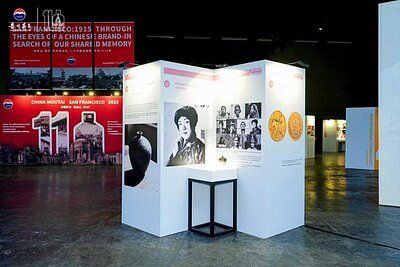
SAN FRANCISCO, CA – December 08, 2025 – Over the weekend, the neoclassical grandeur of San Francisco's Palace of Fine Arts played host to an event steeped in history and aroma. Visitors lined up for an immersive exhibition celebrating Kweichow Moutai, the titan of Chinese baijiu. On the surface, it was a lavish 110th-anniversary party, marking the brand's international debut at the 1915 Panama-Pacific International Exposition held in this very city. But beyond the jazz music and Moutai-infused cocktails, this was no mere corporate commemoration. It was a meticulously crafted strategic maneuver by a global spirits powerhouse, valued at nearly $282 billion, signaling a renewed and sophisticated campaign to conquer the final frontier: the Western market.
A Foundation Built on Shared Memory
Moutai’s connection to San Francisco is not a recent marketing invention; it's a century-long narrative the company is now leveraging with formidable precision. The story begins in 1915, when the potent, sorghum-based spirit, then an unknown entity outside China, traveled in earthenware jars to the Panama-Pacific International Exposition. Legend holds that the Chinese delegation, struggling to gain attention, "accidentally" dropped a jar. The resulting, captivating aroma is said to have intrigued the judges, ultimately helping it secure a gold medal.
This origin story, part history and part folklore, is the cornerstone of Moutai’s global identity. For decades that followed, the spirit was less a consumer product and more an instrument of statecraft, famously used to toast President Nixon during his historic 1972 visit to China. It became a symbol of Chinese hospitality and diplomatic prestige.
A century after its first appearance, the bond with San Francisco was officially cemented. In 2015, then-Mayor Edwin Lee designated November 12 as "San Francisco Moutai Day," an honor recognizing the brand's role in fostering cultural and economic ties. At the recent gala, Moutai reciprocated this gesture by presenting a sculpture of the late mayor to his family, a poignant act that reinforces this unique, city-specific relationship. By returning to its "origin of world fame," Moutai isn't just looking back; it's activating a historical narrative to build resonance in a market where it remains largely a niche curiosity.
The $282 Billion Challenge: Conquering the Western Palate
While Moutai is an institution in China, commanding staggering brand loyalty and a market capitalization that dwarfs Western competitors like Diageo, its international presence is nascent. The global baijiu market, valued at over $150 billion, is overwhelmingly dominated by consumption within China. For Moutai, the challenge isn't just selling a product; it's educating an entire consumer base on a complex spirit category with a flavor profile—often described as savory, funky, and powerfully aromatic—that is unfamiliar to palates accustomed to whisky, gin, or tequila.
This is the central paradox of Moutai: it is simultaneously the world's most valuable spirits brand and a relative unknown in key growth markets. The San Francisco event is a case study in its strategy to bridge this gap. The exhibition, titled "In Search of Our Shared Memories," skillfully framed Moutai's history within the context of San Francisco's own civic pride and the broader history of World Expos. It was less a sales pitch and more a museum-quality cultural dialogue.
"This exhibition filled in a gap in the local memory of the Expo by providing an Eastern perspective," noted one San Francisco cultural scholar in attendance. By showcasing historical artifacts, from early employee rosters to the coveted 1915 medal, the company transforms itself from a foreign product into a co-author of a shared historical moment. This "Culture First" approach is a long-term investment in building brand legitimacy before pushing for mass sales. The introduction of Moutai cocktails at the event is another tactical move, offering a more accessible entry point for consumers who might be intimidated by the spirit's potent, neat serve.
Distilling a Modern Global Strategy
Moutai's push extends far beyond nostalgic events. The company is executing a multi-faceted global strategy that aligns with the expectations of a modern, socially-conscious international consumer. It has embraced a formal Environmental, Social, and Governance (ESG) framework, earning an upgraded BBB rating from MSCI in August 2024. This isn't just corporate window dressing; Moutai has invested hundreds of millions of yuan into ecological protection of the Chishui River Basin, the unique terroir essential to its production. This commitment to sustainability and "green development" provides a powerful narrative in markets where consumers increasingly value provenance and corporate responsibility.
While its overseas revenue of 4.35 billion yuan in 2023 represents a small fraction of its total sales, it accounts for a commanding 77% of all Chinese baijiu exports, demonstrating its leadership in the category's international push. The company’s global distribution network now spans over 100 partners in 64 countries.
"San Francisco is where our global story began," stated Group Chairman Chen Hua in a video address at the "Moutai Night" gala. "From here, Moutai's reputation spread and grew, evolving into the world's leading spirits brand and a truly global icon of Chinese craftsmanship." This message, delivered to an audience of American business leaders and diplomats, underscores the brand's ambition: to be seen not just as a Chinese product, but as a global luxury icon on par with Scotch whisky or French cognac.
The Broader Baijiu Frontier
Moutai is the vanguard, but it is not alone in its global ambitions. The broader baijiu industry is increasingly looking outward as the domestic market matures. Competitors are employing their own strategies to gain a foothold. Luzhou Laojiao, another premium brand with a market cap of over $28 billion, has pursued high-profile sponsorships, most notably becoming an associate sponsor of the Australian Open, even renaming a court the "1573 Arena" after its flagship product.
This burgeoning "baijiu frontier" represents a fascinating intersection of global trade, cultural diplomacy, and brand building. Each company is testing different methods to demystify their product for international audiences. While some focus on sports marketing, Moutai is doubling down on a narrative of heritage, luxury, and shared cultural history. Its event in San Francisco was a powerful demonstration of this approach—less about the hard sell and more about weaving its story into the fabric of a key Western city.
As Moutai toasts to its past, its eyes are clearly on the future. The aroma that filled the Palace of Fine Arts was not just a reminder of a medal won 110 years ago, but a statement of intent. It is the scent of a cultural and economic powerhouse patiently, and strategically, distilling its next century-long chapter on the world stage.