
- Net Profit: $22.65 million (up from $4.86 million year-over-year)
- Gold Sales: 10,478 ounces at an average price of $5,166 per ounce
- Cash Reserves: $101.76 million in cash and short-term investments
Experts would likely conclude that Monument Mining's strong financial performance is driven by strategic market timing, operational excellence at its Selinsing Gold Mine, and a balanced approach to capital allocation, though rising costs pose a challenge that must be managed carefully.
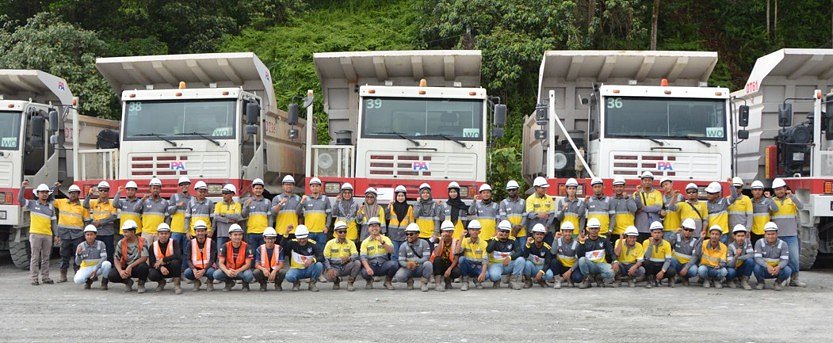
Monument's Golden Quarter: Profits Soar, But Strategy is Key
VANCOUVER, British Columbia – June 01, 2026 – At first glance, Monument Mining's third-quarter results paint a picture of a company hitting a spectacular stride. The Vancouver-based gold producer announced a net profit of $22.65 million, a staggering surge from the $4.86 million reported in the same period last year. This windfall has swelled the company's coffers to a record $101.76 million in cash and short-term investments, providing a formidable war chest for future ambitions. But behind these headline-grabbing numbers lies a more nuanced story of savvy market timing, operational rigor, and a strategic balancing act that will define its trajectory in the volatile 2026 investment landscape.
The driving force behind this phenomenal performance was a confluence of higher production and an extraordinary realized gold price. Monument sold 10,478 ounces of gold at an average price of $5,166 per ounce—a figure that significantly outpaced market averages for the quarter. While the gold market was indeed bullish, with prices hitting record highs in early 2026, the company’s realized price suggests exceptionally shrewd timing of its sales or highly advantageous contracts, capitalizing on market peaks that many others may have missed. As President and CEO Cathy Zhai noted, the combination of favorable production and high gold prices has positioned the company to aggressively pursue its growth initiatives.
The Engine Room: Operational Excellence at Selinsing
While the historic gold rally provided a powerful tailwind, Monument’s performance cannot be solely attributed to market luck. The engine of this success is the Selinsing Gold Mine in Malaysia, where a series of operational improvements have begun to bear significant fruit. Gold production for the quarter rose to 11,700 ounces, up from 9,543 ounces year-over-year. This wasn't just about mining more ore; it was about processing it more effectively.
The company processed 27% more ore compared to the prior-year quarter, a feat made possible by targeted investments in its processing plant. A new filter press, which successfully resolved a previous production bottleneck, along with ongoing optimization initiatives, led to improved plant availability and a higher recovery rate of 89.75%. These gains demonstrate a core competency in execution that separates leaders from the pack. By increasing throughput, the company was able to spread its fixed costs over more ounces, enhancing efficiency even as it ramped up activity. This focus on operational excellence is a critical factor, providing a buffer against market volatility and forming the foundation for sustainable, long-term value creation.
A Double-Edged Sword: Navigating Rising Costs
However, the quarter’s results also reveal the double-edged nature of the current high-price environment. While revenues soared, so did costs. The all-in sustaining cost (AISC) rose to $1,583 per ounce from $1,366 a year ago, while the cash cost per ounce saw an even steeper climb to $1,390 from just $874. This highlights a critical challenge facing the entire mining sector.
A significant portion of this increase is a direct consequence of success. Higher realized gold prices automatically trigger higher royalty payments. Furthermore, the appreciation of the Malaysian Ringgit against the US dollar increased local operating costs in reported terms, and the implementation of a new Sales and Service Tax on mining-related services added another layer of expense. For now, the 160% explosion in gross margin to $32.47 million shows that surging revenues are more than compensating for these inflationary pressures. Yet, it underscores the importance of the operational efficiencies being achieved at Selinsing. Should gold prices retreat from their current highs, the company's ability to control its cost base will become the central pillar of its profitability.
Capitalizing on the Boom: Growth vs. Shareholder Returns
With over $100 million in the bank, the central question for investors is how Monument will deploy this capital. The company’s strategy appears to be a disciplined two-pronged approach: rewarding shareholders for their patience while funding the next phase of growth. In January, the company paid out its first-ever special dividend, a clear signal of its commitment to delivering shareholder returns. This move, coupled with its recognition on the 2026 TSX Venture 50™ list, has bolstered its standing with the market.
Simultaneously, a significant portion of its resources is being funneled back into the ground. As Ms. Zhai explained, the capital allocation strategy is “focused on creating long-term shareholder value through disciplined investment in our core assets.” At Selinsing, an extensive exploration drilling program is underway to expand the resource base and extend the mine’s life beyond its current plan. In parallel, the company is advancing its Murchison Gold Project in Western Australia, progressing the technical and development studies needed to unlock its value. This balancing act—between immediate shareholder rewards and long-term, value-accretive reinvestment—is the defining feature of Monument's current strategy. The success of its exploration and development efforts will ultimately determine if this golden quarter is a momentary peak or the beginning of a new, sustained era of growth.