
- 50 superyacht owners enrolled in the SEA Index® scheme, driving measurable sustainability.
- 100% renewable electricity used at Yacht Club de Monaco since 2018.
- 56 teams from 22 nations participating in the 2026 Monaco Energy Boat Challenge.
Experts would likely conclude that Monaco's data-driven, collaborative approach is setting a verifiable standard for sustainable luxury yachting, though long-term impact remains to be seen.
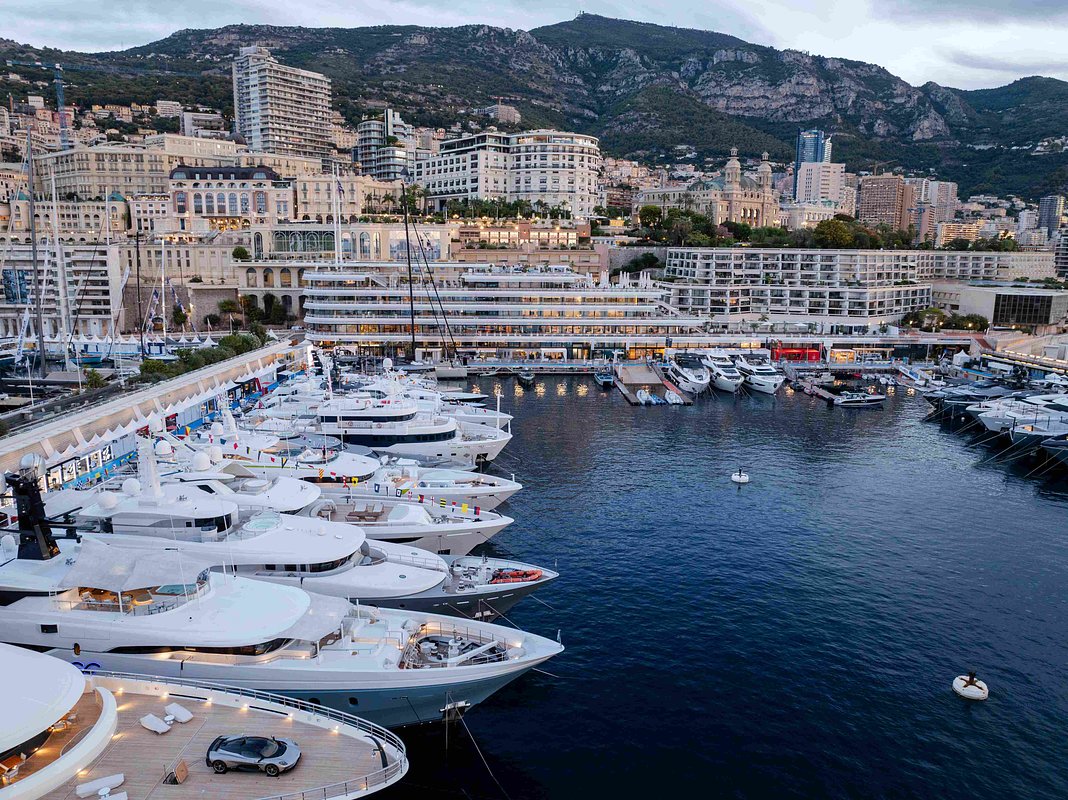
Monaco's Green Compass: Steering Luxury Yachting to a Sustainable Future
MONACO – June 08, 2026 – On World Oceans Day, the ultra-luxe world of superyachts is often viewed with a critical eye, seen as a bastion of fossil-fueled extravagance. Yet, here in the heart of the Riviera, the Yacht Club de Monaco (YCM) is aggressively positioning itself as the epicenter of a paradigm shift. Under the forward-looking vision of its president, HSH Prince Albert II, the principality is championing a strategy where environmental proof replaces promises. Through a suite of data-driven tools and a focus on next-generation technology, Monaco is making a compelling case that luxury and sustainability are not mutually exclusive, but rather the twin engines of the industry's future.
At the core of this transformation is the 'Monaco, Capital of Advanced Yachting' initiative, a comprehensive approach designed to do more than just clean up yachting's image. It aims to fundamentally rewire its operations. The Club's recent announcements underscore a strategy built on concrete, measurable, and collective solutions, signaling a clear departure from the vague environmental pledges of the past.
The Power of Measurement: Deconstructing the SEA Index®
The most potent weapon in Monaco's sustainability arsenal is the SEA Index®. Launched in 2020 by YCM and Credit Suisse (now a UBS brand), the index has rapidly become the benchmark tool for assessing and improving the environmental performance of yachts over 24 meters. Certified by the globally respected maritime classification society Lloyd's Register, it provides a transparent rating system for CO2 emissions based on verified technical data. For yacht owners, this transforms an abstract goal—reducing their carbon footprint—into a manageable, data-driven process.
This year, the index has taken a significant leap forward. In a landmark collaboration with AtmoSud, the regional air quality observatory, YCM has introduced a bespoke certification to measure local air pollutants. This new layer assesses nitrogen oxide (NOx) and fine particulate matter (PM₂.₅) emissions, providing the industry's first dedicated benchmark for a superyacht's impact on local air quality. One expert involved in the certification's development noted that this addresses a public health concern as much as an environmental one, providing transparent indicators for regulators and industry alike. It's a crucial evolution, acknowledging that a yacht's impact is felt not just in global carbon budgets but in the very air of the ports and coastlines it visits.
The adoption of these tools is gaining momentum. Nearly 50 superyacht owners have already enrolled in the SEA Index® scheme, and a growing network of ports, including several on the French Riviera and in Corsica, are beginning to use the ratings to prioritize berths for lower-impact vessels. One captain of a 3-star certified superyacht called the index a “great tool because it shows how the owners, crew and shipyards care about the sea and the environment,” reflecting a growing pride in verified environmental performance.
From Local Action to Global Network
While the SEA Index® provides the technical framework, YCM’s strategy is equally focused on building a global coalition. The initiative's strength lies in its expanding network of strategic partnerships. Recent agreements with the major port of Marseille Fos, the Japan Marina & Beach Association, and prominent port operator Edeis demonstrate a clear intent to scale the system internationally. This collaborative approach aims to create what YCM’s General Secretary calls a “network of committed territories,” ensuring that sustainable practices are encouraged and rewarded across different jurisdictions.
This outward-facing push is anchored by a deep commitment to internal accountability. The YCM’s own facilities serve as a living laboratory for the principles it espouses. ISO 14001 certified since 2016, the club has operated on 100% renewable electricity since 2018. The Norman Foster-designed clubhouse integrates marine thermal energy for heating and cooling, photovoltaic panels, and advanced grey water recycling. In the YCM Marina, the commitment is just as visible: charging stations for electric boats, wastewater recovery systems, and 24 installed Biohuts to support marine biodiversity are standard. A small robot named DPOL patrols the waters, hoovering up floating waste, while the Club’s own classic flagship, Tuiga, runs on a 100% sustainable synthetic biofuel, reducing its carbon impact by 85%.
Cultivating the Next Wave of Maritime Innovation
Perhaps the most forward-looking component of Monaco's strategy is the Monaco Energy Boat Challenge. Now in its 13th year, the event has evolved into a vital 'open-air laboratory' for the future of marine propulsion. Every July, Monaco’s Port Hercule transforms as student engineers, universities, and industry players descend to test and showcase their latest prototypes in a real-world environment.
With a record 56 teams from 22 nations participating in 2026, the event is a vibrant hub of collective intelligence. The competition classes are a roadmap of future maritime technology, from the SeaLab Class exploring novel energy architectures like methanol fuel cells and liquid hydrogen, to the Open Sea Class, which showcases CE-certified, zero-emission industry prototypes ready for the market. This direct pipeline from experimentation to commercial application is critical for accelerating the energy transition.
The challenge also addresses a crucial human-capital need. An integrated Job Forum connects the brightest young engineering minds with maritime companies, feeding a growing industry hungry for talent skilled in sustainable technology. It’s a long-term investment in the people who will design, build, and operate the cleaner vessels of tomorrow.
Navigating the Headwinds of a Changing Industry
The yachting industry is at a crossroads, facing immense pressure to decarbonize and operate responsibly. In this climate, initiatives are often met with skepticism and accusations of 'greenwashing'. YCM's approach, however, appears designed to withstand such scrutiny by rooting itself in third-party verification and continuous improvement. While early versions of the SEA Index® were criticized for a narrow focus, its ongoing evolution to include air quality, fuel cell technologies, and soon, other greenhouse gases and noise pollution, demonstrates a responsive and ambitious trajectory.
As HSH Prince Albert II has stated, “proof must replace promises.” By developing measurable standards, fostering international collaboration, and cultivating next-generation innovation, the Yacht Club de Monaco is not just talking about a more responsible future for yachting—it is actively building the tools and forging the alliances to navigate there. The journey is far from over, but the course has been set.