
- 22 events across 15 cities as part of the MLK Day of Action
- Black women are 3 times more likely to die from pregnancy-related causes than white women
- Black and Hispanic/Latino communities account for the majority of new HIV diagnoses in the U.S.
Experts agree that systemic racism is a public health threat, driving disparities in health outcomes and access to care, making health justice a critical extension of the civil rights movement.
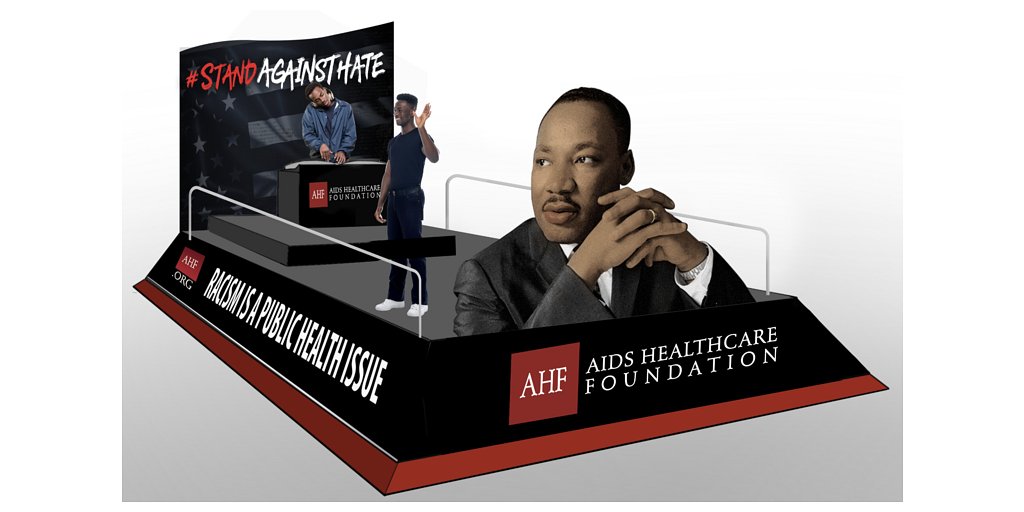
MLK Day of Action: How Health Justice Became the New Civil Rights Battle
LOS ANGELES, CA – January 15, 2026 – As the nation prepares to honor the life and legacy of Dr. Martin Luther King, Jr., on January 19th, one of the world's largest public health organizations is mobilizing nationwide to reframe his dream in the context of today's most urgent health crises. AIDS Healthcare Foundation (AHF), alongside its affiliate the Black Leadership AIDS Crisis Coalition (BLACC), is set to launch a massive series of events under the banner “Stand Against Hate,” explicitly linking the fight for civil rights to the ongoing battle for health equity.
In a coordinated effort spanning 22 events across 15 cities, from parade floats in Los Angeles and Dallas to an empowerment summit in Winston-Salem, NC, thousands of advocates will carry placards with messages that are both provocative and profound: “AIDS is a Civil Rights Issue” and “Racism is a Public Health Issue.” This initiative aims to move the conversation beyond historical reflection, arguing that the structural inequalities Dr. King fought against are the very same forces driving health disparities in the 21st century.
The Dual Epidemic: Racism and Public Health
For AHF and its partners, the slogan “Racism is a Public Health Issue” is not hyperbole but a data-backed declaration. In recent years, a growing chorus of leading medical and public health institutions, including the American Medical Association and the Centers for Disease Control and Prevention (CDC), have formally recognized racism as a public health threat. This framework acknowledges that systemic discrimination, not individual behavior alone, is a primary driver of poor health outcomes in marginalized communities.
Research overwhelmingly demonstrates that chronic exposure to racism and discrimination creates physiological stress that contributes to higher rates of chronic diseases such as hypertension and heart disease. Furthermore, historical policies like redlining have led to segregated neighborhoods with less access to healthy food, clean air, safe recreational spaces, and quality healthcare facilities. The consequences are stark: in the United States, Black women are three times more likely to die from pregnancy-related causes than white women, and communities of color face a disproportionately higher burden of chronic illnesses and shorter life expectancies.
By placing this message at the forefront of their MLK Day activities, AHF is leveraging the national holiday to educate the public on how social justice and health outcomes are inextricably linked. The campaign argues that honoring Dr. King’s legacy requires a direct confrontation with the systems that perpetuate these life-threatening inequities.
AIDS as a Modern Civil Rights Struggle
The assertion that “AIDS is a Civil Rights Issue” draws a direct line from the early days of the epidemic to the present. When HIV/AIDS first emerged, it was shrouded in stigma and met with government inaction, disproportionately affecting gay men and other marginalized groups. Activists had to fight not only a virus but also prejudice and discrimination to secure basic rights to healthcare, housing, and employment.
Today, that fight continues, albeit in a different form. While medical advancements have transformed HIV into a manageable chronic condition, access to these life-saving treatments and prevention tools like PrEP (pre-exposure prophylaxis) remains unequal. According to the CDC, Black and Hispanic/Latino communities, which represent a minority of the U.S. population, account for the majority of new HIV diagnoses. This disparity is not due to biology but to the social determinants of health: poverty, lack of health insurance, medical mistrust rooted in historical injustices, and persistent stigma.
When a person’s race or socioeconomic status determines their ability to access care that can prevent or treat HIV, it transcends a simple health matter and becomes a question of fundamental rights. AHF’s advocacy frames this disparity as a failure of the nation to provide equal protection and opportunity, making the fight against AIDS a continuation of the broader civil rights movement.
A Legacy of Activism and Recognition
This year’s nationwide mobilization is not a new direction for AHF but a culmination of years of sustained advocacy. The “Stand Against Hate” campaign itself was launched in late 2016 as a response to what the organization saw as a rise in divisive and discriminatory rhetoric. Since then, it has served as a consistent platform to connect public health goals with broader social justice issues.
This long-standing commitment was formally recognized in January 2025, when The King Center, the living memorial to Dr. King’s legacy founded by his wife, Coretta Scott King, bestowed upon AHF its highest organizational honor: the MLK, Jr. Social Justice Award. The award celebrated AHF’s global impact and its unwavering dedication to advocating for marginalized populations.
This deep relationship with The King Center continues this year, as BLACC sponsors the Beloved Community Global Youth Summit. This key event during the King holiday celebration is designed to empower the next generation of social justice leaders with the principles of nonviolence and community building that Dr. King championed.
“AIDS Healthcare Foundation and BLACC are honored to join Dr. Bernice A. King and The King Center in supporting the next generation in building the Beloved Community,” said Tracy Jones, Southern Bureau Chief for AHF, in a statement. “It is widely recognized as one of the King Center’s main events of the King holiday celebration, and we are grateful for the privilege to once again sponsor this important community event.”
From the streets of major cities to forums shaping young minds, the message is clear: the fight for justice is far from over. By connecting Dr. King’s vision to the tangible, life-or-death struggles for health equity, these activists are ensuring his work continues in the clinics, communities, and legislative halls where the battle for a truly just society is still being waged.