
- $217.5 million: NASA's funding for Starlab's development through the CLD program.
- 2028: Planned launch date for Starlab aboard SpaceX's Starship.
- 27+: Development milestones Starlab has already passed.
Experts view Mitsubishi's investment in Starlab as a strategic validation of the private space station's viability, signaling a critical step in ensuring continuity for Japanese research and industry in low-Earth orbit post-ISS.
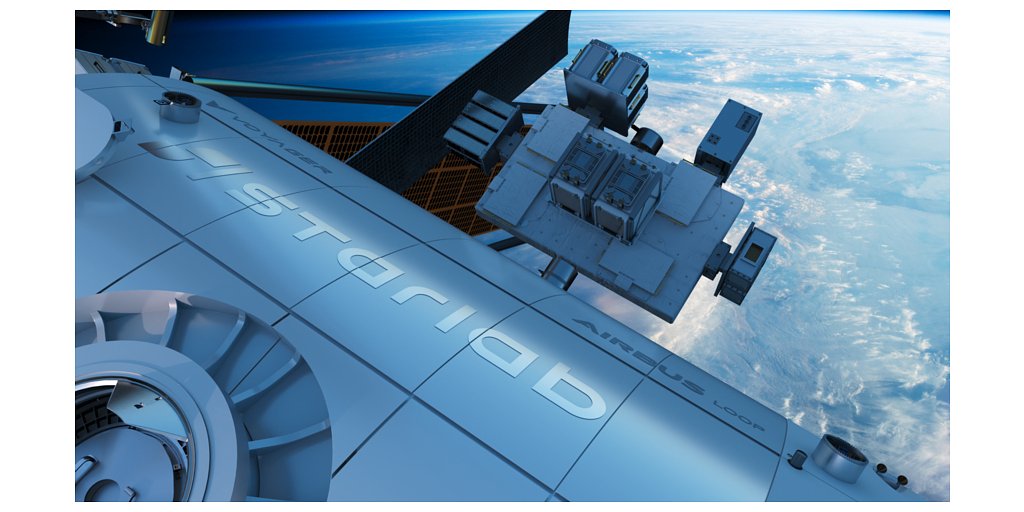
Mitsubishi Bets Big on Starlab in Race for Post-ISS Dominance
HOUSTON, TX – January 12, 2026 – In a move that underscores the accelerating shift toward a commercialized Low-Earth Orbit (LEO), Starlab Space announced that Japanese industrial giant Mitsubishi Corporation has become a foundational customer and key investor in its planned private space station. The deal not only provides Starlab with a significant capital infusion and a pre-paid reservation for research capacity but also grants Mitsubishi a seat on the company's Board of Directors, signaling a deep strategic alignment as the retirement of the International Space Station (ISS) looms.
This expanded partnership positions Mitsubishi to secure a vital foothold for Japanese research and industry in space. By acquiring usage rights for payload volume and on-orbit laboratory facilities, the corporation aims to create a seamless transition for Japanese institutions that have relied on the ISS for decades. The move is a powerful validation of Starlab's business model and a critical milestone in the high-stakes competition to build the orbital outposts of the future.
"Mitsubishi Corporation's decision to reserve capacity on Starlab demonstrates the strong commercial demand for our next-generation platform," said Marshall Smith, CEO of Starlab. "Their commitment as a partner and customer validates our progress as we advance to full development and flight."
The New Gold Rush in Low-Earth Orbit
The agreement arrives at a pivotal moment for human spaceflight. With the ISS scheduled for a controlled deorbit in January 2031, a new space race is underway—not between superpowers, but among private companies vying to fill the impending vacuum. NASA, shifting its role from an owner-operator to a customer, is actively fostering this new commercial ecosystem through its Commercial LEO Destinations (CLD) program. The agency has awarded hundreds of millions of dollars to several ventures, hoping to ensure a continuous U.S. presence in orbit without a costly gap in capability.
Starlab Space, a joint venture led by Voyager Space and including aerospace titans like Airbus and Northrop Grumman, has emerged as a formidable contender. The company has already passed more than 27 development milestones and recently completed its Preliminary Design Review (PDR) with NASA, a critical step confirming the technical soundness of its station architecture. With a planned launch aboard SpaceX's massive Starship vehicle no earlier than 2028, Starlab is aggressively pushing its development timeline.
The competitive landscape is fierce. Houston-based Axiom Space is pursuing a unique strategy, planning to first attach its commercial modules to the ISS starting in 2027 before they detach to form a free-flying station. Meanwhile, Orbital Reef, a partnership between Jeff Bezos's Blue Origin and Sierra Space, envisions a "mixed-use business park" in orbit, leveraging Sierra's innovative inflatable habitat technology. Each of these ventures has secured significant NASA funding and is making tangible progress, turning the abstract concept of private space stations into an engineering reality.
Japan's Strategic Play for a Future in Space
For Japan, the end of the ISS represents a significant challenge. Since 2008, the Japan Aerospace Exploration Agency (JAXA) has operated the sophisticated 'Kibo' Japanese Experiment Module on the station, conducting world-class research. Mitsubishi's investment in Starlab is a strategic maneuver to ensure this legacy of scientific and technological advancement continues uninterrupted.
By pre-purchasing research capacity, Mitsubishi is building a bridge to the future for Japanese universities and corporations. The focus will be on high-value research that thrives in microgravity, including drug discovery, where the environment aids in protein crystallization; nano-medicine applications for targeted therapies; and advanced materials science. Perhaps most critically, the platform will support research into next-generation semiconductor manufacturing, a field where the purity of the space environment could offer a decisive technological edge.
This partnership leverages Mitsubishi's long history of supporting Japan's national space program and its deep industrial expertise. The company's presence on Starlab's board, through representative Issei Shinohara, ensures that Japan's strategic interests are woven into the fabric of this emerging commercial platform. It is a clear signal that nations with established space programs are looking to the private sector to provide the infrastructure that was once the sole domain of government agencies.
A Blueprint for Global Collaboration
Starlab's structure itself represents a new model for large-scale space projects. Rather than a single-nation or single-company effort, it is a U.S-led global joint venture. The inclusion of partners like Europe's Airbus, Canada's MDA Space, and now Japan's Mitsubishi Corporation diversifies financial risk and creates a powerful consortium of technological expertise. This international collaboration is a key part of its strategy to attract a global customer base from nations and corporations that will soon lose access to the ISS.
This model is backed by a hybrid funding strategy that combines private equity with public investment. Starlab has received $217.5 million from NASA's CLD program and an additional $15 million from the Texas Space Commission, demonstrating confidence from both federal and state governments. The addition of Northrop Grumman to the team in late 2023, which abandoned its own station plans to join the venture, further solidified Starlab's position by bringing its proven Cygnus spacecraft into the fold for cargo resupply logistics.
As these commercial ventures mature, securing foundational customers like Mitsubishi is paramount. Such commitments provide not only essential funding but also market validation that is crucial for attracting further investment and assuring stakeholders that a viable business exists beyond government contracts. For Starlab, the Mitsubishi deal is a powerful testament to its progress and its vision for an AI-enabled, user-driven orbital laboratory.
The Ticking Clock to 2031
Despite the rapid progress, a sense of urgency pervades the industry. NASA's plan relies on having at least one commercial station operational by 2028 to allow for a two-year handover period before the ISS is decommissioned. Many industry experts have voiced concerns about the ambitious timelines, citing the immense technical, logistical, and financial hurdles of developing, launching, and certifying a human-rated space station from scratch.
Failure to meet this deadline could result in a gap in American and international access to low-Earth orbit, a scenario NASA is desperate to avoid. This makes every milestone, every successful review, and every major partnership announcement critically important. The deal between Starlab and Mitsubishi is more than a transaction; it is a vital injection of momentum in a high-stakes race against the clock.
As private companies build the successors to one of humanity's greatest engineering achievements, these cross-border commercial partnerships are becoming the essential framework for ensuring a permanent human presence in the cosmos.