
- $3.7 billion: MillerKnoll's revenue in fiscal 2025.
- 660 metric tons: Ocean-bound plastic diverted since 2021 through sustainability initiatives.
- 12% reduction: Estimated decrease in the Aeron chair's global average embodied carbon footprint.
Experts would likely conclude that MillerKnoll is strategically positioning itself as a leader in intelligent, sustainable design, bridging technological innovation with deep human insight across multiple sectors.
MillerKnoll’s Blueprint: AI, Sustainability, and the Future of Space
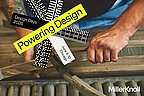
CHICAGO, IL – June 03, 2026 – As the design world converges on Chicago for its annual showcase, one name is signaling its intent not just to participate, but to lead the conversation. MillerKnoll, the global design collective born from the union of modernism’s titans Herman Miller and Knoll, is preparing to transform a vast swath of Fulton Market into a living laboratory for the future of design. From June 8-10, across eight floors and nearly 70,000 square feet, the company will present what it bills as a clear vision for how we will live and work, grounded in technology, craft, and deep human insight.
This is no mere product display; it is a statement of intent. With a portfolio that generated $3.7 billion in fiscal 2025, MillerKnoll’s strategic moves send ripples across multiple industries. "As one of the pioneering tenants of Fulton Market, we're excited to anchor another Design Days by showcasing innovative solutions for home and workplace environments," said Jeff Stutz, incoming interim CEO of MillerKnoll. The showcase promises not just new products, but "new tools to help organizations adapt as the way we work continues to evolve."
The Intelligent and Sustainable Workspace
At the heart of MillerKnoll's vision is the dual imperative of intelligence and sustainability. The company is tackling the complex needs of the modern organization by integrating cutting-edge technology directly into the design process. A centerpiece of the event will be live demonstrations of its new Planning AI tool, a platform designed to help teams visualize workplace scenarios and shifting workstyles with unprecedented clarity. This move signals a significant shift from static floor plans to dynamic, data-driven spatial strategies, addressing a critical need for businesses grappling with hybrid work and real estate optimization.
This focus on smarter spaces is echoed by John Michael, President of North America Contract at MillerKnoll. "Customers need their real estate to work harder and do more than ever before, making the positive impact of a well-designed, well-appointed space even more evident," he noted. The exhibitions are designed to show, not just tell, how this combination of expertise and product innovation can solve tangible business problems.
Simultaneously, the company is doubling down on its environmental commitments, most notably through its most iconic product: the Herman Miller Aeron chair. The updated Aeron, a cornerstone of the Chicago showcase, features significant sustainability advancements. Building on an initiative that has already diverted over 660 metric tons of ocean-bound plastic since 2021, the new models further integrate recycled and bio-based materials, resulting in an estimated 12% reduction in the chair's global average embodied carbon footprint. It’s a powerful example of how the company is embedding environmental responsibility into its core products, aiming to prove that iconic design and planetary health are not mutually exclusive.
Reinventing Icons, Redefining Craft
While pushing technological and environmental boundaries, MillerKnoll is also carefully tending to its rich design heritage. The strategy is one of evolution, not revolution. The Aeron chair, for instance, is not only more sustainable but will also be unveiled in two new sophisticated colorways, Jasper and Nightfall, demonstrating a keen eye for contemporary aesthetics. This careful balance of preserving a legacy while adapting it for the future is a recurring theme.
The 'Craft Work' exhibition, featuring portraits of the skilled artisans behind the products, serves as a direct counterpoint to the 'Means + Methods' display of design tools, past and present. Together, they tell a nuanced story: that technology like the new Planning AI is a tool in service of human creativity, not a replacement for it. This narrative is further enriched by brand-specific evolutions. Geiger, for example, is unveiling a refreshed brand identity that unifies its heritage with a forward-looking global vision, while textile powerhouse Maharam will debut new collaborations with design luminaries like Paul Smith and Hella Jongerius, continuing its tradition of cross-disciplinary innovation.
Beyond the Office: A Holistic Design Ecosystem
Perhaps the most significant aspect of MillerKnoll’s presentation is its sheer breadth. The company is making a clear and compelling case that its design philosophy extends far beyond the corporate campus. The showcase at 1144 West Fulton Market deliberately broadens the focus to healthcare, hospitality, and residential living, reflecting the increasingly blurred lines of modern life.
In healthcare, Herman Miller's new Gemma Sleep Settee offers a compact, intuitive solution for patient rooms where space is at a premium and family comfort is paramount. In the residential and hospitality spheres, brands like Muuto, HAY, and NaughtOne are introducing pieces that blend sculptural beauty with functional ingenuity. Muuto’s Coltre Sofa and HAY’s airy Palissade Cantilever Collection speak to a desire for comfort and style at home, while NaughtOne's Lotti Chair, designed by Keiji Takeuchi, champions circularity with its glue-free, easily disassembled construction. This is a strategic push to create a cohesive design ecosystem, positioning the collective's brands as companions through every facet of a person's day, from the office to the home to the hospital bedside.
Fulton Market: The New Epicenter of Design Dialogue
The choice of venue is as strategic as the products on display. Fulton Market Design Days has rapidly evolved from a rebellious sideshow to a premier destination, offering an experiential, neighborhood-scale alternative to the traditional trade show floor. As a foundational tenant of the district, MillerKnoll has been instrumental in this shift. Its massive, multi-building presence transforms its showrooms from simple points of sale into immersive environments where a holistic vision can be fully appreciated.
By anchoring this burgeoning design festival, MillerKnoll is not just showcasing products; it is shaping the industry's agenda. The event provides a real-world context that allows the company to demonstrate how its diverse portfolio works in concert, addressing complex challenges across sectors. In this dynamic setting, the company is making a powerful argument that the future of design is not about isolated objects, but about integrated systems that are more intelligent, sustainable, and responsive to human needs. It is a comprehensive blueprint for the spaces we will inhabit tomorrow, presented today.