
- Space Savings: Up to 90% of floor space recovered with Vertical Lift Modules (VLMs).
- Efficiency Gains: Picking speeds accelerated by 2-3 times, with throughput rates up to 500 lines per hour.
- Inventory Accuracy: Pick accuracy improved to over 99.9% with VLMs, compared to 2-3% error rates in manual systems.
Experts agree that Vertical Lift Modules (VLMs) offer a transformative solution for Midwest manufacturers, significantly improving space utilization, efficiency, and inventory accuracy while addressing labor shortages and operational costs.
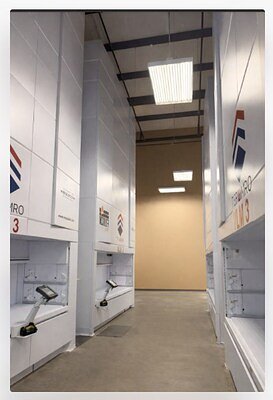
Midwest Manufacturers Go Vertical to Reclaim Space and Boost Output
OXFORD, OH – April 01, 2026 – Confronted by persistent labor shortages and escalating operational costs, manufacturers across the American Midwest are increasingly looking upward—not just for inspiration, but for a tangible solution to their most pressing challenges. A new wave of warehouse automation, led by Vertical Lift Modules (VLMs), is enabling companies to radically rethink their facility footprints, unlocking immense gains in efficiency and productivity without the need for costly physical expansions.
This shift towards high-density automated storage is transforming factory floors and warehouses throughout the industrial heartland. Ohio-based Tier 1 MRO, a provider of custom inventory control solutions, reports a significant uptick in manufacturers adopting VLM technology. The trend highlights a strategic pivot from sprawling, horizontal storage to compact, vertical systems that capitalize on one of the most underutilized assets in any facility: ceiling height.
The Vertical Advantage: More Storage, Less Footprint
For decades, the conventional approach to running out of storage space involved either expanding a building's footprint or leasing additional off-site warehouse space—both costly and complex endeavors. Vertical Lift Modules offer a powerful alternative by fundamentally changing the storage paradigm. These enclosed, automated systems consist of trays arranged vertically on both the front and back of the unit, with a central extractor that retrieves and delivers specific trays to an operator at an ergonomic access window.
The impact on space utilization is dramatic. Industry data and user reports consistently show that facilities can recover up to 90% of the floor space previously dedicated to traditional shelving. A storage area spanning 2,500 square feet, for example, can be condensed into a VLM footprint of as little as 375 square feet.
"Many companies assume they need to expand their building when they run out of storage," noted Mike Sheff, Chief Executive Officer at Tier 1 MRO, in a recent announcement. "In reality, most warehouses are only utilizing a fraction of their vertical space. VLM systems allow companies to recover thousands of square feet while improving picking speed and inventory control."
Beyond space savings, the efficiency gains are profound. By eliminating the time-consuming process of walking through aisles and searching for parts, VLMs can accelerate picking speeds by two to three times. Automated systems deliver the required items directly to the operator, with some configurations achieving throughput rates of up to 500 lines per hour. This "goods-to-person" model not only boosts speed but also accuracy. Integrated software, often featuring pick-to-light guidance and barcode scanning, virtually eliminates human error, driving inventory pick accuracy to over 99.9%—a stark contrast to the 2-3% error rates common in manual systems.
A Broader Shift in the Industrial Heartland
The growing adoption of VLMs is not an isolated phenomenon but rather a key component of a larger trend toward intelligent automation sweeping through the Midwest's manufacturing sector. After a brief slowdown, the global warehouse automation market is poised for a return to double-digit growth, with market analysis firm Interact Analysis projecting the market to more than double in size from $25 billion in 2024 to over $54 billion by 2029.
Significantly, the durable manufacturing sector has emerged as a leader in this automation wave. This investment is fueled by a confluence of factors, including the strategic reshoring of production, the construction of new advanced manufacturing facilities, and the unceasing pressure to enhance operational resilience against supply chain disruptions and economic headwinds. Reports from states like Wisconsin and Minnesota confirm that workforce challenges remain a top concern for manufacturers, prompting sustained investment in technology to bridge the labor gap.
Companies like Tier 1 MRO function as crucial integrators in this ecosystem, partnering with leading VLM manufacturers such as Modula and Kardex to implement tailored solutions for regional businesses. The market is competitive, with numerous providers offering modular designs and sophisticated warehouse management system (WMS) integration. This competition fosters innovation and makes advanced automation more accessible to a wider range of companies, from large automotive suppliers to smaller, specialized machining operations.
Smart Storage, Smarter Workforce
While the narrative around automation often centers on job replacement, the reality on the ground in many manufacturing facilities paints a different picture—one of workforce empowerment and upskilling. VLMs directly address some of the most physically demanding and injury-prone aspects of warehouse work. By delivering trays at an optimal ergonomic height, these systems eliminate the need for workers to constantly bend, stretch, or climb ladders, significantly reducing the risk of musculoskeletal injuries and overall physical fatigue.
This improvement in working conditions is a critical benefit in a tight labor market, making manufacturing roles more attractive and sustainable. Furthermore, the technology empowers employees to become more productive and valuable. Freed from the monotonous task of searching for parts, workers can focus on more complex, value-added activities like quality control, kit assembly, or managing the automated systems themselves. The high degree of accuracy enforced by the VLM's integrated software also reduces the cognitive stress associated with preventing and correcting picking errors.
This evolution of roles is essential for the long-term health of the region's industrial base. As manufacturers in Ohio, Illinois, and Michigan invest in robotics and AI to streamline production, they are also investing in their employees, training them to operate and maintain the sophisticated equipment that will define the future of the factory floor. The technology does not replace the worker; it elevates their contribution.
The strategic implementation of automation is increasingly viewed as a pathway to long-term competitiveness and job security. By boosting productivity and efficiency, companies can better withstand global competition and invest in further growth within the region. For Midwest manufacturers navigating the complexities of the modern economy, looking up to vertical storage solutions offers a clear path toward a more efficient, resilient, and future-proof operation.