
- 500 barrels per day: Target production volume at each modular site by 2032
- 98% single-pass efficiency: Claimed conversion rate of waste into valuable products
- 2032: Year MCatalysis aims to achieve cost parity with petrochemicals
Experts would likely conclude that MCatalysis's microwave-driven technology represents a promising, though challenging, step toward sustainable fuel production, with Lyon's industrial ecosystem providing critical support for scaling this innovative approach.
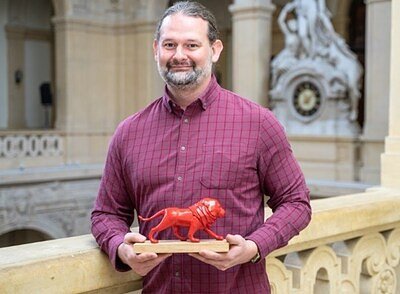
Microwave Alchemy: US Startup to Turn Waste into Fuel in Lyon
LYON, France – January 29, 2026 – In a move that signals a significant step toward a circular economy, U.S. deep-tech firm MCatalysis, Inc. has established its European headquarters and first industrial prototype in Lyon. The company is pioneering a revolutionary microwave-driven technology designed to convert carbon-based waste into sustainable fuels and chemicals, aiming to challenge the dominance of the traditional petrochemical industry.
This strategic expansion into France, supported by the regional investment agency ONLYLYON Invest, marks the company's critical transition from laboratory research to industrial-scale deployment. The prototype is now installed at the Axel'One technology platform in Villeurbanne, a key hub within the Lyon metropolitan area's renowned "Chemical Valley."
The Microwave Revolution
Founded in 2025 and backed by initial funding from HL Energy Ventures, MCatalysis is commercializing a breakthrough process born from research at the University of Oxford. The company holds an exclusive worldwide license for the underlying intellectual property, which centers on using microwave-activated catalysts to upcycle a wide range of waste streams. These include difficult-to-recycle plastics, industrial off-gases, and agricultural residues.
Unlike conventional industrial heating, which relies on transferring thermal energy from the outside in, MCatalysis's technology uses microwaves to heat materials directly and selectively at a molecular level. This approach offers several transformative advantages. It promises to dramatically accelerate chemical reactions, increase energy efficiency, and improve the selectivity of the final products. The process is fully electrified, making it compatible with renewable energy sources and enabling the potential for modular, decentralized production facilities.
The company's goal is ambitious: to produce sustainable synthetic fuels and chemicals at costs comparable to those of the petrochemical industry. Michael Irwin, founder and CEO of MCatalysis, stated that the choice of Lyon was strategic, citing the region's industrial density and scientific excellence as critical factors that will help the company achieve its cost-parity goals.
Lyon: A Crucible for Green Innovation
The decision to base its industrialization and European commercial operations in Lyon was no accident. While fundamental catalyst research continues in London, Lyon provides the ideal ecosystem to scale the technology. The region is France's leading industrial hub and is widely regarded as a European center of excellence in catalysis and chemical processes, a legacy built over centuries.
At the heart of this ecosystem is the Axel'One collaborative innovation platform. Located on the La Doua science campus, Axel'One provides startups and established players with access to pilot-scale equipment, shared infrastructure, and deep technical expertise. For MCatalysis, this partnership is invaluable. It allows the company to test, validate, and optimize its processes under near-industrial conditions, significantly de-risking the perilous journey from lab to market. This collaborative environment also facilitates partnerships with major industrial groups in the chemicals, energy, and materials sectors that are also present on the platform.
The region's strength is further bolstered by a dense network of academic and research institutions, including INSA Lyon, CPE Lyon, Université Claude Bernard Lyon 1, and the French National Center for Scientific Research (CNRS). With over 17,000 researchers and 170,000 students, Lyon offers a rich talent pool and a fertile ground for R&D. The presence of world-class laboratories like the Research Institute for Catalysis and Environment of Lyon (IRCELYON) creates a powerful synergy between fundamental science and industrial application.
Bertrand Foucher, CEO of ONLYLYON Invest, which provided administrative, legal, and business development support, said that the arrival of MCatalysis "confirms Lyon's position as a global hub for chemical and environmental innovation."
The Audacious Path to Petrochemical Parity
The ultimate measure of success for MCatalysis—and for many deep-tech climate ventures—lies in achieving economic viability without permanent subsidies. The company has set a bold target of reaching cost parity with petrochemicals by 2032, aiming for production volumes of approximately 500 barrels per day at each modular site.
Achieving this goal requires overcoming significant hurdles common to industrial deep-tech. High initial capital expenditures for specialized equipment, the complexities of scaling a novel chemical process, and ensuring a consistent, low-cost supply of diverse waste feedstocks are all major challenges.
MCatalysis plans to tackle these obstacles through a combination of technological superiority and smart design. The company claims its process can achieve over 98% single-pass efficiency, maximizing the conversion of waste into valuable products. By eliminating the need for energy-intensive steps like drying biomass and by producing sulfur-free end products, the process aims to streamline production and reduce operational costs. Furthermore, the company is embracing Industry 5.0 principles, designing its modular manufacturing systems with AI-driven predictive maintenance to maximize uptime and efficiency.
The financial backing from HL Energy Ventures, a Dallas-based firm that spun out of the Hunt Energy dynasty, provides not only capital but also deep industry expertise in scaling energy ventures. This strategic partnership is crucial for navigating the capital-intensive path to commercialization.
Forging a Blueprint for the Circular Economy
The establishment of MCatalysis France is more than just a corporate expansion; it is a tangible manifestation of the circular economy in action. The global market for waste-to-value technologies is expanding rapidly, driven by tightening environmental regulations, corporate sustainability commitments, and a growing desire for resource security. By transforming waste liabilities into valuable assets, companies like MCatalysis are creating a new paradigm for industrial production.
This model of innovation—where groundbreaking university research is nurtured by specialized venture capital, accelerated by collaborative industrial platforms, and rooted in a supportive regional ecosystem—offers a potential blueprint for the future of sustainable industry. As MCatalysis begins its work at Axel'One, it represents a convergence of cutting-edge science, strategic investment, and regional ambition, all aimed at solving one of the world's most pressing challenges: decoupling economic growth from resource consumption and waste generation.