
- 800 students at Goshen College
- 45 funded innovation projects across 14 academic departments and 10 administrative offices
- 17-year tenure at Microsoft for Raj Biyani
Experts in educational technology believe that while small colleges face challenges in funding and staffing for large-scale tech initiatives, they also have advantages in leveraging AI to enhance personalized student support and streamline administrative tasks, freeing up faculty and staff to focus on high-touch interactions.
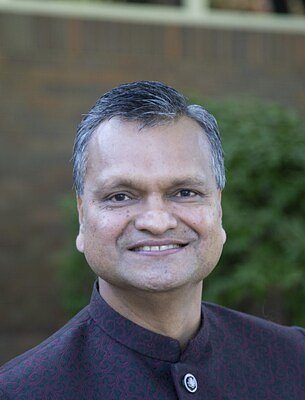
Microsoft Veteran Returns to Small College to Humanize the AI Revolution
GOSHEN, Ind. – April 17, 2026 – In a move that bridges the worlds of big tech and small liberal arts, Goshen College has appointed one of its own, former Microsoft executive Raj Biyani, as its first-ever Chief Innovation Officer. The 1992 alumnus returns to his alma mater not just to implement new technology, but to lead a deliberate and ambitious effort to infuse the development of artificial intelligence with the ethical and human-centered principles of a values-based education.
The appointment signals a bold strategy for the private college of 800 students, positioning it as a potential leader in a critical, emerging conversation: how higher education can guide the responsible use of AI. Instead of racing to build the biggest data models, Goshen is betting that its strength lies in cultivating the human wisdom needed to wield these powerful new tools.
From Global Tech to a Liberal Arts Homecoming
Biyani’s journey back to northern Indiana is a story of a career coming full circle. After graduating from Goshen, he built a formidable resume over three decades in the tech industry. His 17-year tenure at Microsoft included serving as the managing director of Microsoft IT's India operations, where he drove a transformation so profound it became a case study at Harvard Business School. He was also the founding product manager for the precursor to the Microsoft App Store, co-authored a book on cloud computing, and holds multiple U.S. patents.
This background in high-stakes corporate innovation makes his return to a small, Anabaptist-Mennonite-affiliated college particularly noteworthy. The move was catalyzed by his visit to campus for Homecoming 2025 to receive the college’s Culture for Service Award. Since then, Biyani has volunteered extensively, guest lecturing in over 25 classes and engaging with regional business leaders, demonstrating a deep commitment to preparing the institution for an AI-driven future.
His impact is already being felt. Before his official appointment, Biyani designed and taught a 12-part AI seminar for Goshen faculty and staff, laying the groundwork for a campus-wide dialogue. This effort has already borne fruit through the Goshen College AI Innovators Program, a fund he helped champion which has sparked 45 funded innovation projects across 14 academic departments and 10 administrative offices.
"Raj brings strategic clarity, entrepreneurial energy and humility in a rare combination," said Rebecca Stoltzfus, president of Goshen College. "He listens first, generates trust, and brings out the best in others. We are fortunate to have him not only as an accomplished alumnus, but now as a colleague who will help shape our institutional strategy and advance innovation for Goshen College and our students."
A Deliberate Bet on 'Human-Centered AI'
Goshen College is framing its approach not as a technical race, but as an ethical imperative. The institution's core values—rooted in compassionate peacemaking, servant leadership, and global citizenship—are being positioned as the essential framework for navigating the AI revolution. The college’s leadership believes that a liberal arts education, with its emphasis on critical thinking, ethics, and interdisciplinary inquiry, is uniquely suited to tackle the complex questions AI presents.
This philosophy is reflected in the questions the campus community is being encouraged to ask. "At Goshen College, we are not limiting ourselves by just asking what AI can do, but rather what we should do with it and why," Biyani stated. "I am excited to contribute to this mission because those are questions worth dedicating the next chapter of my life to."
This focus on the 'why' is already shaping policy and practice. The college has updated its academic integrity policy to directly address the use of generative AI, clarifying that misrepresenting AI-generated work as one's own is a form of plagiarism while still allowing for faculty-approved instructional uses. The goal is to teach students to use AI as a tool for augmenting thought, not replacing it.
An Emerging Blueprint for Higher Education
While Goshen's appointment of a CIO is notable, it joins a growing number of institutions grappling with AI's impact. Colby College established its Davis Institute for Artificial Intelligence in 2021, and universities like Hamilton and Richmond have launched their own interdisciplinary AI centers and fellowships. However, Goshen’s approach—installing a seasoned tech industry leader in a top strategic role at a small, faith-rooted college—offers a distinct model.
It suggests a path for smaller institutions that may lack the vast resources of a large research university but possess the agility and cohesive mission required to implement a campus-wide, values-driven strategy. The rapid, cross-departmental engagement seen in the AI Innovators Program, with projects spanning from humanities to administration, demonstrates how a smaller community can mobilize quickly around a shared vision.
Experts in educational technology note that while small colleges face challenges in funding and staffing for large-scale tech initiatives, they also have advantages. They can leverage AI to enhance their hallmark personalized student support and streamline administrative tasks, freeing up faculty and staff to focus on high-touch interactions. Goshen’s strategy appears to lean into this advantage, aiming to use AI to amplify its core mission rather than replace it.
As the world of higher education continues to navigate the opportunities and disruptions of artificial intelligence, Goshen College’s experiment will be a closely watched case study. It will test the proposition that in an age of increasingly powerful machines, the most critical innovation may lie in strengthening our own humanity.