
- 40 million users: MEXC's global user base.
- 170+ markets: The exchange's international reach.
- 20 predictions: Maximum number of predictions that can be bundled into a single Combo wager.
Experts would likely conclude that while MEXC's Combo feature introduces innovative complexity to prediction markets, its success hinges on navigating regulatory hurdles and proving its value beyond high-risk gambling.
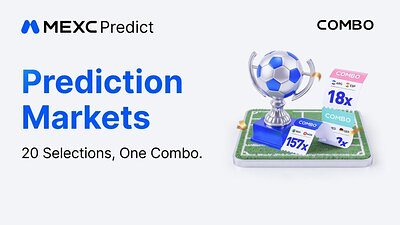
MEXC's 'Combo' Ups the Ante in Prediction Markets, But Is It a Winning Bet?
MUTSAMUDU, Comoros – June 09, 2026 – Cryptocurrency exchange MEXC made a bold move today, launching "Combo," a new feature enabling traders to bundle up to 20 disparate predictions into a single wager. The firm, which boasts over 40 million users, is positioning the launch as a revolutionary step for centralized prediction markets, allowing users to express complex, interconnected views on everything from sports outcomes to crypto prices. "In markets, as in life, nothing happens in isolation," said MEXC CEO Vugar Usi in the announcement. "We are not upgrading a product. We are advancing a category."
While the ambition is clear, a closer look reveals that MEXC is entering a complex and fiercely competitive arena. The launch of Combo raises critical questions about innovation, risk, and the increasingly treacherous regulatory landscape that defines the world of event-based contracts. As enterprises and investors look to these markets for signals, understanding the mechanics and the minefields is paramount.
A Crowded Field for "Firsts"
MEXC's press release declares that "for the first time, a centralized prediction market lets traders express combination views." This claim, however, appears to overlook established precedent. Kalshi, a U.S.-based platform regulated by the Commodity Futures Trading Commission (CFTC), has offered a functionally identical feature—also named "Combos"—for some time. Kalshi allows users to create multi-leg event contracts, essentially parlays, that have become a significant driver of its trading volume.
"The claim of being first is a common marketing tactic, but in this case, it's demonstrably inaccurate," noted one industry analyst familiar with the prediction market space. "Kalshi has been operating multi-leg contracts in a regulated U.S. environment, proving both the model and the demand exist."
This context reframes MEXC's launch not as a pioneering act, but as a strategic entry into a developing product category. The challenge for the exchange will be to differentiate its offering. While Kalshi is focused on the U.S. market, MEXC's global reach across 170+ markets presents an opportunity for scale, but also introduces a dizzying array of compliance hurdles. The core innovation, it seems, is not the parlay itself, but its deployment on a massive, international crypto exchange platform.
The High-Stakes Parlay: Risk vs. Reward for Traders
For traders, Combo promises a new level of strategic depth. The ability to link a prediction that "France defeats England" with a call that "Bitcoin breaks $70,000" in a single order offers a streamlined way to execute a complex thesis with potentially less capital. The platform automates the pricing and filters out logical contradictions, aiming for a seamless user experience.
However, this sophistication comes with a sharp, unforgiving edge: the "all-or-nothing" payout structure. If even one of the 20 possible predictions in a Combo order fails, the entire wager is lost. This structure dramatically amplifies risk. While a trader making separate bets might lose on one but win on others, a Combo trader faces total loss from a single misstep. This transforms trading into a high-wire act where the probability of failure compounds with every added leg.
"Liquidity and accurate pricing become exponentially more difficult as you add more legs to a parlay," explained a quantitative analyst. "Beyond three or four events, the odds of everything hitting correctly become astronomically low, and the product starts to look more like a lottery ticket than a financial instrument." This dynamic raises serious questions about risk management, both for the user and the platform. It blurs the line between informed speculation and high-stakes gambling, a distinction regulators are watching with increasing scrutiny.
Navigating the Regulatory Minefield and a Mystery Partner
Perhaps the most significant challenge facing MEXC's Combo is the global regulatory minefield. The press release includes a lengthy disclaimer listing dozens of restricted countries, including the United States, Canada, the United Kingdom, and most of the European Union. This list is a testament to the legal ambiguity surrounding prediction markets, which are often classified as illegal gambling in jurisdictions without specific frameworks for event-based derivatives.
The regulatory battle is particularly intense in the U.S., where state regulators are clashing with the CFTC over jurisdiction. While the CFTC is working to establish itself as the primary federal regulator for these products, many states have moved to ban them outright. MEXC's decision to geofence a vast number of major markets underscores the immense compliance burden.
Adding another layer of intrigue is the repeated, yet vague, reference to a "partner" or "collaborators" who enabled the launch. The press release offers no clues as to the identity of this entity. This lack of transparency is conspicuous. Is this partner a technology provider, a liquidity source, or a specialized firm designed to insulate MEXC from certain regulatory pressures? In an industry where compliance and transparency are becoming key drivers of corporate strategy, operating through an unnamed partner on a legally sensitive product is a notable choice. It suggests a complex operational structure designed to navigate a fractured and often hostile legal environment.
The Future of Forecasting or a Gamified Gamble?
The launch of Combo arrives as prediction markets are gaining mainstream traction, evolving from niche crypto experiments into powerful tools for forecasting. Reports from firms like Messari highlight their growing accuracy and expanding use cases, attracting both retail traders and institutional interest. By offering more complex products, exchanges like MEXC are tapping into a clear demand for more sophisticated ways to trade on future events.
This evolution brings the central tension of the sector into sharp focus: Are these platforms building the future of information aggregation, or are they creating more elaborate casinos? MEXC’s Combo, with its potential for high rewards and even higher risk, sits directly on this fault line. It offers a powerful tool for expressing a nuanced worldview, but its all-or-nothing structure simultaneously appeals to the same psychology that drives lottery and parlay betting.
As MEXC pushes to "advance a category," it will be judged not just on its technology, but on its ability to manage risk, navigate an unforgiving regulatory climate, and prove that its innovations offer genuine value beyond gamified speculation. The success of Combo will depend on whether traders see it as a sophisticated hedging instrument or a quick way to lose it all on a single bad call.