
- 35% sales increase: Mazda reported a 35% year-over-year sales surge in May 2026, moving 39,066 vehicles.
- 40.2% DSR growth: Daily Selling Rate jumped 40.2%, indicating strong demand and operational efficiency.
- CX-50 Hybrid success: Best-ever sales month for the CX-50 Hybrid, with the entire CX-50 line up 107.2% year-over-year.
Experts would likely conclude that Mazda's May sales spike reflects strategic product wins and heightened consumer demand, but sustained growth will depend on replicating hybrid success across its lineup and navigating regional market challenges.
Mazda's May Sales Spike: A Strategic Rebound or a Statistical Mirage?
IRVINE, CA – June 02, 2026 – Mazda North American Operations (MNAO) just delivered a blockbuster May, reporting a remarkable 35 percent sales increase compared to the same month last year, moving 39,066 vehicles. The figure represents the company's best sales month since July 2025 and, on the surface, signals a powerful resurgence. Yet, the celebration is tempered by a more complex reality: year-to-date sales remain down 6.9 percent. This paradox of a stellar month within a challenging year raises a critical question for any strategist or investor: Is Mazda witnessing a genuine, sustainable turnaround, or is this simply a fleeting bright spot in a turbulent market?
Delving into the numbers reveals a crucial metric that cuts through the noise. With one fewer selling day in May 2026 than in May 2025, the company's Daily Selling Rate (DSR) soared by an even more impressive 40.2 percent. This isn't just a calendar quirk; it's a clear indicator of heightened consumer demand and operational velocity, suggesting the May performance is more than a statistical anomaly. The story of Mazda's May is a complex interplay of strategic product wins, regional economic pressures, and a clear bet on an electrified future.
A Tale of Two Triumphs: Hybrids and Compacts
At the heart of Mazda's May success are two specific product stories that perfectly capture current market dynamics. The first is the resounding victory of the CX-50 Hybrid, which achieved its best-ever sales month. This isn't happening in a vacuum. Across the industry, competitors from Hyundai to Honda are reporting record-breaking hybrid sales as consumers increasingly seek refuge from high fuel prices without making the full leap to battery-electric vehicles. The CX-50 Hybrid's performance proves that when Mazda brings a compelling, electrified product to a hot segment, it can win big. The entire CX-50 line saw a staggering 107.2% jump, demonstrating a successful pivot toward a newer, more rugged crossover that is clearly resonating with buyers.
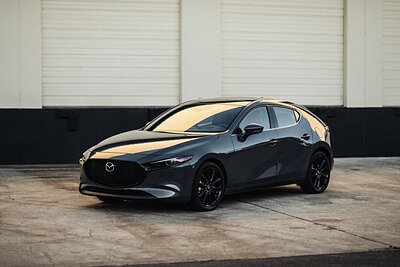
Simultaneously, the Mazda3—a staple of the compact class—had its best sales month since May 2021, with sales up 68 percent. In an era dominated by SUVs, the strong comeback of a sedan and hatchback is significant. It points to a growing segment of the market grappling with affordability. As vehicle prices and interest rates remain elevated, the value proposition of a well-crafted, fuel-efficient compact car becomes undeniable. The Mazda3's success suggests a shrewd awareness of this consumer pressure, capturing buyers who may be priced out of larger, more expensive vehicles.
However, this success is juxtaposed with struggles elsewhere in the portfolio. The venerable CX-5, once the brand's undisputed sales champion, saw its U.S. sales fall by 17.9 percent. This decline likely reflects a natural product lifecycle, with consumer attention shifting to the newer CX-50. More telling is the strategic retreat of the CX-30. The model's significant year-over-year decline isn't due to a lack of popularity but a deliberate operational decision by Mazda to scale back imports from its Mexico plant to mitigate the financial impact of tariffs. This highlights the tightrope Mazda walks between managing profitability and maintaining market share in a complex global supply chain.
The North American Puzzle: A Divergent Market
Zooming out from specific models reveals a fractured North American market where Mazda's fortunes vary dramatically by country. The phenomenal 35 percent growth was overwhelmingly driven by the United States, where consumer demand for the brand's key models surged. This performance significantly outpaced the broader U.S. market's modest single-digit growth, indicating Mazda is actively capturing share from its rivals.
Cross the northern border, however, and the picture inverts. Mazda Canada reported a stark 21 percent sales decrease in May, contributing to a 16.1 percent year-to-date decline. This isn't an isolated problem for Mazda; the entire Canadian auto market is navigating significant headwinds. A combination of trade uncertainty, elevated consumer financial stress, and stagnant wage growth has created a far more cautious buying environment. While Mazda Canada noted some positive month-over-month momentum for core models, the overarching economic climate is proving to be a powerful drag on performance.
Meanwhile, Mazda Motor de Mexico posted a solid 13 percent sales increase for the month. While its year-to-date figures remain nearly flat, the positive monthly performance suggests a more stable, resilient market than Canada's. This regional divergence underscores the immense operational challenge for automakers: a strategy that works brilliantly in one territory can falter in another, requiring nimble adjustments to everything from marketing to inventory management.
Decoding the Momentum: Strategy Meets Market Reality
So, what does this all mean for Mazda's path forward? The powerful 40.2 percent DSR increase confirms that the May sales lift was driven by genuine momentum, not just favorable timing. When placed against competitors who celebrated high single-digit or low double-digit gains, Mazda's 35 percent spike looks like a tactical masterstroke. The company successfully aligned its most appealing products—the modern, efficient CX-50 Hybrid and the value-driven Mazda3—with the two most powerful consumer currents: the push for electrification and the need for affordability.
Still, significant strategic questions loom. Some analysts argue the brand is in a precarious position, what one called being "a little stuck" between mainstream pricing and a premium experience that isn't always clearly differentiated. The launch of the new large-platform crossovers has been a mixed bag. The CX-90 has found a footing, but the newer, two-row CX-70 has faced a challenging start, with some industry watchers questioning its value proposition relative to its three-row sibling. This portfolio complexity requires a clear and compelling marketing message that Mazda is still working to perfect.
The undeniable success of the CX-50 Hybrid, however, provides the clearest roadmap. It validates the company's electrification strategy and proves that Mazda's engineering and design ethos can be successfully applied to the powertrain technologies today's buyers demand. The company's future success will likely depend on its ability to replicate this hybrid triumph across more of its lineup, turning May's impressive rebound into a sustained and profitable growth trajectory.