
- 14% decrease in total U.S. vehicle sales for Mazda in January 2026, totaling 28,958 units.
- 64.4% surge in CX-50 sales, reaching 10,415 units, now accounting for 36% of Mazda's total sales.
- 63% plunge in CX-30 sales, dropping from 6,657 to 2,423 units.
Experts would likely conclude that Mazda's strategic shift toward upscale SUVs like the CX-50 is paying off, despite broader market challenges and declines in legacy models.
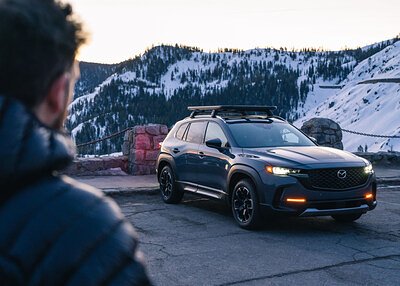
Mazda's CX-50 Shines Brightly in a Mixed January Sales Report
IRVINE, CA – February 03, 2026 – Mazda North American Operations (MNAO) released its January 2026 sales figures today, presenting a complex picture of strategic realignment amidst a challenging market. While the headline figure showed a 14% year-over-year decrease in total U.S. vehicle sales, to 28,958 units, a deeper dive into the numbers reveals a story of significant growth in key areas, led by the stellar performance of its US-assembled CX-50 crossover.
The report highlights a pivotal moment for the Japanese automaker, as consumer preferences and Mazda's own production strategy visibly reshape its sales landscape. The booming success of the CX-50, coupled with strong growth in the certified pre-owned market and positive results from Canada and Mexico, contrasts sharply with declining sales for many of the brand's legacy models, painting a nuanced portrait of a company in transition.
A Tale of Two SUVs
The undisputed star of Mazda's January report is the CX-50. Sales for the rugged and stylish crossover surged an incredible 64.4% compared to January 2025, with 10,415 units sold. This record-breaking performance not only marks the model's best-ever January but also officially dethrones the long-reigning CX-5 as Mazda's top-selling vehicle in the U.S. The CX-50 now accounts for 36% of Mazda's total sales, a dramatic increase from just 19% a year ago.
Assembled in Huntsville, Alabama, the CX-50's success is a significant win for Mazda's U.S. manufacturing efforts. Its appeal is bolstered by strong reviews praising its upscale interior, engaging driving dynamics, and a recently added hybrid powertrain option sourced from Toyota. With ample inventory and attractive financing offers, the CX-50 is clearly resonating with American consumers who are seeking a stylish and capable alternative in the crowded compact SUV segment.
In stark contrast, the vehicle it unseated, the venerable CX-5, saw its sales fall by 8% to just under 9,900 units. Even more dramatic was the decline of the smaller CX-30 crossover, whose sales plummeted by over 63% from 6,657 units last January to just 2,423. Research suggests this sharp drop may be a deliberate move by Mazda to scale back production of the Mexico-built model, likely to prioritize inventory and focus on more profitable vehicles like the CX-50. The brand's sedans and sports cars also faced headwinds, with the Mazda3 sedan dropping 39% and the iconic MX-5 Miata falling 42%.
Navigating a Choppy Market
Mazda's 14% U.S. sales decline did not occur in a vacuum. The broader North American auto market faced a sluggish start to 2026, with a projected seasonally adjusted annual rate (SAAR) of around 15.2 million units, down from December's more robust figures. Analysts point to persistent vehicle affordability challenges, economic uncertainty, and severe winter weather across parts of the country as contributing factors to the slowdown.
However, Mazda's performance lagged behind several key competitors. Hyundai and Kia both reported sales increases for January, up 2% and 13% respectively, driven by strong demand for their own SUV and hybrid lineups. American Honda also posted a strong month, with passenger car sales climbing over 14%. While Subaru of America also reported a sales decrease, its 9.1% drop was less severe than Mazda's.
This competitive landscape underscores the intense pressure within the industry. While Mazda's overall numbers were pulled down by its struggling models, the success of the CX-50 proves the brand can compete and win with the right product. The results suggest Mazda's strategy of moving upmarket with well-appointed, dynamically styled SUVs is its most viable path forward, even if it means sacrificing volume from older, less differentiated products.
The Shift to Value: CPO and Regional Strength
Two other bright spots in Mazda's report offer insight into broader consumer trends. The first is a significant 15.6% increase in Certified Pre-Owned (CPO) sales, which totaled 6,109 vehicles. This surge in the used-car market is a direct reflection of the affordability crisis plaguing new vehicles. As prices for new cars remain stubbornly high, a growing number of price-sensitive shoppers are turning to the CPO market for a more accessible entry point to vehicle ownership. Mazda's ability to capitalize on this trend indicates a healthy demand for its products on the secondary market and a well-managed CPO program.
The second bright spot is the brand's performance outside the U.S. While MNAO's primary market struggled, Mazda Canada reported a 4.9% sales increase, and Mazda Motor de Mexico saw an impressive 11% jump in sales compared to last year. This regional strength provides a crucial buffer for the company's North American operations and demonstrates that the brand's appeal remains strong in markets with different economic conditions and competitive pressures.
Ultimately, Mazda's January 2026 sales report is a clear signal of a company undergoing a significant pivot. The automaker is trading volume in legacy sedans and smaller crossovers for high-margin growth in its newer, more desirable SUV offerings. The success of the CX-50 provides a clear path forward, but the journey will involve navigating the decline of older nameplates and adapting to an automotive landscape that is more competitive and economically uncertain than ever before.
Topics & Related
Electric Vehicles
Related Company Pulse