
- $25 million investment from Eric Sprott, boosting MAX Power's treasury to over $40 million. - 1.3 million acres of land controlled by MAX Power in Saskatchewan's Genesis Trend. - 11 million shares of Homeland Critical Minerals received in exchange for the Willcox Lithium Project, representing a ~50% ownership stake.
Experts would likely conclude that MAX Power's strategic pivot to focus exclusively on natural hydrogen reflects a broader industry trend toward specialization in the clean energy transition, balancing risk and opportunity through a structured separation of assets.
MAX Power’s Hydrogen Bet: A Strategic Split in the Clean Energy Race
REGINA, Saskatchewan – June 08, 2026
In the sprawling, complex world of the green energy transition, clarity is the rarest and most valuable commodity. Today, MAX Power Mining Corp. made a decisive move to acquire it, announcing a strategic transaction that effectively cleaves its business in two. The company is selling its Willcox Playa Lithium Project to a dedicated entity, Homeland Critical Minerals Corp., in a move designed to sharpen its corporate focus into a pure-play natural hydrogen venture. This isn't just a corporate restructuring; it's a statement about the future of energy and a fascinating case study in strategic specialization.
By divesting the Arizona-based lithium asset, MAX Power is making a high-stakes bet that the future of shareholder value lies not in diversification, but in a singular, relentless pursuit of what it believes is the next frontier in clean energy: geological hydrogen. It’s a move that simplifies the narrative for investors and concentrates capital, but it also highlights a fundamental bifurcation happening across the resource sector. Companies are increasingly being forced to choose: will you supply the materials for the transition, or will you supply the energy itself?
The All-In Hydrogen Gambit
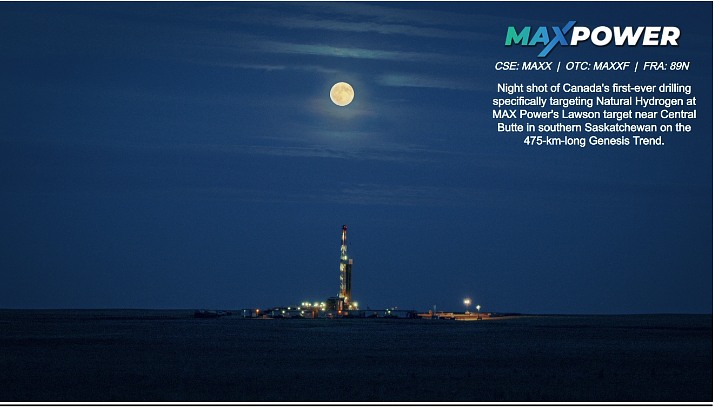
MAX Power’s pivot is less a change of direction and more a shedding of weight to accelerate its primary mission. The company is already a first-mover in Canada, having confirmed the nation's first-ever subsurface natural hydrogen system at its Lawson discovery in Saskatchewan. With this transaction, the company is tripling down on that advantage.
"This transaction sharpens MAX Power’s focus on what we believe is one of the most compelling emerging energy opportunities globally, Natural Hydrogen," stated CEO Ran Narayanasamy in the official announcement. This sentiment is backed by significant capital. The company recently secured a $25 million investment from renowned resource investor Eric Sprott, bolstering its treasury to over $40 million and providing the firepower to aggressively pursue commercialization.
That capital will be laser-focused on the 475-km Genesis Trend in Saskatchewan, where MAX Power controls a dominant land package of approximately 1.3 million acres. The immediate goal is a multi-well follow-up drill program to validate the commercial scale of the Lawson Complex. By removing the lithium project from its direct operational portfolio, management can now dedicate all its capital, technical resources, and execution bandwidth to this singular, ambitious goal. It transforms the company from a junior explorer with interesting assets into a specialized vehicle for a potentially disruptive new energy source.
De-Risking by Dividing
While the headline is about hydrogen, the structure of the deal is a masterclass in retaining value while mitigating risk. MAX Power isn't simply walking away from lithium. In exchange for the Willcox Project, the company receives 11 million shares of Homeland Critical Minerals, representing just under a 50% ownership stake in the new entity. The deal values the transaction at a modest $1.1 million, but the strategic value is far greater.
This structure effectively creates a tracker stock for the lithium asset. MAX Power shareholders, through the company's substantial equity position, retain significant exposure to any future success at the Willcox Project. It allows them to participate in two distinct narratives: the high-risk, high-reward exploration of a nascent energy source with MAX Power, and a more focused critical minerals play through Homeland.
The timing for Homeland is opportune. As Narayanasamy noted, an “improved lithium market and a U.S. administration focused on the development of critical minerals” creates a favorable environment. Homeland, which intends to pursue its own public listing on a Canadian exchange, will be able to approach investors with a clean, focused story: developing a confirmed, near-surface lithium discovery in the United States at a time when domestic supply chains are a national priority. MAX Power, in turn, has the option to distribute its Homeland shares to its own shareholders in the future, providing a direct return and fully completing the separation.
The Great Energy Divide: Materials vs. Molecules
Zoom out from the specifics of the deal, and you see a larger trend solidifying. The energy transition requires two fundamental inputs: low-carbon molecules for energy and critical minerals to build the necessary hardware (batteries, turbines, solar panels). For years, many junior resource companies have tried to play in both sandboxes. MAX Power’s move suggests that era of diversification may be ending, replaced by an age of specialization.
By becoming a pure-play natural hydrogen company, MAX Power clarifies its identity and its risk profile for the market. Investors now know exactly what they are buying: a leveraged bet on the successful commercialization of geological hydrogen. Likewise, once Homeland is publicly listed, investors seeking exposure to US-based lithium clays will have a clear, undiluted vehicle for that specific thesis.
This strategic schism reflects the maturation of the decarbonization landscape. The technical and financial requirements to successfully develop a large-scale hydrogen project are vastly different from those needed to permit, mine, and process lithium clays. Attempting to master both simultaneously stretches capital and managerial focus thin. This transaction is an acknowledgment of that reality, allowing two separate management teams to dedicate themselves to their unique challenges and opportunities. For the 2026 consumer, this corporate maneuvering is a distant, abstract process, but its implications are direct. The intense focus and dedicated capital unlocked by deals like this are what will ultimately build the real-world supply chains for the electric vehicles they drive and the clean energy that powers their homes.