
- 15-20% premium: Consumers in Vietnam pay an estimated 15-20% more on daily essentials due to supply chain inefficiencies.
- 6,100 stores by 2026: Masan aims to expand its retail network to 6,100 stores by the end of 2026, with a goal of 13,000 stores by 2030.
- 70% rural focus: 70% of new stores are being opened in rural areas, achieving a 40% internal rate of return (IRR) with a payback period of less than three years.
Experts would likely conclude that Masan’s 'Great Connectivity' strategy represents a bold and well-structured attempt to dominate Vietnam’s retail sector through vertical integration, digital intelligence, and aggressive expansion, though its success will depend on execution and market adaptability.
Masan’s Great Connectivity: A Bid to Rule Vietnam’s Retail Future
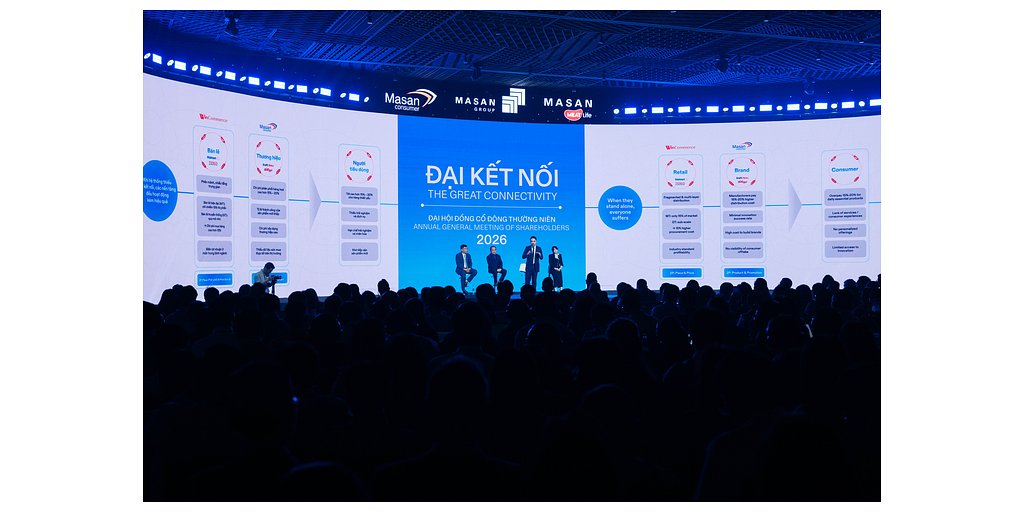
HO CHI MINH CITY, Vietnam – April 25, 2026 – Masan Group, one of Vietnam’s largest conglomerates, has declared its intention to fundamentally rewire the nation's consumer landscape. At its recent Annual General Meeting, the company unveiled a transformative strategy themed “The Great Connectivity,” centered on building a comprehensive “Consumer Operating System” (cOS). This ambitious platform aims to unify the country's fragmented retail, brand, and digital sectors, promising to lower consumer costs while simultaneously capturing an unprecedented share of the market.
For years, inefficiencies in Vietnam’s supply chain have meant consumers pay an estimated 15% to 20% premium on daily essentials. Masan’s cOS is positioned as the definitive solution, an integrated ecosystem designed to connect its vast brand portfolio, its rapidly expanding retail footprint, and a powerful digital intelligence engine. The goal is to create a seamless journey from production to purchase, a vision that, if successful, could establish Masan as the dominant force in Vietnamese consumer life.
“The Great Connectivity is not just a business strategy; it is a commitment to Vietnam,” stated Danny Le, CEO of Masan Group, at the meeting. “When we connect our brands, our retail network, and our digital intelligence, consumers win, employees win, and shareholders win.”
The Retail Engine Overhaul
The foundation of Masan's strategy is a formidable physical retail presence. The company announced the official completion of its turnaround for WinCommerce (WCM), the retail arm that operates WinMart supermarkets and WinMart+ convenience stores. After a period of heavy investment and restructuring that saw a staggering ~VND3,700 billion loss in 2019, WCM is now targeting a VND1,000 billion profit in 2026. This dramatic reversal was achieved by optimizing store economics and slashing capital and operating expenditures by 30% per store.
With profitability secured, Masan is now in hyper-scaling mode. The group plans to expand its network to approximately 6,100 stores by the end of 2026, with an ultimate goal of 13,000 stores by 2030. A crucial element of this expansion is its focus on Vietnam’s rural areas, where 70% of new stores are being opened. While modern trade currently accounts for only 14% of Vietnam's total retail market, Masan is betting big on its growth, projecting it will surpass 20% by 2030. The company reports that its new rural stores are achieving an impressive 40% internal rate of return (IRR) with a payback period of less than three years, proving the viability of modern retail beyond the saturated urban centers.
This aggressive brick-and-mortar expansion runs counter to a global narrative of retail retreat, but it forms the critical “hardware” of the cOS, providing the physical touchpoints necessary to serve a population of 100 million people.
Modernizing a Million Mom-and-Pops
Perhaps the most transformative aspect of Masan's strategy is its plan to integrate, rather than simply compete with, Vietnam's traditional retail backbone: the one million family-owned “mom-and-pop” shops, or tap hoa. These stores still command an estimated 75% of the country’s retail market but face mounting pressure from modern chains and e-commerce, often struggling with inefficient supply chains and limited access to technology.
Masan’s “Retail Supreme” platform aims to bring these traditional retailers into its ecosystem. By shifting from a traditional wholesale model to a digital, direct-coverage system, Masan’s sales representatives can now directly manage territories and ensure deeper brand penetration. Early results from a 2024 pilot in Ca Mau province have been promising, with the number of outlets directly served by Masan more than doubling to 500,000. These stores are now purchasing more product variety, with a 17% increase in SKUs per order.
Looking ahead, Masan is scaling up WIN+, a converged model designed to empower 70,000 of these general trade partners with the tools and experiences of modern retail. The goal is to reach one million active selling outlets by the end of 2026. This dual approach of building its own stores while simultaneously upgrading the traditional trade network could give Masan unparalleled market distribution, effectively covering nearly 90% of the weighted market.
The Power of Brands and Data
While the retail network provides the “push,” Masan is equally focused on creating consumer “pull” through powerful brands and data-driven intelligence. The company aims to cultivate a portfolio of “Mega Brands” across its consumer and meat divisions, alongside a robust lineup of private-label house brands, with the collective goal of capturing 30% of Vietnamese consumers’ total spending on daily necessities.
This strategy is particularly evident in the meat sector. Despite being a staple, the vast majority of meat in Vietnam is unbranded. Masan MEATLife (MML) aims to replicate the success story of branded fish sauce, leveraging the unified distribution platform of 13,000 WCM stores and 70,000+ WIN+ outlets to make its branded fresh, marinated, and processed meat a household name.
The digital engine, anchored by the loyalty platform WinX, is the glue that binds the entire cOS together. Having already amassed 15 million members, with a target of 50 million, WinX captures transaction data from every purchase and interaction. This data feeds Masan’s “Digital 4P” intelligence layer, a system that optimizes decisions across four key areas:
- Place: Using location scoring to identify the most profitable sites for new WinMart+ stores and to select high-potential WIN+ partners.
- Product: Employing SKU scoring to tailor store assortments to specific neighborhood demographics and preferences.
- Price: Leveraging consumer intelligence to deploy hyper-personalized pricing and loyalty rewards.
- Promotion: Creating a direct channel to engage with consumers and optimize marketing spend.
This deep integration of data analytics aligns perfectly with the behavior of Vietnamese consumers, who are among the most digitally-savvy in the region. With smartphone-based online shopping becoming ubiquitous, Masan’s ability to harness data will be a key competitive advantage against rivals like Central Retail, Saigon Co.op, and pure-play e-commerce giants such as Shopee and TikTok Shop.
A High-Stakes Bet on Vietnam’s Future
The financial targets underpinning this strategy are as ambitious as the vision itself. For 2026, Masan is targeting 20% group revenue growth and expects the One Masan Operating Platform to generate $500 million in cash. The company’s recent performance, including a near-doubling of its pre-tax profit in Q2 2025 and WCM’s string of profitable quarters, has lent credibility to these projections and boosted investor confidence.
By building a vertically integrated system that spans from brand creation and manufacturing to a multi-channel retail network powered by digital intelligence, Masan is making a high-stakes bet that it can create a moat around its business that competitors will find difficult to cross. The “Great Connectivity” is more than a slogan; it is a detailed blueprint for market dominance in one of Southeast Asia's most dynamic economies. The success of this venture will not only determine Masan’s future but could also set a new paradigm for how consumer goods are produced, distributed, and sold across emerging markets worldwide.