
- $65B Empire: Mars, Inc. achieves 100% renewable electricity across its U.S. operations, a milestone for its $65 billion enterprise.
- 42.6% Reduction: Direct Scope 1 and 2 emissions cut by 42.6% since 2015.
- $2B Investment: Mars allocates $2 billion for U.S. manufacturing decarbonization by 2026.
Experts would likely conclude that Mars's achievement of 100% renewable electricity in the U.S. is a significant step, but the real test lies in scaling these efforts across its global supply chain to address the 90% of emissions tied to Scope 3.
Mars's Green Gambit: Decoupling Growth from Carbon in a $65B Empire
MCLEAN, VA – June 16, 2026
Mars, Incorporated, the famously private, family-owned titan behind M&M's and Pedigree, has just pulled back the curtain on its environmental strategy, and the numbers are designed to impress. In its 2025 Sustainable in a Generation Report, the company declared that its entire U.S. footprint—from the factories making Snickers to the thousands of Banfield and VCA veterinary hospitals—is now powered by 100% renewable electricity. This is a significant operational milestone for a sprawling, $65 billion enterprise. It’s a claim that positions Mars not just as a confectioner or pet care provider, but as a potential architect of corporate decarbonization. The central question for stakeholders, however, is whether this achievement is a genuine blueprint for systemic change or a masterful piece of corporate accounting.
The Power Play Behind the Milestone
Achieving 100% renewable electricity across a geography as vast and complex as the United States is no small feat. For Mars, this isn't a new goal—the company has reported sourcing renewable power for its U.S. operations since 2015. But today's announcement represents a doubling down on that commitment, scaled to accommodate a business that has grown by approximately 75% in the last decade. The engine behind this milestone is a sophisticated, multi-pronged energy strategy.
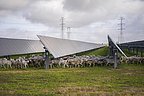
The most tangible piece of this strategy is a massive Power Purchase Agreement (PPA) with Enel North America, finalized in late 2025. This contract commits Mars to offtake the entire output of three new solar projects in Texas, which will generate roughly 1.8 TWh of renewable electricity annually. This is what's known in the energy world as “additionality.” Rather than simply buying credits for existing wind or solar farms, this PPA directly funds the construction of new clean energy capacity, adding it to the Texas grid. It’s a move that provides Mars with long-term energy security while tangibly shifting the composition of the power grid itself.
"Reaching a milestone of 100% renewable electricity in our direct U.S. operations... it's something to celebrate and be proud of," said Mars CEO Poul Weihrauch in a statement. He frames the move not just in environmental terms, but as a core component of business resilience. In a world of volatile energy markets and increasingly severe climate events, securing clean, accessible energy is a strategic imperative. This PPA, alongside the continued use of Renewable Energy Certificates (RECs) from other wind and solar projects, allows Mars to match its direct electricity consumption (known as Scope 2 emissions) with clean power, contributing to a striking 42.6% reduction in its direct Scope 1 and 2 emissions since 2015.
Beyond the Factory Gates: The Scope 3 Challenge
While powering its own operations with renewables is a commendable and visible achievement, it addresses only a fraction of the company's total carbon footprint. The real behemoth, as with any major consumer-packaged goods company, lies in its value chain—the sprawling network of farms, suppliers, logistics partners, and consumers that constitute Scope 3 emissions. For Mars, these indirect emissions account for over 90% of its total impact.
Here, the progress is slower, but the strategy is becoming clearer. The company reported a 6.4% reduction in its full value chain emissions in 2025 alone, bringing its cumulative absolute reduction to 16.9% since 2015. What makes this figure particularly noteworthy is that it was achieved while the business grew by nearly 75%. This suggests a genuine, if nascent, decoupling of business growth from carbon emissions—the holy grail of corporate sustainability.
To accelerate this, Mars is attempting to export its renewable energy strategy to its partners. The Renewables Acceleration (RAcc) program, launched in 2025, is designed to aggregate the energy demand of its thousands of suppliers and offer it to renewable energy developers. The goal is to create large-scale PPAs that its smaller suppliers could never access on their own, effectively greening the grid that powers its entire value chain. It’s an innovative model that, if successful, could reduce emissions by an estimated 3 million tons by 2030, tackling a significant chunk of its Scope 3 footprint.
From Peanuts to Pet Food: Rewiring the Global Pantry
Beyond energy, Mars is confronting climate risk at its most fundamental level: its agricultural supply chain. The company’s portfolio of brands is deeply dependent on a stable global food system, one that is increasingly threatened by drought, disease, and unpredictable weather. In response, Mars is investing heavily in what it calls “climate-smart agriculture.”
These aren't just pilot programs. The company is deploying significant capital into initiatives like “Protect the Peanut,” a $5.2 million, five-year investment to develop drought- and disease-resistant peanut varieties. In its rice supply chain, a key ingredient for brands like Ben's Original™, Mars is investing $20 million over a decade to scale practices that reduce water use and methane emissions, a potent greenhouse gas. This isn't philanthropy; it's a calculated investment in securing future supply.
Collaboration is a key theme. In Poland, Mars has partnered with competitors and suppliers like PepsiCo and ADM to launch a regenerative agriculture program for wheat farmers. This initiative, supporting 24 farmers across more than 5,450 hectares, aims to improve soil health and biodiversity, making the farms more resilient to climate shocks while providing sustainable wheat for pet food brands like WHISKAS® and PEDIGREE®. As Mars Chief Sustainability Officer Alastair Child noted, "Delivering impact at scale requires collaboration across industries, suppliers, governments, NGOs and local communities."
Putting Capital to Climate Work
Underpinning these initiatives is a clear signal that sustainability has been integrated into the company's core financial strategy. Mars has earmarked an estimated $2 billion for U.S.-based manufacturing and €1 billion for its European operations by the end of 2026, with a significant portion dedicated to decarbonization and resilience. This isn't pocket change; it's a substantial capital allocation that signals a long-term commitment.
Furthermore, the launch of the Mars Sustainability Investment Fund, with a capital commitment of up to $250 million, creates a dedicated vehicle to incubate and scale new technologies and business models that support its climate goals. This fund allows the company to move beyond incremental improvements and place bets on breakthrough innovations that could reshape its value chain.
The story emerging from Mars's latest report is one of a company moving from pledges to performance. The 100% renewable electricity milestone in the U.S. is a powerful headline, but the more profound story lies in the strategic rewiring of its energy procurement, agricultural sourcing, and capital investment. The company is leveraging its immense scale not just to reduce its own footprint, but to catalyze change among its network of partners, effectively creating a sustainability ecosystem. The journey is far from over, and the challenge of decarbonizing a global supply chain remains immense, but Mars is building a compelling case that for a modern corporation, sustainability and resilience are two sides of the same coin.