
- $2 billion in assets under advisement (AUA) for Market Guard
- $7.7 trillion in model portfolio assets (Q1 2025), projected to exceed $10 trillion by 2028
Experts agree that the financial advisory industry is undergoing a fundamental shift toward systematic, rules-based investment strategies, driven by demand for efficiency, transparency, and emotional discipline in portfolio management.
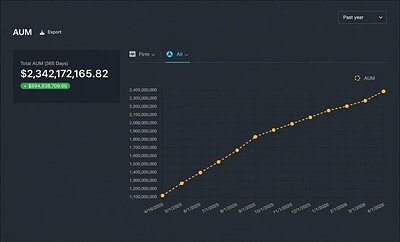
Market Guard's $2B Milestone Signals a Systematic Shift in Wealth
FRANKLIN, Tenn. – April 22, 2026 – Systematic investment model provider Market Guard announced today it has surpassed $2 billion in assets under advisement (AUA), a milestone that signifies more than just corporate growth. It serves as a clear barometer for a profound transformation sweeping the financial advisory industry: the accelerating shift from traditional, discretionary portfolio management to disciplined, rules-based investment strategies.
The achievement reflects a growing appetite among financial advisors for data-driven tools that promise consistency, scalability, and the removal of emotional bias from investment decisions. As stagnant allocation models face increasing scrutiny, advisors are actively seeking dynamic processes to navigate volatile markets.
"Advisors today are looking for consistency, discipline, and a repeatable process," said Brad Jenkins, Founder of Market Guard, in a statement accompanying the announcement. "We believe there's always opportunity in the market—the question is how you find it. Our approach is designed to do just that."
The Rise of the Rule-Based Advisor
The trend that has propelled Market Guard past the $2 billion mark is not an isolated phenomenon. It is part of a much larger, industry-wide evolution. The use of model portfolios by financial advisors has exploded in recent years, with assets in these strategies reaching an estimated $7.7 trillion in the first quarter of 2025. Industry analysts project this figure could surpass $10 trillion by 2028, underscoring a fundamental change in how wealth is managed.
This migration is driven by a quest for efficiency and a redefinition of the advisor's role. By leveraging systematic models and third-party strategists, advisors can significantly reduce the time spent on portfolio construction and rebalancing—tasks that can take weeks to perform manually across a large client base. This newfound time allows them to concentrate on higher-value activities such as holistic financial planning, behavioral coaching, and strengthening client relationships.
Furthermore, the adoption of data-driven methodologies directly addresses one of the most persistent challenges in investing: human emotion. Rules-based strategies are inherently designed to be unemotional, executing buy, sell, or hold decisions based on predefined, quantitative criteria rather than market noise or gut feelings. This disciplined approach provides a repeatable and transparent process, which is increasingly demanded by a new generation of clients who expect technological sophistication and clarity from their financial partners.
Inside the Machine: A Look at the MGX100
At the heart of Market Guard's offering is its flagship product, the Market Guard Top 100 Index (MGX100). This rules-based index is not merely a passive benchmark but an active tool designed to identify what the firm deems high-quality opportunities within the U.S. equity market. Its construction provides a window into the mechanics of modern systematic investing.
The MGX100 is built upon a proprietary "quantamental" model, a hybrid approach that blends quantitative analysis with forward-looking fundamental insights. The system sifts through over 100 different fundamental and technical indicators, ultimately distilling them into the most predictive factors. Each stock is then rigorously scored across four critical pillars:
- Momentum: This factor analyzes the speed and strength of a stock's price movements over time, aiming to identify assets that are demonstrating sustained upward trajectory.
- Valuation: The model assesses whether a stock's price is fair, overvalued, or undervalued relative to its intrinsic worth. This helps balance growth potential with disciplined pricing.
- Quality: This pillar examines a company's financial health, operational efficiency, and the sustainability of its business model to ensure a foundation of consistent performance.
- Credit: The model evaluates a company's creditworthiness, providing another layer of risk assessment to the selection process.
Based on these scores, the index identifies its constituents. However, Market Guard's platform goes a step further by translating this index into actionable advice. The firm provides advisors with ongoing portfolio signals—specific buy, sell, and rebalance recommendations—that allow for the real-time implementation of the strategy across client accounts. This unified framework, which connects index construction directly with portfolio execution, is a key differentiator in a crowded market.
Navigating a New Competitive Landscape
Market Guard is not operating in a vacuum. The wealthtech space is populated by a wide range of players, from financial giants like BlackRock and Dimensional, which offer extensive suites of model portfolios, to other specialized fintech firms providing similar signal-based services. The widespread industry shift has attracted significant investment and innovation, creating a competitive environment.
Where firms like Market Guard aim to stand out is in the specificity and transparency of their methodology. While large asset managers provide diversified, turnkey solutions, specialized providers often focus on delivering a distinct, rules-based philosophy that an advisor can adopt as a core part of their practice's value proposition. The appeal lies in offering an institutional-grade, quantitative process that was once the exclusive domain of large hedge funds and asset managers.
By integrating its proprietary index with real-time trading signals, the company provides a complete ecosystem for the advisor. This allows advisory firms to not only outsource the heavy lifting of security selection and market timing but also to clearly articulate the disciplined logic behind their investment strategy to clients. As the industry continues its march toward greater automation and hyper-personalization, the ability for advisors to leverage such sophisticated, scalable systems will become increasingly critical for maintaining a competitive edge and meeting evolving client expectations.