
- 50% reduction in resupply timelines demonstrated during a recent Army exercise using OverDrive technology.
- Several hours of autonomous operation achieved by the ROGUE Fires prototype in rugged terrain without human intervention.
- Modular hardware kit (SPARK) enables rapid, cost-effective transformation of existing vehicles into autonomous assets.
Experts agree that this advancement marks a critical milestone in modernizing military capabilities for contested environments, enhancing force resilience and lethality while reducing human risk.
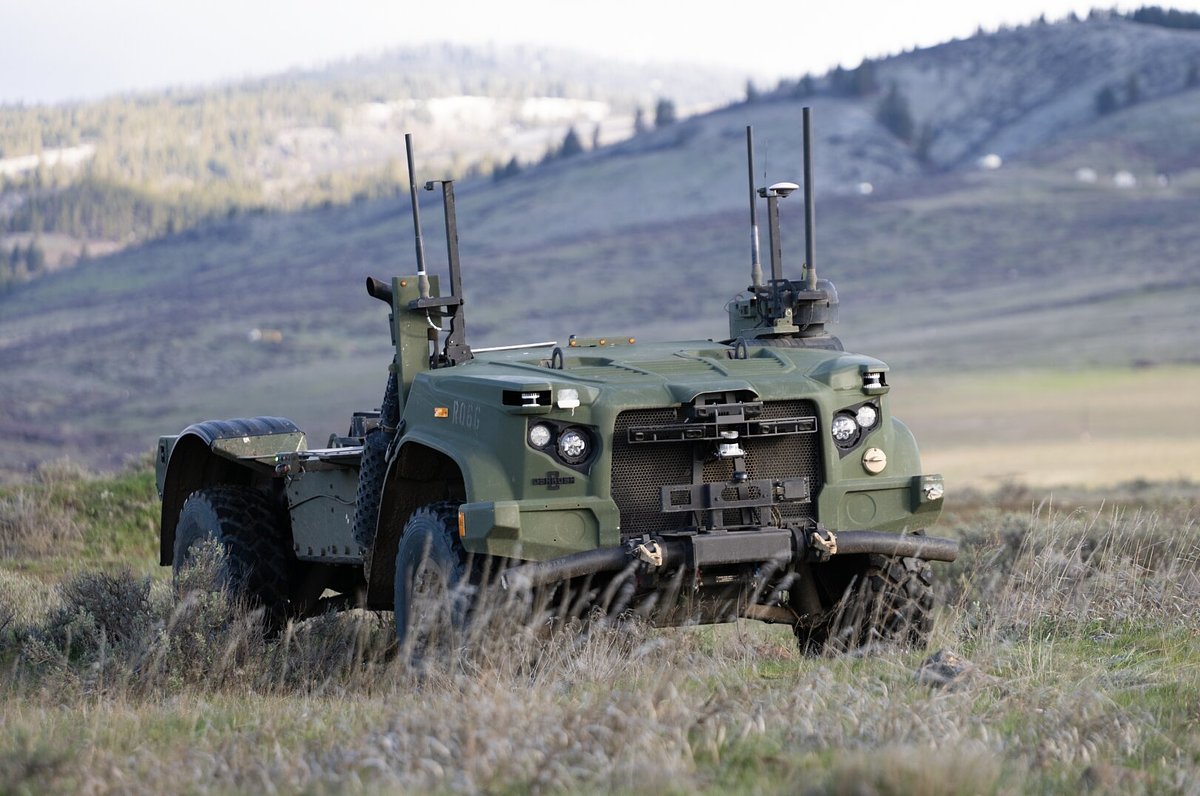
Marines' Robotic Rocket Launcher Masters GPS-Denied Warfare
SEATTLE, WA – April 23, 2026 – The U.S. Marine Corps has taken a significant step toward realizing its vision for future warfare, successfully demonstrating a robotic rocket launcher that can navigate and operate autonomously, even when GPS signals and communication links are cut. Seattle-based tech firm Overland AI announced it has integrated its advanced autonomy system, OverDrive, onto the Marine Corps’ ROGUE Fires platform, a critical component of the service's modernization efforts.
During a recent demonstration, a ROGUE Fires prototype equipped with the technology operated for several hours over mixed, rugged terrain without any human intervention. The successful test marks a major milestone in developing disaggregated, lethal assets that can function deep within contested environments, reducing risk to Marines and increasing the potency of expeditionary forces.
The New Face of Expeditionary Warfare
The ROGUE (Remotely Operated Ground Unit for Expeditionary) Fires program is a cornerstone of the Marine Corps' ambitious Force Design 2030 initiative, which aims to reshape the service for high-stakes conflict in the Pacific and beyond. The system, built on the versatile Joint Light Tactical Vehicle (JLTV) chassis, is designed to launch anti-ship missiles, such as the Naval Strike Missile, from remote and rapidly changing land positions.
This capability is central to the Corps' strategy for Littoral Operations in a Contested Environment (LOCE) and Expeditionary Advanced Base Operations (EABO). The concept involves dispersing small, mobile, and hard-to-target units across islands and coastlines to challenge enemy naval dominance. By enabling ROGUE Fires to perform "shoot and scoot" tactics autonomously, the military can create a more resilient and lethal coastal defense network. An unmanned launcher can fire its payload and immediately relocate to a new hiding position to avoid counter-fire, a mission far too dangerous for a human crew.
Overland AI's technology directly addresses the primary challenge of this new doctrine: operating effectively when the enemy is actively jamming GPS and communications. “Comms-denied and contested environments are not an edge case for the Marine Corps. OverDrive was built for those conditions,” said Byron Boots, co-founder and chief executive officer of Overland AI, in a statement.
The Technology Behind the Autonomy
At the heart of this new capability is Overland AI’s proprietary software and hardware. The OverDrive autonomy stack is purpose-built for the chaos of the battlefield, specifically designed to navigate unmapped, off-road terrain using a suite of onboard passive sensors like LiDAR and cameras. Unlike commercial self-driving systems that rely on detailed maps and constant connectivity, OverDrive analyzes the terrain in real-time to find a safe path, allowing it to function in complete electronic silence.
The system is installed on the vehicle using SPARK, a modular hardware kit that includes the necessary sensors and high-performance computers. This "upfit kit" approach allows the military to transform existing vehicle fleets into autonomous assets rapidly and cost-effectively, bypassing the lengthy and expensive process of developing entirely new robotic platforms from scratch.
The recent demonstration not only proved the system's ability to handle complex terrain but also showcased its proficiency in manned-unmanned teaming (MUM-T), where the autonomous ROGUE Fires platform operated in concert with other manned vehicles. This integration is crucial for creating cohesive fighting units that blend the strengths of both human soldiers and intelligent machines.
“Our work with the ROGUE Fires platform reinforces that Overland's autonomy is capable of expeditionary operations inside the weapons engagement zone,” noted Tim Francis, a director of business development at Overland AI. “This technology is built to handle the contested radio frequency and climate demands of littoral missions, and we are proud to support the Marine Corps.”
A Proven Track Record in the Field
This collaboration with the Marine Corps is not Overland AI's first foray into supporting frontline units. The company's technology was recently validated during a demanding, month-long deployment with the 3rd Brigade Combat Team of the U.S. Army's 82nd Airborne Division at the Joint Readiness Training Center (JRTC).
During the large-scale combat exercise, autonomous vehicles powered by OverDrive executed critical missions under realistic training pressure. The vehicles successfully conducted logistics runs, cutting resupply timelines by as much as 50% while traversing kilometers of contested territory. In one instance, a robotic vehicle was organically adapted by soldiers to act as a decoy, drawing enemy attention while a critical resupply mission was completed elsewhere. This deployment demonstrated that the technology is not just functional but also adaptable and readily embraced by soldiers who see its direct value in solving high-risk problems.
The experience with the 82nd Airborne provided crucial validation for the system’s performance across a range of missions, from reconnaissance to logistics, proving its readiness to transition from controlled tests to the unpredictable conditions of operational deployment.
The Pentagon's Broader Push for Autonomy
The integration of systems like OverDrive into platforms such as ROGUE Fires reflects a much larger strategic shift within the U.S. Department of Defense. The Pentagon is aggressively pursuing an "Autonomy First" framework, prioritizing the rapid integration of intelligent systems to enhance combat effectiveness, sustain forces, and, most importantly, protect service members.
This strategy emphasizes the use of open-architecture standards and commercially-developed software to avoid being locked into proprietary systems, fostering a competitive ecosystem of innovation from specialized companies like Overland AI, Forterra, and Applied Intuition. While large defense contractors like Oshkosh Defense build the vehicle platforms, it is often agile tech firms that provide the sophisticated AI brains.
To guide this rapid technological adoption, the DoD has established clear ethical principles for the use of AI, ensuring that systems are responsible, equitable, traceable, reliable, and governable. The goal is to maintain meaningful human control and accountability even as machines take on more complex tasks on the battlefield. The successful test of the autonomous ROGUE Fires platform is a clear indicator that this future is arriving quickly, with intelligent ground vehicles poised to become an indispensable part of the U.S. military's arsenal.