
- $400,000 federal investment to expand St. John Ambulance's Winnipeg training facility
- 3,000 square feet of additional space to increase training capacity
- 30,000+ people trained annually by St. John Ambulance
Experts agree that this investment is a critical step in enhancing Manitoba's emergency preparedness and community resilience, addressing gaps exposed by recent wildfires and floods.
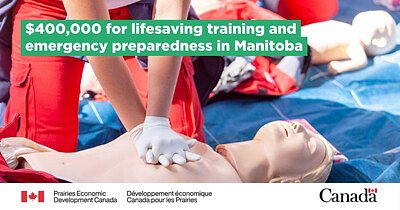
Manitoba's New Shield: A $400K Bet on Community Resilience
WINNIPEG, MB – December 01, 2025
On the surface, a $400,000 federal investment to expand a training facility in Winnipeg might seem like a standard infrastructure announcement. But the funds directed to St. John Ambulance (SJA) Manitoba from Prairies Economic Development Canada (PrairiesCan) represent something far more profound: a strategic reinforcement of the province's first line of defense against crises that extend well beyond the hospital walls. This initiative isn't just about adding a classroom; it's about building a more resilient Manitoba, empowering everyday citizens to become lifesavers, and ensuring the province's economic and social fabric can better withstand the shocks of an increasingly unpredictable world.
The investment, delivered through the Community Economic Development and Diversification (CEDD) program, will enable SJA to add approximately 3,000 square feet to its Winnipeg headquarters. This expansion is a direct response to a growing, urgent demand for skills that are becoming as fundamental as literacy in the 21st century.
A Province on High Alert
To understand the significance of this funding, one must look at the recent challenges that have tested Manitoba's limits. The devastating wildfire season of 2025, which claimed lives, destroyed over a hundred homes, and forced the evacuation of entire communities, was a stark reminder of the province's vulnerability. That year, simultaneous fires scorched over seven percent of Manitoba's forests, exposing systemic gaps in preparedness, from funding limitations to insufficient staff capacity.
Beyond the flames, the province has also contended with “unprecedented flooding,” leading to a critical need for enhanced flood mitigation and community-level response strategies. While large-scale infrastructure projects remain under review, the immediate need for a populace trained to act in an emergency has never been clearer. These extreme weather events, coupled with the logistical demands of hosting major gatherings like the 2025 Grey Cup, have placed immense pressure on existing emergency services.
This is the environment in which St. John Ambulance operates. The organization found its Winnipeg facility, even after a 2021 expansion, operating at maximum capacity with just four classrooms. The result was growing waitlists for essential courses, leaving businesses struggling to meet workplace safety requirements and communities short on trained volunteers. The federal investment directly tackles this bottleneck.
Scaling the First Line of Defense
The expansion project is meticulously planned to maximize impact. The addition of a fifth classroom, a new boardroom, multipurpose training spaces, and enhanced storage will dramatically increase SJA's capacity. For an organization that anticipated training over 30,000 people in 2023 and saw its training revenue climb to over $2.1 million in 2022, this new space is not a luxury—it is an operational necessity.
"Our government recognizes the need to invest in organizations like St. John Ambulance," noted the Honourable Eleanor Olszewski, Minister of Emergency Management and Community Resilience. "With this investment, they will be able to increase their capacity to deliver lifesaving training and emergency response programs while strengthening emergency preparedness... and equipping more Manitobans with skills that protect lives."
The tangible outcome will be a larger and more readily available pool of trained individuals. This includes more first aiders for Manitoba workplaces, reducing the risk of injuries and ensuring compliance with evolving health and safety regulations. Crucially, it also means preparing a larger corps of volunteers ready to be deployed during emergencies, supporting everything from community events to wildfire and flood response efforts.
The Economic Case for Preparedness
Viewing this investment solely through a public health lens misses half the picture. The funding comes from PrairiesCan's CEDD program, an initiative designed to foster inclusive economic growth and diversification. This positions emergency preparedness not as a cost, but as a vital component of economic strategy.
When a crisis strikes, the economic fallout can be immense. Businesses shut down, supply chains are disrupted, and productivity grinds to a halt. A workforce trained in first aid and a community with a robust volunteer response system can significantly mitigate these disruptions. Quick, effective action minimizes injuries, protects assets, and accelerates recovery, thereby strengthening business continuity and regional economic stability.
"This investment strengthens Manitoba's ability to respond when it matters most," said Glen Simard, Manitoba's Minister of Municipal and Northern Relations. By building a more reliable system, he noted, the partnership keeps Manitobans safe while ensuring communities have the resources to act quickly.
This approach aligns with the broader mandate of the CEDD program, which has funded diverse projects like the creation of childcare co-operatives to boost workforce participation. In both cases, the investment in community infrastructure—be it childcare or safety training—yields a direct economic return by removing barriers and building a more resilient, productive society.
Empowering a Legacy of Service
This federal funding is not creating a new capability from scratch; it is amplifying the impact of a trusted institution with over a century of service in the province. St. John Ambulance's impact extends far beyond basic CPR. The organization is a cornerstone of community health, offering a comprehensive portfolio that addresses modern challenges.
Its programs include Mental Health First Aid, which equips citizens to support those experiencing a mental health crisis, and Opioid Poisoning Response Training (OPRT), which had already trained nearly 6,000 Manitobans and equipped them with life-saving Naloxone kits by 2022. SJA’s volunteer-led Therapy Dog program brings comfort to thousands in hospitals and care homes, while its Medical First Responder groups provide essential coverage at countless community gatherings.
By investing in SJA, PrairiesCan is leveraging this deep-rooted community trust and diverse expertise. The expansion will allow these vital programs to reach more people, from urban centres to underserved communities. It empowers more ordinary Manitobans to become the 'everyday heroes' who form the backbone of a truly resilient community.
As Mayor Scott Gillingham of Winnipeg stated, "Building capacity in organizations like St. John Ambulance strengthens our whole community." This project is a testament to that belief—a recognition that the health of a province is measured not only by the sophistication of its hospitals but by the skills and willingness of its citizens to care for one another in times of need. This investment ensures that when the next crisis arrives, more Manitobans will be ready to answer the call.