
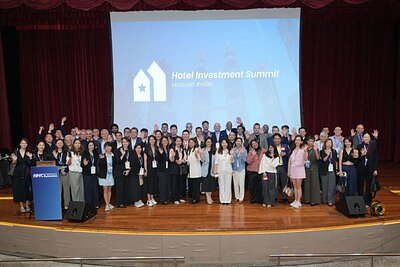
- 351 delegates from 228 companies attended the 6th Hospitality Malaysia Conference (#HMC2026).
- Over 40% of attendees were asset owners, signaling high capital engagement.
- Shift to Total Revenue Per Available Room (TRevPAR) as a key profitability metric.
Experts would likely conclude that Malaysia's hospitality sector is undergoing a strategic transformation, prioritizing resilience, purpose-driven design, and data-informed revenue strategies to navigate economic volatility.
Malaysia's Hospitality Crossroads: Capital, Design, and Data Collide
KUALA LUMPUR, Malaysia – June 26, 2026 – As the curtains closed on the 6th Hospitality Malaysia Conference (#HMC2026), the prevailing sentiment was not one of conclusion, but of commencement. Organized by Hospitality Asia, the gathering of 351 delegates from 228 companies was less a post-mortem on the market and more a strategic war room for its future. With Malaysia's ambitious Visit Malaysia Year 2026 (VMY 2026) on the horizon, the discussions were charged with a palpable sense of urgency and opportunity. This was not business as usual. The high concentration of asset owners, representing over 40% of attendees, signaled a fundamental truth: the people with capital at risk are actively rewriting the rules of engagement for the nation's hospitality sector.
Beneath the surface of networking and panel discussions, a clear narrative emerged. The industry is navigating a complex convergence of inflationary pressures, shifting investor appetites, and a digital-first consumer landscape. The path forward, as mapped out in the conference's triple-summit agenda, is not a single road but a multi-lane highway paved with smarter capital, purpose-driven design, and data-fueled revenue strategies. It’s a blueprint for building resilience in an era defined by volatility.
The New Investment Blueprint: Resilience Over Speculation
The Hotel Investment Summit laid bare the tightening financial landscape. The era of speculative, high-leverage bets is giving way to a more disciplined pursuit of durable value. Discussions moved past macro-economic forecasts into the granular details of capital allocation in a high-stakes environment. With global uncertainty as a backdrop, the focus has pivoted to identifying assets that can deliver not just returns, but resilient returns.
A key theme was the modernization of Malaysia's substantial portfolio of economy and mid-scale properties. Rather than chasing trophy assets, savvy investors are exploring strategic reinvestment and conversions to unlock latent value. This pragmatic approach is complemented by a growing sophistication in funding structures. The rise of branded residences and the exploration of alternative credit sources signal a move away from traditional financing, offering owners greater flexibility to weather economic cycles. As one panelist noted, “Growth now depends on smarter asset use, hybrid models, and returns with resilience.”
Furthermore, ESG principles have officially graduated from corporate talking points to critical drivers of competitive advantage. The summit highlighted how hotels integrating sustainability into their core operations are not only attracting a new class of conscientious traveler but are also proving more attractive to institutional capital. This alignment of purpose and profit is a core tenet of building permanent value, demonstrating that long-term financial health is intrinsically linked to environmental and social stewardship.
Beyond Aesthetics: Designing for Permanence and Profit
Parallel to the financial recalibration is a revolution in physical space. The Hotel Design Summit challenged the notion of design as a mere aesthetic overlay, repositioning it as a fundamental driver of operational value and guest loyalty. The dialogue centered on moving beyond fleeting trends to create spaces with what speakers called “deep emotional and local identity.”
"Participating in HMC for the first time has provided an invaluable opportunity to gain fresh insights from the panels and view the Malaysian hospitality landscape through a broader strategic lens," stated Ben Gregoire, Founder & Principal of LEVELS. He pointed to the incredible benefit of connecting directly with stakeholders, “particularly given the highly unique and diverse tourism assets that Malaysia has to offer.” This sentiment captures the essence of the summit: leveraging Malaysia's distinct cultural and natural heritage to create immersive architecture that tells a story. The goal is to build assets that are not just beautiful, but meaningful and deeply connected to their location.
This narrative-driven approach is also about maximizing return on investment. Panels explored how purposeful design can enhance operational efficiency, create new revenue streams, and command premium pricing. Whether in urban conversions or expansive resorts, the focus is on creating a seamless integration of form, function, and finance. The result is a new generation of hotels that are not just places to stay, but destinations in themselves, engineered for long-term relevance and profitability.
The Commercial Engine Room: Data, Dynamics, and Total Revenue
If investment provides the foundation and design creates the identity, then the commercial strategy is the engine that drives performance. The Hotel Revenue Summit tackled the complex “commercial battleground of modern hospitality,” where success is increasingly defined by data agility and a holistic view of profitability.
The conversation has decisively shifted from a singular focus on room rates to a more comprehensive metric: Total Revenue Per Available Room (TRevPAR). This reflects a broader understanding that a hotel’s profitability is tied to the entire guest journey, from F&B and wellness services to events and retail. To optimize this, operators are leaning heavily on dynamic pricing algorithms and sophisticated data analytics to understand guest behavior and anticipate market shifts.
"This summit presents a remarkable opportunity to gain deeper strategic insights from peers and partners right from within the heart of the sector," shared Anshul Kumar, Director of Sales, India and Southeast Asia at Aven Hospitality. He described it as a moment to "step back, evaluate your overarching strategy, and analyze the way you operate." This strategic pause is critical as the industry moves from a volume-based mindset to one centered on value. The goal is no longer just to fill rooms, but to attract the right guest at the right price and maximize their lifetime value.
Where Strategy Meets Action: Forging a Resilient Ecosystem
Perhaps the most significant outcome of #HMC2026 was the tangible translation of strategy into action. The event was deliberately structured as a live marketplace, a place to forge the partnerships essential for navigating the challenges ahead. As Andrew Khoo, Chairman and Chief Executive Officer of The MUI Group, noted, "The primary challenge within Malaysian hospitality today is establishing meaningful connections with the right partners. We possess industry passion; by bringing the right stakeholders together, we can seamlessly deliver properties that align with the highest guest expectations."
This philosophy was put into practice through dedicated 'Match & Meet' sessions and a bustling Exhibition Showcase. These were not casual coffee breaks; they were curated platforms for business. Technology vendors, payment system providers, and guest-experience innovators engaged directly with hotel owners and operators. The feedback was immediate and positive. "We have already concluded several productive meetings with key hotel operators and owners," said Ezra Wang, Director, Travel & Hospitality APAC at Sertifi by Flywire. He expressed high optimism that these initial dialogues "will soon translate into concrete business decisions and long-term partnerships."
This is the mechanic of resilience in action. By fostering a collaborative ecosystem where capital, operations, design, and technology converge, Hospitality Asia has created a platform that does more than just disseminate information—it builds the connective tissue required for an entire industry to adapt and thrive. The dialogues initiated in Kuala Lumpur are poised to become the deals and developments that will define Malaysia’s next chapter in hospitality.