
- 125-year history: Citizens Bank of Edmond has a 125-year history of serving Oklahoma County.
- $250,000 FDIC limit: The bank demonstrated protection for depositors beyond the standard FDIC insurance limit during the 2023 banking crisis.
- 2023 banking crisis: The bank's proactive communication strategy prevented a potential deposit run during the 2023 turmoil.
Experts in community banking advocate for data-driven, transparent deposit insurance reforms that empower smaller banks to protect depositors without introducing systemic risks, emphasizing the stability they bring to local economies.
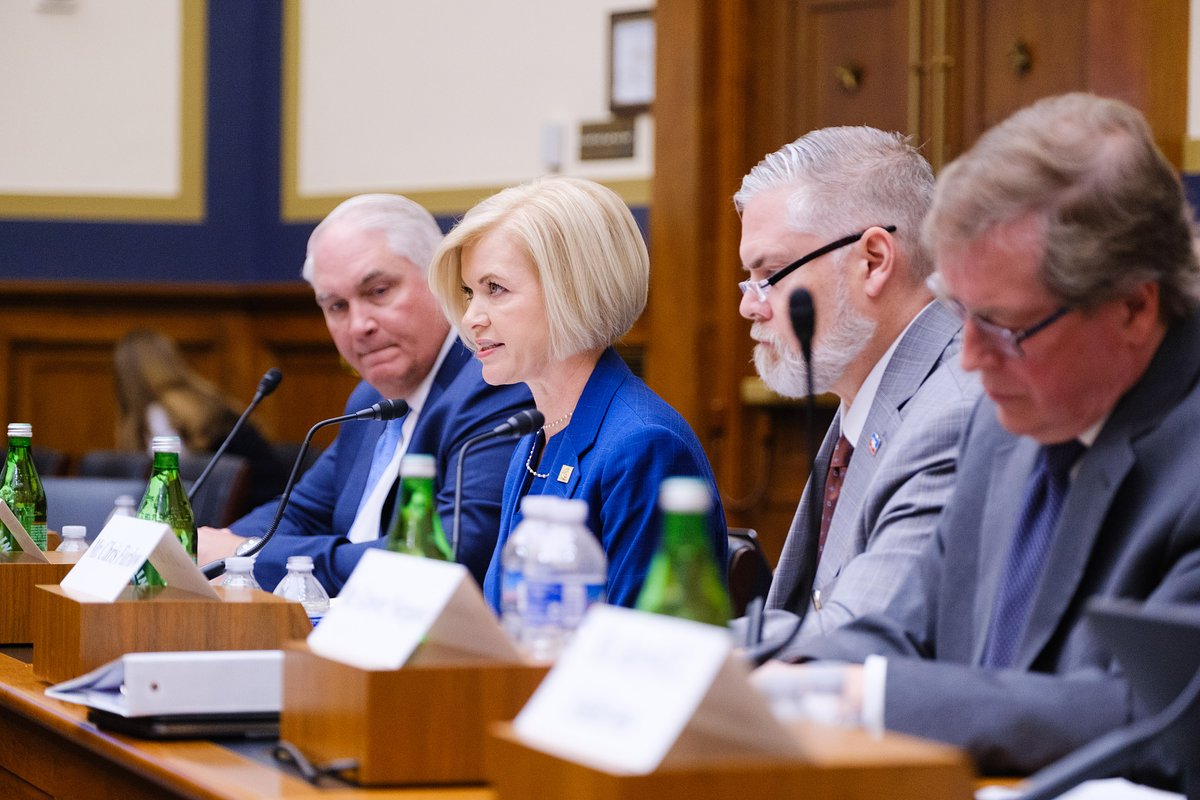
Main Street's Voice on Capitol Hill: A Banker's Deposit Reform Plan
WASHINGTON, D.C. – December 17, 2025 – In a hearing room accustomed to the voices of Wall Street titans, a distinct perspective from America's Main Street took center stage today. Jill Castilla, the CEO of Citizens Bank of Edmond, Oklahoma, appeared before the U.S. House Financial Services Committee, delivering a compelling message on the future of deposit insurance reform shaped by her institution's 125-year history and its proactive navigation of recent financial turbulence.
Castilla, a nationally recognized leader in community banking, urged lawmakers to pursue reforms that are data-driven, transparent, and focused on reinforcing public confidence rather than simply expanding government guarantees that could introduce new, unforeseen risks. Her testimony provided a crucial counter-narrative in a debate often dominated by the fallout from large institutional failures, emphasizing that the stability of local economies hinges on the health of their community banks.
A Call for Tailored Regulation
Drawing from her experience leading a women-owned institution that has served Oklahoma County since 1901, Castilla argued that any effective reform must avoid placing undue burdens on the thousands of smaller banks that act as economic lifelines for their communities. She stressed the fundamental differences between Main Street banks, which thrive on personal relationships, and the larger, more complex institutions at the center of the 2023 banking turmoil.
"A stronger banking system will come from empowering the banks that know their customers by name and stand beside them when the headlines turn," Castilla stated in her written testimony. "That is what we did in 2023, and that is what thousands of community bankers do every day across America."
Her credibility on the issue is well-established. Repeatedly named one of American Banker's "Most Powerful Women in Banking," Castilla also serves on the Federal Reserve's Federal Advisory Council, providing a direct channel of insight from the heartland to the nation's central bank. Her leadership has transformed Citizens Bank of Edmond from a struggling local entity into a nationally recognized model of innovation and community engagement, famously earning praise from entrepreneur Mark Cuban as being "no talk, all action" for her rapid response during the COVID-19 pandemic.
A Blueprint from the 2023 Crisis
Castilla's testimony was not purely theoretical. She provided a concrete case study from the height of the banking crisis in March 2023, when the collapse of Silicon Valley Bank sent shockwaves of fear through depositors across the country. As news of the impending failure spread, her team at Citizens Bank of Edmond implemented a strategy rooted in proactive communication and relationship banking.
"During the 2023 turmoil... we called our customers before they called us," Castilla told the committee. This simple but powerful action stands in stark contrast to the reactive posture of many larger institutions. "Within hours," she explained, "we reached every depositor with uninsured balances and explained precisely how existing tools... could fully protect their funds."
This approach prevented a potential deposit run and reinforced trust at a moment of maximum uncertainty. By personally walking clients through their options, the bank demonstrated that mechanisms to secure funds well beyond the standard $250,000 FDIC limit were not only available but readily accessible. This hands-on crisis management serves as a powerful argument for her core thesis: that empowered, well-run community banks are a source of stability, not systemic risk.
The Mechanics of Depositor Confidence
The tools Castilla referenced are central to the debate on how to protect large-balance depositors, particularly the small and medium-sized businesses that use transaction accounts for payroll and operations. Her bank's strategy relied on a combination of established but often poorly understood financial instruments:
Reciprocal Deposits: This mechanism allows a bank to take a customer's large deposit and distribute it across a network of other insured banks in increments below the $250,000 FDIC limit. The entire sum becomes fully insured, while the customer maintains a single, seamless relationship with their primary bank. Legislation currently under consideration, such as the Keeping Deposits Local Act, seeks to further enhance the ability of banks to use this tool without triggering stricter regulations.
Federal Home Loan Bank (FHLB) Letters of Credit: Often used to secure public funds from municipalities, these letters of credit act as a guarantee from the highly-rated FHLB system. This allows a bank to secure deposits exceeding FDIC limits without having to tie up its own high-quality securities, freeing up capital for community lending.
Collateralization: This involves a direct agreement where a bank pledges specific assets, like government securities, to a depositor to secure funds above the insurance cap. While more direct, it highlights a bank's ability to back its deposits with tangible assets.
By leveraging these tools, Citizens Bank of Edmond demonstrated that robust depositor protection is possible within the existing framework, provided banks have the expertise and the commitment to proactive customer service.
The Path Forward for Reform
Castilla's testimony aligns with a growing consensus among community banking advocates, who are championing legislative efforts to bolster the system without punishing smaller players. The Independent Community Bankers of America (ICBA) has thrown its support behind proposals like the Main Street Depositor Protection Act, which would raise insurance coverage significantly for non-interest-bearing transaction accounts—the lifeblood of small businesses—while exempting community banks from the associated assessment costs.
The core of the debate, as highlighted by House Financial Services Committee Chairman French Hill, involves balancing systemic safety with the risk of unintended consequences. Lawmakers are grappling with how to prevent the social-media-fueled bank runs seen in 2023 while ensuring that the cost of any new insurance regime doesn't consolidate the banking sector further by squeezing out local institutions.
As Citizens Bank of Edmond prepares to celebrate its 125th anniversary, its CEO has made it clear she will remain a key voice in this national conversation. Castilla plans to continue working with policymakers and industry partners, advocating for a system that recognizes the unique and vital role of community banks in fostering financial stability from the ground up.