
- $32M Contract: ELTA North America awarded a $32 million deal for next-gen armored vehicle defense components.
- $3.6B Market: Global Active Protection Systems (APS) market valued at $3.6 billion in 2023, projected to nearly double by 2030.
- Multi-Mission Capability: Advanced systems like M3S2 integrate radar, electro-optical sensing, and counter-drone capabilities into a single unit.
Experts agree that the investment in ELTA North America's next-generation APS technology is critical for enhancing armored vehicle survivability, addressing evolving battlefield threats, and strengthening domestic defense manufacturing.
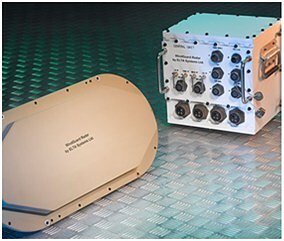
ELTA North America Lands $32M Deal for Next-Gen Armored Vehicle Defense
ANNAPOLIS JUNCTION, MD – December 17, 2025 – In a significant move to enhance the protection of U.S. military personnel, Maryland-based defense firm ELTA North America has been awarded a series of contracts totaling $32 million. The award is designated for the co-production of next-generation processors and optical sensors, the critical components that form the core of advanced Active Protection Systems (APS) for armored vehicles.
This contract signals a major investment in domestic manufacturing of cutting-edge survivability technologies, designed to counter the increasingly lethal threats faced by combat vehicles on the modern battlefield. The components, specifically Next Generation Central Units and Othello Optical Sensors, are integral parts of battle-proven systems that provide an invisible shield for armored platforms and their crews.
"The need for advanced vehicle and crew survivability solutions has never been greater," said Joe Adams, President and CEO of ELTA North America, in a statement accompanying the announcement. "We're proud to contribute to this mission by delivering precise, dependable components that strengthen the APS architecture."
The Invisible Shield: Demystifying Active Protection
Active Protection Systems are a technological evolution beyond traditional passive armor. Instead of simply absorbing an impact, an APS is designed to detect and neutralize an incoming threat, such as an anti-tank guided missile (ATGM) or a rocket-propelled grenade (RPG), before it can strike the vehicle. These systems are broadly divided into two categories: soft-kill systems that jam or decoy a threat's guidance system, and hard-kill systems that physically intercept and destroy the incoming projectile.
The effectiveness of any APS hinges on its ability to see, think, and react in milliseconds. This is where the components supplied by ELTA North America become paramount. The optical sensors act as the system's eyes, while the central processing units serve as its brain. By integrating data from advanced radar and sophisticated optical sensors like the Othello, the central unit can detect a threat, calculate its trajectory and velocity, and deploy the appropriate countermeasure in the blink of an eye.
This contract supports the production of components for systems that represent a leap in defensive capabilities. A prime example of this next-generation approach is the company's Multi-Mission/Multi-Sensor Suite (M3S2), a system the U.S. Department of Defense is currently evaluating. The M3S2 integrates radar and electro-optical sensing into a single, compact package, offering simultaneous active protection, counter-drone capabilities, and ground surveillance—a multi-layered defense that was previously impossible without multiple, cumbersome systems.
A Technological Leap for Battlefield Survival
The term "next-generation" is not merely a buzzword; it signifies tangible advancements in speed, accuracy, and versatility. The new processors enable sensor fusion, a process where data from multiple sources—such as radar, thermal imaging, and optical cameras—is combined to create a single, highly accurate tactical picture. This reduces false alarms and allows the system to effectively discriminate between genuine threats and battlefield clutter.
Furthermore, these advanced systems are designed with a low Size, Weight, and Power (SWaP) footprint. This is a critical consideration for modern armored vehicles, which are already packed with electronics and mission systems. By integrating multiple functions into a single, efficient unit, systems like the M3S2 provide a comprehensive defensive screen without compromising the vehicle's mobility or adding excessive weight.
This multi-mission capability is perhaps the most crucial advancement. The proliferation of small, weaponized drones has fundamentally altered the threat landscape. A modern APS must now be able to defend not only against traditional ground-based anti-tank weapons but also against top-down attacks from loitering munitions and small unmanned aerial systems (UAS). The integration of C-UAS functionality directly into the vehicle's primary defensive suite is a forward-looking solution to this rapidly evolving challenge.
Maryland's Strategic Role in a Competitive Market
The $32 million award solidifies ELTA North America's position as a key player in the burgeoning global APS market, a sector valued at over $3.6 billion in 2023 and projected to nearly double by 2030. The company operates in a competitive landscape alongside major international defense firms like Israel's Rafael, known for its Trophy APS used on U.S. M1 Abrams tanks, and Germany's Rheinmetall.
However, ELTA North America's status as a U.S.-based company is a significant strategic advantage. Headquartered in Annapolis Junction, Maryland, the firm contributes directly to the U.S. defense industrial base. It operates under a U.S. Government mitigated Foreign Ownership, Control, or Influence (FOCI) status. This arrangement, which acknowledges its affiliation with parent company Israel Aerospace Industries (IAI), allows the firm to perform both classified and unclassified work for the U.S. government while ensuring national security interests are protected.
This contract therefore not only enhances military capability but also supports high-tech manufacturing and engineering jobs within the United States, reinforcing a domestic supply chain for critical defense components. As the military seeks to modernize its armored brigades—including Abrams tanks, Bradley Fighting Vehicles, and Strykers—having a reliable domestic partner for essential APS technology is a strategic imperative.
An Urgent Response to a Changing Battlefield
The urgency behind the push for advanced APS is a direct reflection of recent geopolitical events and military conflicts. The war in Ukraine, in particular, has served as a stark proving ground, demonstrating the extreme vulnerability of even advanced main battle tanks to a pervasive combination of sophisticated ATGMs and low-cost drones. Images of armored vehicle losses have underscored the reality that conventional armor alone is no longer sufficient.
Military planners and defense think tanks have emphasized the need for multi-layered, active defenses to ensure vehicle and crew survivability in any potential near-peer conflict. The ability to counter threats from all angles, including top-down attacks that exploit a vehicle's weakest point, has become a non-negotiable requirement for modern armored warfare. The investment in ELTA North America's technology is a direct response to these hard-learned lessons, aiming to equip American soldiers with the protection they need to operate and succeed in these increasingly transparent and lethal environments.