
- $10 million in seed funding raised to deploy autonomous AI workforce for cybersecurity.
- AI 'risk agents' designed to continuously assess vendors and drive remediation in real-time.
- Mythos era refers to AI-driven attacks operating at machine speed, outpacing human response.
Experts would likely conclude that Magnitude's autonomous AI workforce represents a necessary evolution in cybersecurity, addressing the growing gap between human-paced risk management and AI-driven threats, though it raises critical questions about governance, bias, and accountability in AI-driven decision-making.
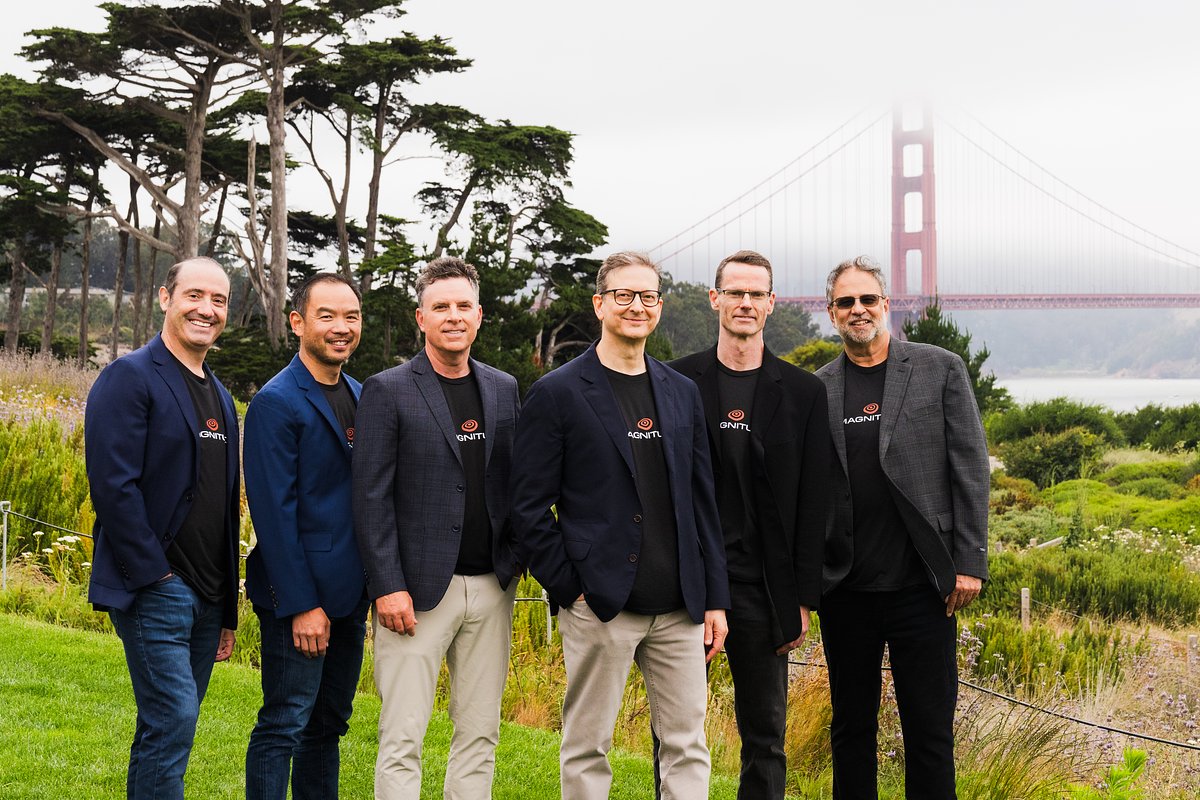
Magnitude's AI Workforce: Autonomous Defense for the Mythos Era
SAN FRANCISCO, CA – June 16, 2026 – In a move that signals a tectonic shift in cybersecurity strategy, the firm Magnitude emerged from stealth today, armed with $10 million in seed funding to deploy what it calls the world's first autonomous AI workforce. The mission: to overhaul the antiquated world of third-party risk management (TPRM) for what the company has dubbed the “Mythos era”—a new age where AI-driven attacks operate at a speed and scale that human teams can no longer counter alone.
Led by a team of veterans from Amazon, Abnormal AI, and Proofpoint, and backed by the cybersecurity-focused venture firm Ballistic Ventures, Magnitude is not merely offering another tool. It is proposing a new operational model. The company’s platform unleashes AI “risk agents” designed to continuously assess vendors, govern the use of external AI, validate security evidence, and drive remediation. These digital workers are intended to function as an extension of an enterprise’s security team, creating an autonomous governance and defense system for the sprawling, interconnected ecosystems that define modern business.
The Crumbling Foundations of Traditional Risk Management
For years, third-party risk management has been a necessary but often lagging discipline, treated more as a compliance checkbox than a dynamic security function. The process has been notoriously manual and periodic. A company might conduct an in-depth assessment of a critical vendor in January, but by March, that vendor could have adopted new software, changed its infrastructure, or fallen victim to a breach, rendering the initial assessment obsolete. This point-in-time approach creates a dangerous illusion of security.
This model is now at a critical inflection point, strained to the breaking point by two accelerating forces. First is the sheer complexity of the modern supply chain. Risk is no longer confined to direct, or third-party, relationships. It extends to the fourth, fifth, and Nth parties—the vendors of your vendors—creating a web of dependencies that are largely invisible to most organizations. Breaches originating from these upstream dependencies are increasingly common, yet monitoring them has been practically impossible.
Second, and more urgently, is the dawn of the Mythos era. This term captures the reality that AI is now being weaponized for autonomous offense. Malicious actors, using both sophisticated proprietary models and cheaper open-weight alternatives, can now scan vast digital ecosystems for vulnerabilities in minutes. As Magnitude’s CEO and founder, Rami Habal, stated, “Today’s third-party risk model was built for a different era. As autonomous offense becomes a reality, organizations need autonomous defense to keep pace.” The speed of AI-driven threat discovery has rendered the human-paced cycle of spreadsheets, questionnaires, and manual follow-ups dangerously inadequate.
This sentiment is echoed by industry analysts. Phil Harris, Research Director for Governance, Risk, and Compliance Solutions at IDC, noted the changing landscape, stating, “As autonomous systems expose weaknesses across vendors, products, AI agents, and downstream dependencies, organizations need more than periodic assessments. They need a continuous way to understand which external dependencies are exposed, which are prepared to respond, and where action should be prioritized.”
A New Class of Digital Workers
Magnitude’s answer to this challenge is not to simply speed up the old process, but to replace it with an entirely new engine. The company’s autonomous AI workforce is designed to operate continuously, 24/7, across an organization's entire third- and Nth-party ecosystem. These AI risk agents are tasked with the manual, error-prone work that currently consumes risk management teams.
Instead of waiting for an annual review, these agents constantly gather and validate evidence of a vendor's security posture. They can assess which vendors, products, and even other AI agents might be exposed to a newly discovered vulnerability like one on the scale of Log4j. Critically, they don't just identify risk; they are designed to drive action. The system can prioritize remediation efforts based on business impact and a vendor's readiness to respond, coordinating internal and external teams before a weakness can be exploited.
According to the company, these digital workers learn and adapt, reasoning against each enterprise's specific governance policies and refining their judgment based on feedback and real-world outcomes. This creates a system that promises not only speed and scale but also consistency and explainability—a shift from disconnected tasks to a cohesive, intelligent defense system. The goal is to move from months-long vendor onboarding and limited monitoring to a state of continuous assurance, allowing companies to adopt new technologies, including third-party AI, faster and more safely.
The Strategic Bet on Autonomous Defense
The $10 million seed round, led by a specialist firm like Ballistic Ventures, is a significant vote of confidence in this vision. Ballistic, which recently closed a $360 million fund dedicated to cybersecurity, invests in companies it believes can fundamentally reshape the security landscape. Their backing suggests that the market for AI-driven defense is no longer a niche but a necessity.
Jake Seid, co-founder and General Partner at Ballistic Ventures, framed the investment as a core part of their thesis. “A core thesis for us at Ballistic is that the most important security companies will both help companies be more secure and help enable them to move faster,” he said. “With every third-party vendor adding AI capability, you need AI to help you adopt AI quickly and safely. But with the adversary using AI to attack the third-party enterprise surface at machine scale and speed, you need AI to help you defend against the new reality of autonomous offense.”
This investment highlights a crucial market dynamic: the only viable defense against automated, machine-speed attacks is an equally automated, machine-speed defense. The economic driver is not just about reducing headcount in TPRM teams; it's about enabling the entire organization to operate with greater agility and resilience. In an era where a supply chain vulnerability can propagate across an ecosystem in hours, the ability to assess and remediate risk in near-real time becomes a profound competitive advantage.
The Unscripted Questions of an AI-Governed Future
While the promise of an autonomous defense system is compelling, its arrival ushers in a new set of fundamental questions for every leader. As we delegate critical risk decisions to non-human agents, we enter uncharted territory. The core challenge shifts from managing human workflows to governing intelligent machines.
How do we ensure these AI risk agents are free from the inherent biases that can plague AI models, potentially leading them to unfairly penalize certain vendors? Magnitude claims its agents learn from enterprise-specific policies, but the mechanisms for auditing this learning process and ensuring fairness will be paramount for building trust. Furthermore, the issue of explainability looms large. When an AI agent makes a high-stakes decision—to block a critical vendor or prioritize one risk over another—security leaders will need to understand why. The black-box nature of some AI systems is simply not acceptable when business continuity is on the line.
Finally, there is the question of accountability. As one expert from Ballistic Ventures noted in a recent discussion, it's easier to manage failure when a human is involved because there is someone to hold responsible. When an autonomous system fails, who is accountable? This forces a necessary evolution in governance, demanding robust frameworks for oversight, human intervention, and ultimate responsibility. The launch of platforms like Magnitude is not just a technological milestone; it is a catalyst forcing us to define the future of the human-machine partnership in the context of our most critical institutional functions.