
- 50 million student records to be digitized using blockchain technology
- 15-20% of job applicants in India may submit falsified or inflated educational qualifications
- Project set to be completed in 18 months under joint steering committee oversight
Experts view this initiative as a groundbreaking solution to credential verification challenges in India, leveraging blockchain technology to enhance trust, security, and accessibility in the education system.
Madhya Pradesh Taps Blockchain to Digitize 50 Million Student Records
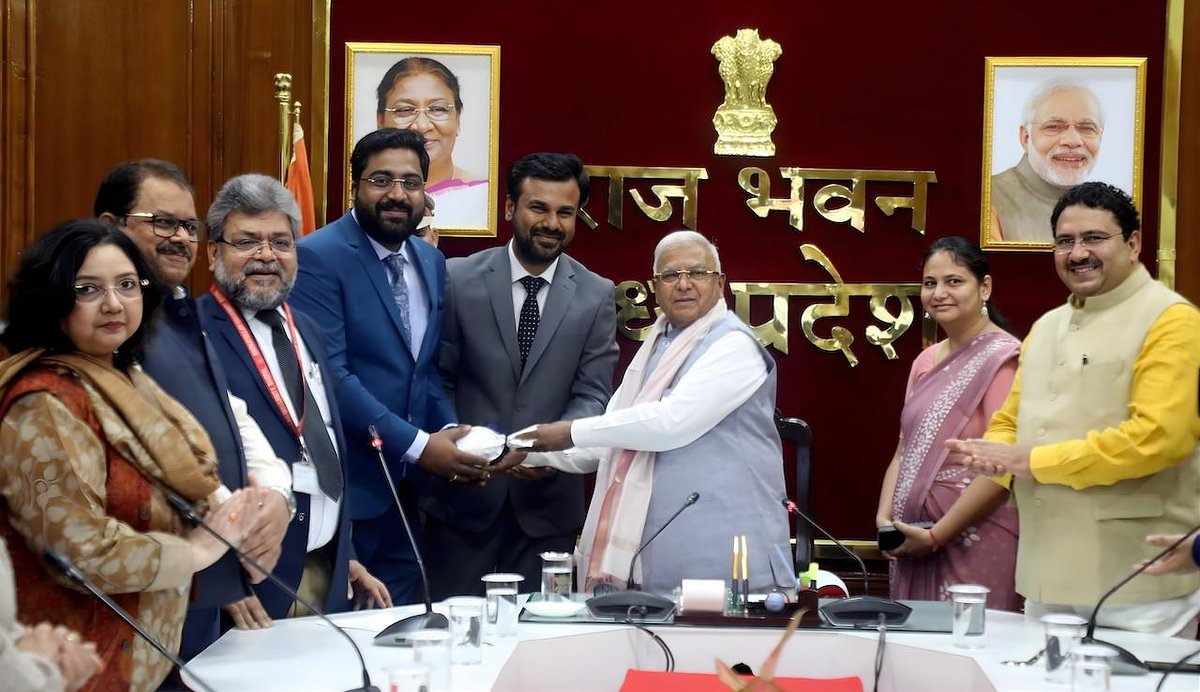
BHOPAL, India – January 08, 2026 – The Indian state of Madhya Pradesh has embarked on one of the world's most ambitious digital education projects, signing a Memorandum of Understanding (MoU) to digitize the academic records of up to 50 million students and graduates using blockchain technology. The landmark initiative, a collaboration between the state government, community-led Web3 organization Open Campus, and local tech partner Geeks of Gurukul, aims to revolutionize credential verification and enhance graduate employability across the region.
The project, set to be overseen by a joint steering committee over the next 18 months, will leverage Open Campus's EDU Chain, a blockchain specifically designed for education, to create secure, tamper-proof digital credentials. This move directly confronts long-standing challenges within India's education system, promising to build a new layer of trust for employers and unlock opportunities for millions.
The Challenge of Credential Verification in India
For decades, the process of verifying academic qualifications in India has been a significant bottleneck for graduates and a point of vulnerability for employers. The country's fragmented educational landscape, with thousands of universities and colleges, has largely relied on manual, paper-based systems. This has resulted in a cumbersome and time-consuming verification process that can take weeks, or even months, to complete.
These delays frequently hinder job prospects, complicate university admissions, and slow down visa applications for students aspiring to study or work abroad. More critically, the system is highly susceptible to fraud. Reports have indicated that a significant percentage of job applicants, estimated by some studies to be as high as 15-20%, may submit falsified or inflated educational qualifications. The prevalence of forged degree certificates and altered mark sheets has eroded trust in the job market, forcing employers to invest heavily in third-party verification services, which adds administrative overhead and still offers no guarantee of authenticity.
The existing National Academic Depository (NAD) was established to create a digital repository, but its implementation and the digitization of historical records have faced significant hurdles. The partnership in Madhya Pradesh represents a fundamentally different approach, leveraging decentralized technology to address the core issues of trust, security, and accessibility head-on.
A Blockchain-Powered Solution for a Digital India
At the heart of the initiative is Open Campus's EDU Chain, a purpose-built Layer 3 blockchain that operates on top of Arbitrum Orbit technology. This architecture is designed for high scalability and security, inheriting the robustness of the Ethereum network while enabling the high transaction volumes necessary for a project of this magnitude.
Through this infrastructure, the partnership will issue verifiable digital credentials, Open Campus IDs, and smart cards to students and alumni. These digital assets will be stored in a secure wallet controlled by the individual, giving them ownership and control over their academic data. For a graduate, this means their degree, transcripts, and other qualifications become a portable, instantly verifiable digital record.
When applying for a job or further education, they can grant prospective employers or institutions permission to access and verify these credentials in real-time. The blockchain's immutable ledger ensures that once a credential is issued by a recognized institution, it cannot be altered or forged, effectively eliminating the risk of fraud. For employers, this translates to a streamlined, cost-effective verification process that provides unparalleled confidence in a candidate's qualifications.
"The scale of this digitization effort will transform how qualifications are verified, fostering a trusted job market and unlocking opportunities for millions of young professionals," said the Honourable Governor of Madhya Pradesh, Shri Mangubhai C. Patel, in a statement regarding the partnership.
A Landmark Public-Private-DAO Partnership Model
The collaboration is notable not just for its technological ambition but also for its innovative governance structure. It brings together a state government, a private technology firm (Geeks of Gurukul), and a Decentralized Autonomous Organization (DAO) in Open Campus. This tripartite model could serve as a blueprint for future public service delivery, blending the accountability of government, the local expertise of a private company, and the decentralized innovation of a global Web3 community.
While the Madhya Pradesh government provides the official mandate and access to the state's vast educational ecosystem, and Geeks of Gurukul offers on-the-ground support, Open Campus provides the core blockchain infrastructure. This model leverages the strengths of each partner to tackle a complex public sector challenge, demonstrating a new path for large-scale digital transformation.
This project aligns with Madhya Pradesh's broader push towards digitization in education. The state recently launched its "Education Portal 3.0," a comprehensive platform designed to streamline administrative tasks for over 45,000 schools by integrating student records and teacher management. The blockchain initiative is a logical and powerful extension of this vision, adding a crucial layer of security and verifiability.
Beyond Credentials: Integrating Education Finance
The vision for the partnership extends beyond just academic records. Open Campus plans to integrate its on-chain education finance (EduFi) layer into the system. This would allow students and graduates using the Open Campus ID to access a range of financial services, including student loans, scholarships, and grants for upskilling.
By building a trusted, verifiable academic and professional reputation on the blockchain, individuals could potentially unlock new financing opportunities. Lenders and scholarship providers could use the verified data—with the user's consent—to make more informed decisions, potentially lowering barriers to educational access and career development. This integration of verifiable identity with financial services showcases the deeper potential of blockchain to create a more equitable and efficient educational ecosystem.
Mohamed Ezeldin, President of Open Campus, emphasized this holistic approach, stating, "By combining Open Campus’s blockchain credentialing with EDU Chain’s financing solutions, we're breaking down barriers to education and employment."
Navigating the Hurdles of a Massive Undertaking
Despite its immense potential, the project faces significant technical and logistical challenges. Digitizing 50 million records is a monumental data management task. Ensuring the system can scale to handle the data load while remaining performant is paramount. Furthermore, integrating the new blockchain system with the diverse and often outdated legacy systems of numerous universities will require careful planning and execution.
Data privacy is another critical consideration. The project must navigate India's Digital Personal Data Protection (DPDP) Act, which includes provisions like the "Right to Correction." This could pose a challenge for immutable blockchain ledgers, where data alteration is inherently difficult. The project's architects will need to design a system, likely a permissioned or hybrid blockchain, that balances transparency and security with regulatory compliance, potentially using off-chain data storage for personal information linked to on-chain verifiable proofs.
Finally, user adoption will be key to success. A massive education and training effort will be required to onboard millions of students, educators, and employers onto the new platform, ensuring they understand how to use digital wallets and manage their decentralized identities. However, if successful, the initiative will not only transform Madhya Pradesh's educational landscape but also serve as a powerful proof-of-concept for the rest of India and the world.
Ezeldin noted the project's pioneering nature, remarking, "This project sets a precedent for digital public infrastructure, offering a model for other states across India and nations across the globe." The success of this ambitious endeavor could mark a pivotal moment in the adoption of blockchain for public good, demonstrating its power to build trust and create opportunity on a national scale.