
- 67 students served by the ASPIRE program as of March 2026
- $350,300 grant secured by Lowell Public Schools for STEM curriculum enhancement
- Anonymous donor funding provides transportation and stipends to remove participation barriers
Experts in education and STEM advocacy would likely conclude that the ASPIRE program's hands-on, experiential learning approach, combined with strategic partnerships and equitable access measures, sets a strong model for engaging students in STEM education beyond traditional classroom settings.
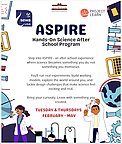
Lowell's ASPIRE Program Ignites STEM Learning with Unique Partnership
LOWELL, Mass. – May 01, 2026 – As the final school bell rings, a different kind of learning is just beginning for a growing number of middle and high school students in Lowell. A new after-school initiative, the ASPIRE STEM Enrichment Program, is rethinking how young people engage with science, technology, engineering, and math. By combining hands-on exploration with robust community support, the program is quickly becoming a model for accessible and engaging education outside the classroom.
Launched through a collaboration between Sewa International USA, Project LEARN, and Lowell Public Schools, ASPIRE has grown from a three-month planning phase into a dynamic program serving 67 students as of March 2026. Its popularity is spreading organically, with peer referrals and consistent attendance underscoring its early success.
Beyond Textbooks: A New Model for Learning
The core of ASPIRE's appeal lies in its commitment to “learning by doing.” Twice a week, students gather not for lectures, but for interactive challenges and experiments. They build towers from marshmallows and spaghetti to understand structural engineering, and they create tangible demonstrations of the carbon cycle to grasp complex environmental science. This applied learning approach is a deliberate departure from conventional instruction.
“ASPIRE has been really unpredictable,” said Phillip Keo, a student at Lowell High School. “When I joined, I expected it to be all schoolwork. But we get to have fun while learning.”
This engaging environment is the result of a meticulously designed framework architected by Radhika Sathe, a Harvard-trained researcher specializing in program design. Sathe's goal was to create a system that was not only impactful but also sustainable. “I was drawn to this work because it sits at the intersection of structure and impact,” she stated. “The goal was to build a model that is accountable, scalable, and responsive to student needs.” Her design incorporates compliance frameworks and tracking systems, ensuring the program's effectiveness can be measured and replicated.
This pedagogical style aligns with findings from educational experts, who have long advocated for experiential learning to foster critical thinking, collaboration, and a genuine passion for STEM subjects. The ASPIRE program is bringing this theory to life within a district already committed to scientific advancement, as Lowell Public Schools has previously secured significant funding, such as a $350,300 grant from the Massachusetts Life Sciences Center, to enhance its STEM curriculum and resources.
The Power of Partnership and Philanthropy
The program’s existence is a testament to the power of a multi-layered partnership. It brings together the global reach and organizational strength of Sewa International, the deep local expertise of Project LEARN, and the institutional framework of Lowell Public Schools. This collaborative energy is fueled by a generous gift from an anonymous donor committed to youth empowerment and educational equity.
Kate Toth, a philanthropic advisor at Choate Hall & Stewart LLP who represents the donor, explained the motivation behind the gift. “The donor values programs that challenge students intellectually while supporting their growth beyond the classroom, and they are pleased to partner with Sewa International and Project Learn as trusted collaborators. They are proud to support an initiative that will create meaningful opportunities for young people in Lowell and look forward to seeing its impact over time.”
This philanthropic investment goes beyond simply funding activities. It is strategically deployed to dismantle the most common obstacles that prevent students from participating in after-school enrichment.
Removing Barriers to Fuel Potential
One of ASPIRE’s most innovative features is its direct approach to ensuring equitable access. The donor’s funding provides critical transportation support and incentive-based stipends for students, acknowledging their time and commitment. This removes financial and logistical hurdles that often exclude students from low-income households or families with demanding work schedules.
“The donor's investment in stipends and transportation removes barriers and ensures that all students can access these transformative STEM experiences, aligned to state standards,” noted Sneha V. Patel, Director of Pathways & Partnerships at Project LEARN. This comprehensive support system is already being recognized by the community, with school officials observing that families deeply appreciate the program's accessibility.
By addressing these practical needs, ASPIRE ensures that a student’s curiosity and potential are the only prerequisites for participation. This has created a positive feedback loop where engaged students return each week, often bringing their friends with them, driving the program's consistent growth.
A Holistic Vision for Community Empowerment
For Sewa International, the ASPIRE program is not an isolated project but a natural extension of its long-term commitment to the Lowell community. The organization, which holds top ratings from charity evaluators like Charity Navigator and GuideStar, has a history of impactful youth programs like its “LEAD” initiative for high schoolers. More locally, it has been a fixture in Lowell for over a decade through its collaboration with the Dharma Center of America, providing weekly nutritious food to residents.
This history of service demonstrates a holistic approach to community development. By pairing educational opportunities like ASPIRE with tangible resources that address basic needs, the organization creates a powerful ecosystem for student success. It’s a philosophy that recognizes that a student cannot aspire to a future in STEM if they are worried about their next meal or how they will get home.
“ASPIRE is more than an afterschool STEM program — it is a launchpad for middle and high school students to explore, build, and discover their potential,” said Kumar Subramanian, the Boston Chapter Coordinator for Sewa. The program is designed to be a replicable model, and with its early success and scalable framework, the partners are looking toward the future. A public-facing event is planned for June 2026 to showcase the students' work and celebrate the community that has come together to support them.