
- $11 billion: The global low- and no-alcohol market valuation in 2025 (NIQ Research).
- 14% growth: Wine-based RTDs grew by this percentage in 2025.
- 3% ABV: Birdy the Drink's alcohol content, yet it won a bronze medal in a prestigious competition.
Experts would likely conclude that Birdy’s award validates the growing maturity and investment potential of the low-alcohol beverage sector, driven by consumer demand for mindful drinking options.
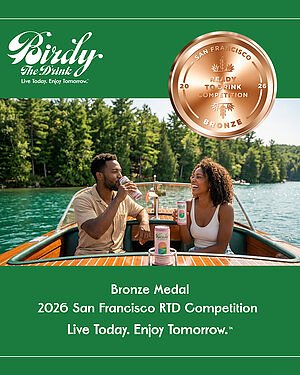
Low-Alcohol, High-Growth: Birdy's Award Signals Maturation for an $11B Market
TRAVERSE CITY, MI – June 29, 2026 – In the world of institutional investment, signals matter. While daily headlines are dominated by software unicorns and biotech breakthroughs, a recent bronze medal awarded to a small, woman-founded beverage company in Northern Michigan offers a potent signal about a different kind of high-growth sector: the rapidly maturing low- and no-alcohol market.
Birdy the Drink, a 3% ABV wine spritzer, earned its accolade at the prestigious 2026 San Francisco Ready-to-Drink (RTD) Competition. On the surface, it’s a feel-good story of a local brand making good. But for market analysts and investors tracking consumer trends, this win is a crucial data point. It represents the validation of a core investment thesis: that the low-ABV category can overcome its historical quality problem and capture a significant, durable share of the consumer wallet. This isn't just about a new drink; it's about the de-risking of an entire product category that, according to NIQ Research, surpassed $11 billion in 2025.
From Craft Trend to Investable Asset
For years, the low-alcohol segment, particularly in wine, was plagued by a reputation for compromise. Products were often dismissed by discerning consumers as overly sweet, diluted, or simply lacking the character of their full-strength counterparts. This perception created a significant barrier to entry and made institutional investors wary. Birdy the Drink was founded specifically to challenge this narrative.
"We made Birdy because we wanted something real. Not a mocktail. Not a compromise," says Co-Founder Callie Gruman Furste. "A wine that actually tastes like wine... Having expert judges award it a medal knowing it was 3% ABV is everything we have been working toward."
This external validation is precisely the kind of signal that shifts a category's perception. The San Francisco Ready-to-Drink Competition is not a local fair; it is hosted by The Tasting Alliance, the same organization behind the San Francisco World Spirits Competition, one of the most influential judging events in the global spirits industry. With over 400 entries in the RTD competition, a medal signifies that a product meets a rigorous standard of quality as determined by a panel of blind-tasting experts. For a 3% ABV product to earn a bronze medal against a full field of competitors, many with higher alcohol content, is a powerful statement. It proves that technical and formulation challenges in creating palatable low-ABV beverages are being solved, paving the way for premiumization and higher margins within the category. This achievement transforms the brand's core value proposition from a marketing claim into a validated fact, a critical step in building long-term brand equity and attracting serious investment.
Tapping into a Durable Consumer Shift
The success of brands like Birdy is not happening in a vacuum. It is the direct result of a fundamental shift in consumer behavior. The global low- and no-alcohol market's $11 billion valuation is underpinned by the "mindful drinking" or "sober curious" movement. This is not about total abstention for everyone, but rather a desire for moderation, wellness, and control. Consumers, particularly Millennials and Gen Z, are increasingly seeking options that fit into an active and health-conscious lifestyle without forcing them to opt out of social occasions.
The data corroborates this trend. NIQ Research highlights that wine-based RTDs alone grew by 14% in 2025. This growth is fueled by products that deliver on multiple fronts. Birdy, for instance, is not only low in alcohol but also under 100 calories, low in sugar, and gluten-free. It’s a product designed not for a food pairing, but as the company puts it, to "pair with your hobbies and responsibilities."
As one industry analyst noted, "The modern consumer doesn't want to choose between a Saturday afternoon on the golf course and a productive Sunday morning. They want both." This desire creates a clear market need that legacy beverage giants have been slow to fill with high-quality offerings. For investors, this represents a classic disruption opportunity, where nimble, founder-led brands with an authentic connection to their target audience can capture significant market share. Birdy’s success demonstrates that the demand is not just for any low-ABV option, but for one that doesn't ask the consumer to sacrifice the sensory experience—a key differentiator that supports premium positioning and customer loyalty.
Building a Moat with Local Authenticity
In a crowded consumer marketplace, a defensible competitive advantage—an economic "moat"—is paramount. Birdy the Drink is building its moat not with proprietary technology, but with something equally powerful: authenticity and a hyper-local supply chain. The brand is explicitly a "family story" rooted in Northern Michigan.
This is more than just marketing narrative; it’s a strategic operational choice. Every can of Birdy is produced in partnership with Bonobo Winery, a local Traverse City establishment co-founded by Carter and Todd Oosterhouse. The product uses Michigan wine and leverages the 27 years of experience of Bonobo's winemaker, Cornel Olivier. This deep integration into the local craft beverage ecosystem provides several advantages. It ensures a consistent, high-quality ingredient source, builds a compelling brand story that resonates with consumers’ desire for provenance, and creates a supply chain that is difficult for larger, mass-market competitors to replicate.
This "Michigan-made" identity, combined with a direct-to-consumer (DTC) sales channel via its website and strategic regional distribution through Great Lakes Wine and Spirits, allows the company to control its brand message and build a direct relationship with its customers. For investors evaluating the long-term potential of a consumer brand, this combination of a strong, authentic identity and a multi-channel distribution strategy is a compelling formula for sustainable growth. It demonstrates a sophisticated understanding of modern brand-building that goes far beyond simply putting a product on a shelf.
The journey of Birdy the Drink from a concept on the shores of Northern Michigan to a medalist in a global competition serves as a microcosm of the broader evolution in the beverage industry. It highlights the convergence of powerful consumer wellness trends, the importance of third-party validation in establishing brand value, and the strategic advantage of authentic, founder-led innovation. While fintech and deep tech may capture the bulk of venture capital headlines, the quiet, consistent growth of categories like low-ABV beverages represents a significant and increasingly validated opportunity for institutional capital looking to tap into the future of consumer spending.