
- 243 fallen U.S. heroes honored with the discovery of their final resting places.
- 3 WWII warships located: USS Bonefish (SS-223), USS Drexler (DD-741), and USS William D. Porter (DD-579).
- 85 crew members lost aboard the USS Bonefish, discovered at a depth of 3.4 kilometers in the Sea of Japan.
Experts affirm that these discoveries provide critical closure for families and reinforce the importance of preserving war graves as hallowed historical sites.
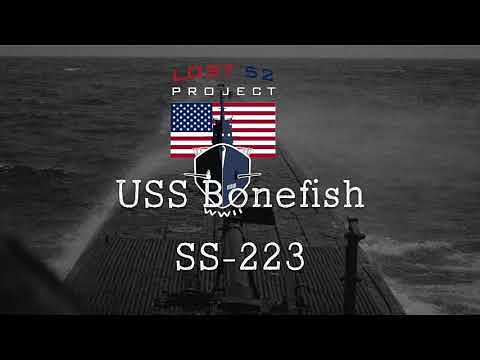
Lost WWII Warships Found, Honoring 243 Fallen U.S. Heroes
NEW YORK, NY – May 22, 2026 – More than eighty years after their final battles, the ocean has surrendered the secrets of three U.S. Navy warships lost during World War II. The Lost 52 Project, a private organization dedicated to locating America's lost WWII submarines and ships, announced on Memorial Day the historic discovery of the submarine USS Bonefish (SS-223) and the destroyers USS Drexler (DD-741) and USS William D. Porter (DD-579). The discoveries confirm the final resting places for 243 American servicemen who remain entombed within the wrecks, bringing a somber and profound sense of closure to generations of families.
The successful 2025 expeditions, conducted in the vast and challenging depths of the Sea of Japan and the South China Sea, were led by explorer Tim Taylor. His team's work, a synthesis of historical research and cutting-edge technology, has once again transformed historical footnotes into hallowed underwater gravesites.
Echoes from the Deep: The Lost Ships Identified
The three vessels represent distinct, tragic, and in one case, bizarre final chapters of the Pacific War. Each wreck tells a unique story of duty, sacrifice, and the unforgiving nature of naval combat.
The USS Bonefish (SS-223), a Gato-class submarine, was discovered at a crushing depth of 3.4 kilometers in the Sea of Japan. The submarine and its 85 crew members were lost in June 1945 during their eighth war patrol. After sinking two Japanese ships, the Bonefish was subjected to a fierce counterattack. Post-war Japanese records described a barrage of depth charges that produced a large oil slick and debris—a grim testament to the submarine's final moments. The Lost 52 Project located the Bonefish near the wreck of one of its last victims, the Japanese merchant ship Konzan Maru, confirming the historical accounts with startling precision.
Off the coast of Okinawa, the team located the Allen M. Sumner-class destroyer USS Drexler (DD-741). Its end was swift and brutal. On May 28, 1945, while on hazardous radar picket duty, the Drexler was struck by two kamikaze aircraft. The destroyer capsized and sank in less than 60 seconds, taking 158 of its crew to their deaths. The discovery provides a definitive location for one of the war's most rapid and devastating losses.
In a story of incredible luck amidst misfortune, the wreck of the USS William D. Porter (DD-579) was also found. This Fletcher-class destroyer, famously nicknamed the "unluckiest ship in the Navy" after a series of mishaps that included accidentally firing a live torpedo toward the battleship carrying President Franklin D. Roosevelt, met its end on June 10, 1945. A Japanese dive bomber, having missed its target, exploded directly beneath the destroyer's keel. The underwater blast acted like a giant hammer, lifting the ship from the water and fatally rupturing its hull. Miraculously, every single crew member survived the sinking, abandoning ship just minutes before it went down.
The Deep-Sea Detectives and Their Tools
These discoveries are not the result of luck, but of meticulous planning and technological prowess. The expedition was spearheaded by Tim Taylor, the founder of the Lost 52 Project and CEO of Tiburon Subsea. Taylor is a recipient of the U.S. Navy's Distinguished Public Service Award, the highest civilian honor granted by the service, for his significant contributions to naval history.
His team utilizes a suite of advanced underwater robotics, including autonomous underwater vehicles (AUVs) equipped with high-resolution multibeam echo-sounders (MBES). These instruments methodically map vast swaths of the ocean floor, creating detailed three-dimensional images that can reveal the tell-tale shapes of man-made objects. Once a potential target is identified, remotely operated vehicles (ROVs) are deployed to provide live video confirmation, allowing archaeologists and historians to visually identify the wreck without disturbing the site.
"The technology allows us to go to these extreme depths and stay for extended periods, methodically searching areas where historical data tells us these ships were likely lost," explained a marine technology expert familiar with the project. "It's about turning a vast, unknown space into a manageable grid and having the persistence to search it."
A Measure of Peace: Closure for Generations
The timing of the announcement on Memorial Day underscores the core mission of the Lost 52 Project: to honor the fallen and provide closure. For decades, the families of the 243 men lost on the Bonefish and Drexler had only a date and a general location to mark their loss. Now, they have a confirmed final resting place.
The project works to connect with descendants, sharing the data and imagery that transforms an abstract historical loss into a tangible, albeit inaccessible, memorial. For many families, knowing the exact location where their loved ones made the ultimate sacrifice is a deeply emotional and significant event, completing a story that has been passed down through generations.
This work reinforces the military ethos of leaving no one behind, extending that promise from the battlefield to the historical record and the silent depths of the ocean. It is an act of national remembrance, made possible by private dedication.
Silent Sentinels in Sensitive Waters
The locations of these discoveries—the Sea of Japan and the waters off Okinawa, adjacent to the contested South China Sea—place them in geopolitically sensitive regions. However, their status under international law is clear. Sunken sovereign vessels, particularly warships, remain the property of their flag nation. The U.S. government considers these wrecks to be sovereign immune vessels and, most importantly, protected war graves.
U.S. policy, consistent with international practice, is to leave such sites undisturbed. The work of the Lost 52 Project is strictly archaeological and documentary in nature, aimed at identification and preservation of memory, not salvage or intrusion. The discoveries serve as a reminder that the ocean floor is a museum of human history, holding artifacts that are intertwined with modern legal and diplomatic principles.
As silent sentinels, these wrecks are a permanent part of the underwater landscape. Their discovery and official recognition ensure they will be respected as the hallowed ground they are, safeguarding the final resting places of the sailors who served aboard them.