
- 800V DC Power Rack: LITEON's new solution promises up to 5% improvement in end-to-end power efficiency compared to legacy systems.
- Copper Usage Reduction: The high-voltage architecture could cut copper usage by as much as 45%.
- Power Demand: A single large AI data center consumes as much power as a small city.
Experts agree that the shift to 800V DC power architecture is essential for the future of AI infrastructure, as it significantly improves efficiency, reduces costs, and supports sustainable data center operations.
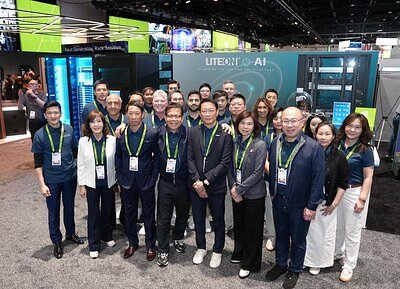
LITEON Powers AI's Future with 800V DC for NVIDIA's Vera Rubin Platform
SAN JOSE, CA – March 17, 2026 – As the artificial intelligence revolution accelerates, the immense energy appetite of data centers has become a critical bottleneck. Addressing this challenge head-on, LITEON Technology today at NVIDIA GTC 2026 showcased a new portfolio of power and cooling solutions designed to support the next generation of megawatt-scale AI infrastructure, including systems built for the powerful new NVIDIA Vera Rubin platform.
The announcement highlights a crucial industry-wide shift away from traditional power architectures toward a more efficient, high-voltage standard. LITEON is debuting an 800-volt direct current (VDC) Power Rack, a 110 kW Power Shelf, and advanced liquid cooling systems, including a 2.1 MW in-row CDU. These components are engineered to work within NVIDIA's MGX modular reference design, aiming to streamline the deployment of the massive, power-hungry AI factories of tomorrow.
The Inescapable Power Problem
The AI boom, while promising transformative capabilities, is built on a foundation of raw computational power that consumes electricity at an unprecedented rate. Data center electricity use is projected to nearly double by 2030, with a single large AI data center consuming as much power as a small city. This insatiable demand is pushing legacy power systems to their breaking point.
Traditionally, data centers have relied on 48V or 54V power distribution. However, as rack power densities soar from tens of kilowatts to potentially over 100 kW to support clusters of advanced GPUs, these lower-voltage systems become wildly inefficient. Pushing thousands of amperes at low voltage requires thick, expensive copper cables and generates significant energy loss in the form of heat, which in turn requires even more energy for cooling. This vicious cycle of escalating power and cooling costs threatens to stifle the growth of AI.
Recognizing this impending crisis, the industry, led by pioneers like NVIDIA, is coalescing around a new standard: 800 VDC. LITEON's GTC showcase demonstrates its role as a key enabler of this fundamental transition.
A High-Voltage Revolution
The move to an 800 VDC architecture represents a ground-up re-imagining of data center power delivery. By increasing the voltage, the current required to deliver the same amount of power is drastically reduced—a principle of basic physics. This has profound implications for efficiency, cost, and scalability.
LITEON's 800 VDC solution promises to improve end-to-end power efficiency by up to 5% compared to legacy systems. It achieves this by eliminating several wasteful AC-to-DC conversion steps, creating a more direct and streamlined path from the power grid to the processor. The reduced current also allows for the use of thinner cables, potentially cutting copper usage by as much as 45%. This not only lowers material costs but also simplifies the complex and crowded physical infrastructure within a data center rack.
"AI data centers are entering a critical phase where power and thermal systems must be re‑architected together," said John Chang, General Manager of LITEON's Cloud Infrastructure Platform and Solution SBG, in the company's press release. "Power systems are no longer merely supporting functions; they are becoming one of the core elements of data‑center. Through high‑voltage DC designs, we help customers achieve optimal balance among power density, energy efficiency, and infrastructure costs."
LITEON is not alone in this effort. The company is part of a growing ecosystem of NVIDIA partners, including competitors like Delta Electronics and Vertiv, all working to build out the components for this new 800 VDC standard. This collaborative push underscores the industry's consensus that high-voltage DC is not merely an option, but a necessity for the future of high-performance computing.
Fueling NVIDIA's Agentic AI Vision
The demand for this new infrastructure is being driven by rapid advances in AI hardware, exemplified by the NVIDIA Vera Rubin platform also announced at GTC 2026. Designed for what NVIDIA calls the age of "agentic AI"—where models can reason and perform complex, multi-step tasks—the platform packs unprecedented computational density. Its key components, the Vera CPU and Rubin GPU, are engineered for extreme performance, which in turn requires extreme power and cooling.
LITEON's new offerings are purpose-built to meet these demands. The 110 kW Power Shelf, designed for the NVIDIA MGX modular architecture, allows system builders to flexibly configure servers with the latest technology. The 800 VDC Power Rack and 2.1 MW liquid cooling systems provide the foundational infrastructure to house and operate these high-density racks at a megawatt scale. By integrating power modules, DC distribution, and system-level energy management, these solutions are designed to handle the stringent and highly dynamic power loads of AI servers, which can exhibit a "roller coaster" pattern of energy use during training and inference workloads.
The Imperative of Sustainable AI
Beyond pure performance, the shift to 800 VDC and advanced liquid cooling carries significant environmental implications. The inherent efficiency gains directly reduce the overall energy consumption and carbon footprint of AI operations. Less energy wasted as heat means less energy is needed for cooling, contributing to a better Power Usage Effectiveness (PUE), a key metric for data center efficiency.
By enabling more power to be delivered in a smaller physical and material footprint, these technologies support the construction of more sustainable AI factories. As enterprises and governments become increasingly focused on environmental, social, and governance (ESG) goals, the ability to train and deploy powerful AI models in an energy-efficient manner is becoming a competitive differentiator and a social license to operate.
LITEON's deep collaboration with NVIDIA and its focus on these core infrastructure challenges position the company as a critical player in the AI ecosystem. The solutions unveiled at GTC 2026 are more than just new products; they are the essential nuts and bolts that will enable the next phase of the AI revolution to be built in a powerful, scalable, and ultimately sustainable way.