
- May 6, 2026: Lightbridge successfully completed irradiation testing of its next-generation nuclear fuel at Idaho National Laboratory.
- 1,000°C cooler core temperature: Lightbridge Fuel™ operates significantly cooler than conventional UO2 fuel, enhancing safety margins.
- $215.7 million in cash reserves: Lightbridge's reported funding as of last quarterly report.
Experts would likely conclude that this milestone represents a significant technical validation for Lightbridge's nuclear fuel technology, advancing its path toward commercialization while acknowledging remaining regulatory and competitive challenges.
Lightbridge's Nuclear Milestone: A Key Signal for Next-Gen Energy's Viability
RESTON, VA – June 25, 2026 – In the high-stakes world of advanced energy, progress is measured not in press releases, but in hard data and tangible results. This week, a significant growth signal emerged from the high-security campus of the Idaho National Laboratory (INL), where Lightbridge Corporation (Nasdaq: LTBR) successfully completed a pivotal phase of testing for its next-generation nuclear fuel.
On May 6, after a rigorous irradiation campaign, the first material samples of Lightbridge Fuel™ were carefully removed from the core of the Advanced Test Reactor (ATR), the nation's most powerful research reactor. This event marks a critical transition for the company, moving its proprietary technology from the realm of simulation and modeling to the crucial stage of physical examination and data validation. For executives, investors, and analysts tracking the momentum in the clean energy sector, this is more than just a technical achievement; it's a clear indicator that the path to commercializing a safer, more efficient nuclear fuel is becoming shorter and more defined.
“The data already developed at the Advanced Test Reactor is a meaningful validation of the innovation and engineering behind Lightbridge Fuel,” said Seth Grae, President and CEO of Lightbridge, who was on-site for the milestone. He emphasized that the forthcoming analysis is expected to directly “support our ongoing fuel performance modeling activities and regulatory licensing efforts for commercial deployment.” This is the language of a company moving with deliberate speed from development to market.
Decoding a Technological Leap
To understand the significance of this milestone, one must look past the complex jargon of nuclear physics and grasp the fundamental problems Lightbridge aims to solve. For decades, the global fleet of nuclear reactors has relied on ceramic uranium dioxide (UO2) fuel in cylindrical rods—a reliable but technologically mature design with known operational limits. Lightbridge is proposing a radical redesign.
Its fuel is not a ceramic pellet but a metallic uranium-zirconium alloy, formed into a unique, helically twisted, multi-lobed rod. This geometry isn't just for aesthetics; it dramatically increases the fuel's surface area, allowing for far more efficient heat transfer to the surrounding water coolant. The result is a fuel that operates at a core temperature over 1,000°C cooler than conventional fuel. This massive thermal margin is a game-changer for safety, giving plant operators significantly more time to respond during a potential accident and mitigating the risk of a high-temperature zirconium-steam reaction.
Beyond safety, the growth signal is economic. The company projects that its fuel can enable power uprates of 10-17% in existing reactors and extend operating cycles from 18 to 24 months. For a multi-billion-dollar power plant, such gains in output and availability represent a substantial increase in revenue and a lower cost of electricity—a powerful incentive for adoption. This combination of enhanced safety and improved economics is the core value proposition that Lightbridge is now one step closer to proving.
The Power of Public-Private Partnership
This achievement is also a testament to a powerful, and increasingly vital, model for innovation: the public-private partnership. The tests were conducted at INL, the U.S. Department of Energy’s lead nuclear energy research and development laboratory. The collaboration leverages world-class government facilities and expertise to de-risk and accelerate private-sector technology.
The irradiation campaign utilized the Fission Accelerated Steady-state Testing (FAST) method, an advanced technique conceived and developed at INL that uses Highly Enriched Uranium to simulate long-term fuel performance in a fraction of the time. This acceleration is crucial for a company operating on investor timelines. In a notable turn of events, Lightbridge’s Director of Materials, Geoffrey “Boone” Beausoleil, was part of the original INL team that developed the FAST method, bringing a unique depth of expertise to the project.
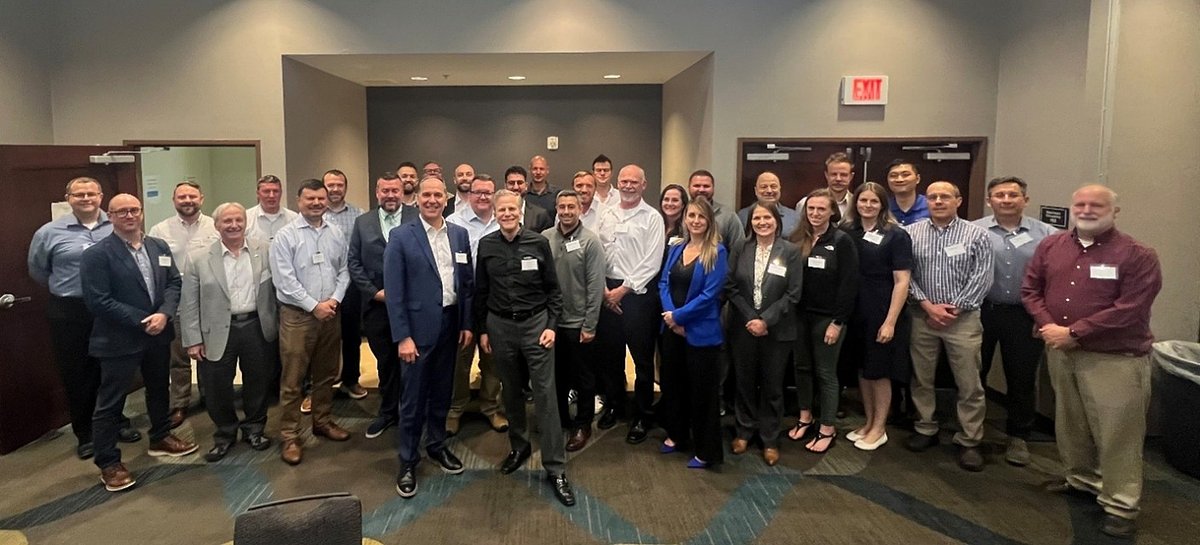
John Wagner, Laboratory Director of Idaho National Laboratory, contextualized the collaboration's importance. "Public-private partnerships of this kind are central to INL's mission of accelerating the development of new nuclear technologies," he stated, reinforcing that the data generated contributes to the broader scientific understanding of advanced fuel performance. With 24 Lightbridge personnel on-site for the event, from senior management to the engineering team, the milestone was a clear demonstration of a deeply integrated partnership.
The Path Forward: From Data to Deployment
With the samples now in a months-long cool-down period, the next critical phase is the post-irradiation examination (PIE). This forensic analysis will yield the hard data on how the fuel material performed under the intense conditions inside the ATR. This data is the currency Lightbridge will use to engage with regulators like the U.S. Nuclear Regulatory Commission (NRC).
However, the path to commercialization still contains significant hurdles. The NRC categorizes Lightbridge's metallic fuel as a "longer term" Accident Tolerant Fuel concept, signaling that it will require a substantial body of new data for licensing. Furthermore, the fuel's design requires high-assay, low-enriched uranium (HALEU), which presents its own set of logistical and regulatory challenges for the broader industry.
The competitive landscape is also heating up. Major established fuel vendors like Westinghouse and Framatome are developing their own advanced fuel concepts. While Lightbridge's geometric and metallic approach is distinct, it is racing against well-capitalized incumbents who are pursuing different paths to the same goal of a safer, more economical fuel.
For investors, this milestone is a significant de-risking event. It validates the core technology and the operational strength of the INL partnership. With a reported $215.7 million in cash as of its last quarterly report, Lightbridge appears well-funded to navigate the next stages. The signal from Idaho is that the company has successfully navigated a crucial technical gate. The next signal to watch for will be how effectively it translates this technical success into regulatory and commercial momentum.