
- $38 billion: Projected value of the global drone defense market by 2035
- 1.2 million: Pieces of debris larger than 1 centimeter currently in Earth's orbit
- 30 megawatts: Peak power of Velodyne Space's magnetic-electric launch (MEL) system
Experts view David Hall's dual ventures as innovative solutions to critical challenges in drone defense and space sustainability, though widespread adoption will depend on proving reliability, cost-effectiveness, and regulatory compliance.
Lidar King's Return: Hall Aims to Tame Drones and Clean Up Space
LAS VEGAS, NV – January 06, 2026 – David Hall, the visionary engineer whose invention of 3D lidar gave birth to the modern autonomous vehicle industry, has returned to the global technology stage at CES 2026 with a new, ambitious two-front mission: securing the skies from rogue drones and making access to space sustainable. Through two independent companies, Hall Lidar Inc. (HLi) and Velodyne Space, Hall is leveraging his deep expertise in sensor technology and advanced engineering to address some of the most pressing challenges in national security and environmental stewardship.
Decades after his work on a DARPA-funded challenge changed transportation forever, Hall is now targeting the aerospace and defense sectors. The innovations unveiled today propose a radical rethinking of how we counter aerial threats and how we reach for the stars, moving away from explosives and chemical propellants toward smarter, safer, and cleaner alternatives powered by artificial intelligence and electromagnetism.
Securing the Skies: A New Era of Drone Defense
The proliferation of inexpensive, highly capable drones has created a complex security dilemma. The global drone defense market is exploding, with some projections estimating its value could surpass $38 billion by 2035 as governments and private entities scramble to protect critical infrastructure like airports, power plants, and military bases. Current methods, often involving shooting drones down with explosives or jamming their signals, come with significant risks, including collateral damage from falling debris and interference with friendly communications.
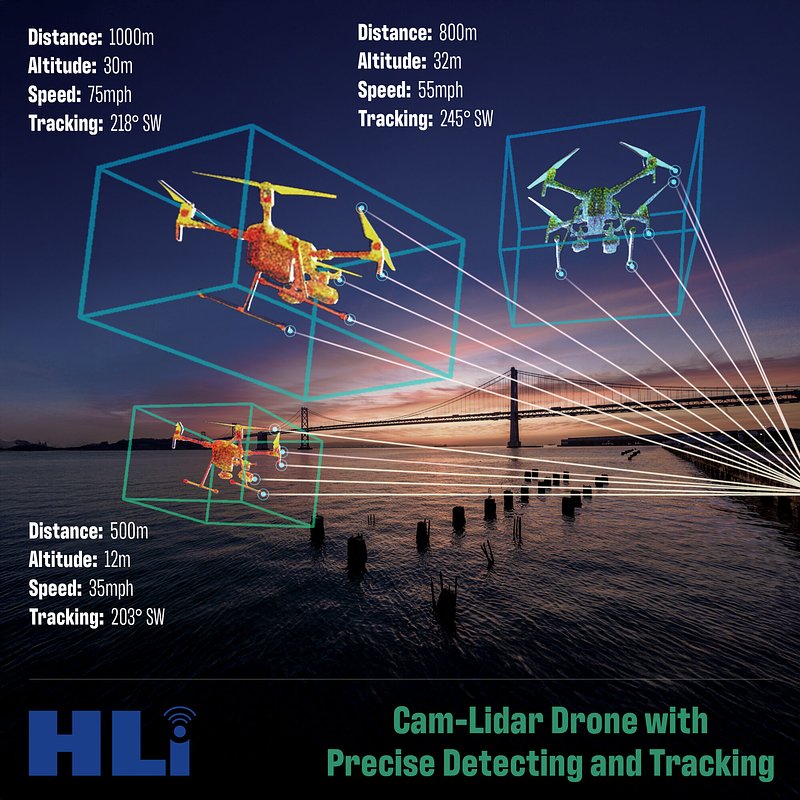
Hall's companies offer a different approach: capture, don't destroy. Hall Lidar Inc. introduces its Cam-Lidar technology, a sophisticated system that fuses high-resolution cameras, precision lidar, and advanced AI algorithms. This mobile, modular platform is designed to provide real-time detection, identification, and tracking of high-speed aerial objects with what the company calls “unprecedented precision.”
Taking the concept from tracking to interception, Velodyne Space has developed a Drone Catching System (DCS). At its core is a powerful magnetic-electric launch (MEL) system—a commercial application of coil gun technology capable of generating over 30 megawatts of peak power. This non-explosive propulsion core can fire a volley of large, 20-foot diameter nets at a rate of five per second, capable of neutralizing a single drone or an entire swarm. Once a drone is enveloped, a parachute deploys to bring the captured craft and its netting down to the ground safely. This method not only prevents a potentially fiery crash but also preserves the drone intact for forensic analysis, a crucial advantage for law enforcement and military intelligence.
The system maintains a human operator in the decision-making loop, who authorizes engagement after the AI-powered sensor stack detects and tracks a target. This design choice directly addresses growing ethical concerns about fully autonomous weapon systems.
The Final Frontier, Reimagined Sustainably
While one venture looks to the skies above our cities, the other looks to the heavens above our planet. Velodyne Space is also applying its magnetic-electric launch technology to the monumental challenge of space access. The MEL system is being positioned as a green alternative to the chemical rockets that have been the sole gateway to orbit for over 60 years. By replacing traditional propellants, the company claims its technology can “dramatically reduce fuel consumption, emissions, and launch costs and timing.”
This innovation arrives at a critical juncture for the space industry. The orbital environment around Earth is becoming dangerously crowded. According to the European Space Agency (ESA), there are now over 1.2 million pieces of debris larger than 1 centimeter in orbit—a cloud of high-velocity junk that makes the region “unsustainable in the long term.” Every traditional launch adds to the chemical pollution in the atmosphere and the risk of creating more debris. A clean, cost-effective launch system could not only lower the barrier to entry for commercial spaceflight but also help mitigate the growing environmental crisis in low Earth orbit.
The concept of electromagnetic launch has been a subject of research for decades, but Velodyne Space’s unveiling marks a serious commercial effort to bring it to market, born from five years of private research and development led by Hall.
Navigating Hurdles from the Ground to Orbit
Despite the groundbreaking potential, both Hall Lidar Inc. and Velodyne Space face a challenging path from CES showcase to widespread adoption. The counter-drone market is not only growing but also fiercely competitive, populated by defense giants like Raytheon, Northrop Grumman, and Lockheed Martin, all of which have mature, field-tested systems. Hall's ventures will need to prove their solutions are not only safer but also more reliable and cost-effective than those offered by established incumbents.
Furthermore, the regulatory landscape remains complex. In the United States, the Federal Aviation Administration (FAA) strictly governs actions that can interfere with aircraft, and deploying any counter-drone system requires navigating a maze of legal and safety authorizations. While the “capture” method may prove more palatable to regulators than kinetic options, it will still face intense scrutiny.
In space, the challenge is less about competition and more about physics and international policy. While the need for sustainable launch is clear, the technical hurdles to achieving orbit with electromagnetic propulsion are immense. Moreover, the international guidelines for mitigating space debris, managed by bodies like the Inter-Agency Space Debris Coordination Committee (IADC), are largely voluntary. For a sustainable solution to have a global impact, it must not only work flawlessly but also be adopted widely in an industry driven by national interests and commercial pressures.
For now, the industry is watching with keen interest. The operable launch equipment and video simulations on display at CES offer a tantalizing glimpse of what's possible. The true test, however, will come during a planned live national demonstration in the spring of 2026, where David Hall will have to prove that the man who gave sight to robots can now deliver a safer and more sustainable future for the skies and the stars.