
- 100% color gamut coverage across DCI-P3, Adobe RGB, and BT.2020 color spaces, a first for consumer TVs.
- Over 1,000 dimming zones in 'Micro Dimming Ultra' for enhanced contrast.
- 100-inch, 86-inch, and 75-inch screen sizes available.
Experts view the LG Micro RGB evo as a groundbreaking advancement in LCD technology, potentially narrowing the performance gap with OLED in color accuracy and brightness, though real-world comparisons will determine its market impact.
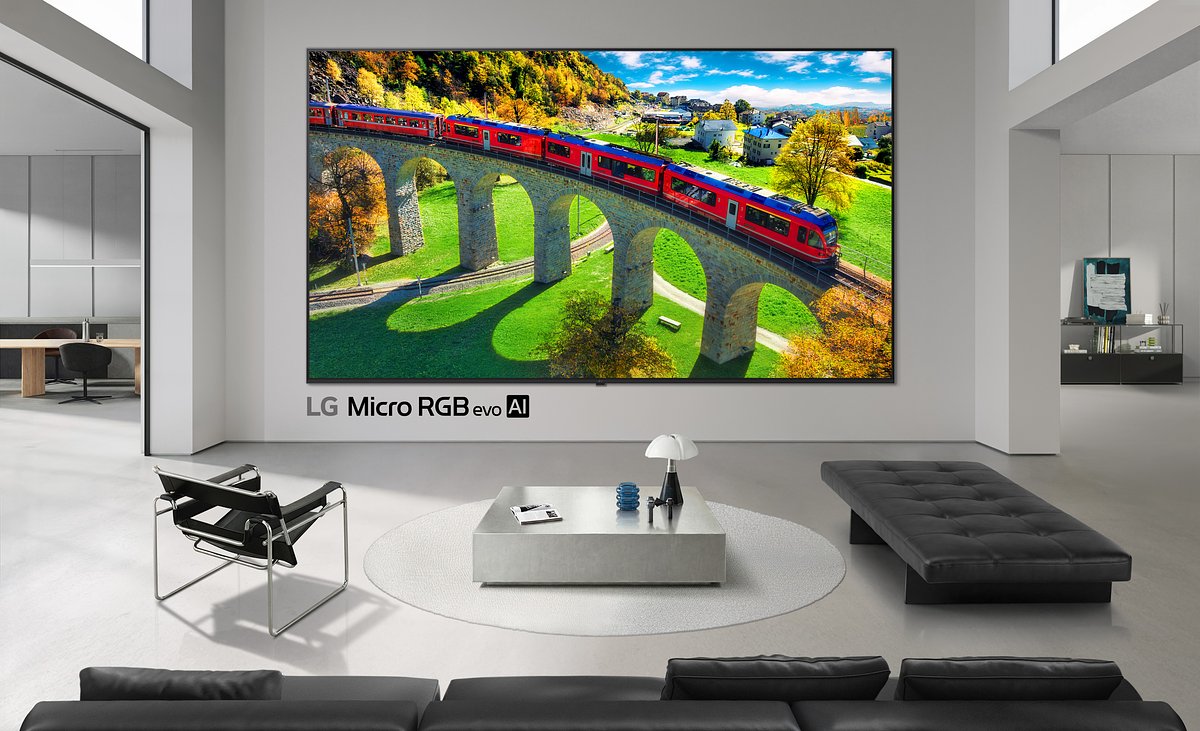
LG's Micro RGB evo TV Aims to Redefine LCD, Challenging OLED's Reign
ENGLEWOOD CLIFFS, NJ – December 16, 2025 – In a bold move ahead of the world's largest technology showcase, LG Electronics has announced its first-ever flagship RGB TV, the LG Micro RGB evo. Already a CES 2026 Innovation Award winner, this new television represents what the company calls a “significant step forward from MiniLED,” aiming to set a new benchmark for LCD performance by borrowing a page from its own OLED playbook.
The announcement signals a new front in the battle for living room supremacy, pitting advanced LCD technology directly against the established dominance of OLED. With claims of unprecedented color accuracy and intelligent processing, LG is positioning the Micro RGB evo not just as an alternative, but as a potential new champion for viewers who demand the absolute pinnacle of visual fidelity.
The Technology Behind the Breakthrough
At the heart of the LG Micro RGB evo is a fundamental shift in backlight technology. While premium MiniLED TVs from LG, Samsung, and others have dramatically improved LCD performance by using thousands of tiny LEDs for more precise backlighting, they typically rely on blue or white LEDs combined with quantum dot layers and color filters to produce a full-color image. The Micro RGB evo, as its name implies, uses a different approach: its backlight is composed of LG's smallest individual red, green, and blue LEDs.
This direct RGB light source is the key to its ambitious performance claims. By generating primary colors directly from the backlight, the system can, in theory, achieve a purer, wider spectrum of color than traditional methods. LG states this is an evolution of Micro RGB technology, powered by the new Dual AI Engine-based α (Alpha) 11 AI Processor Gen 3. This powerhouse chip is not only responsible for upscaling and image clarity but also enables what LG calls “OLED precision to control each of the RGB LED backlights,” a nod to the company’s 13 years of expertise in the self-emissive display category.
Complementing the advanced backlight is 'Micro Dimming Ultra,' a system that orchestrates more than a thousand dimming zones with exceptional accuracy. While this doesn't reach the per-pixel control of an OLED panel, it aims to deliver the highest contrast performance among LCD TVs, minimizing blooming and halo effects to reveal intricate details in both the darkest shadows and brightest highlights. This combination of an RGB light source and granular dimming control is designed to close the performance gap with OLED on contrast while potentially exceeding it in peak brightness and color volume.
A New Standard for Color Fidelity
Perhaps the most audacious claim made for the Micro RGB evo is its certified color performance. LG announced that the display has been certified by Intertek for achieving 100 percent color gamut coverage across three critical color spaces: DCI-P3, Adobe RGB, and BT.2020.
While 100% DCI-P3 coverage has become a benchmark for high-end HDR TVs, and Adobe RGB is vital for creative professionals, full coverage of BT.2020 is the true headline grabber. The BT.2020 (or Rec. 2020) color space is the standard for Ultra HD television and represents a vastly wider range of colors than current displays can typically reproduce. For years, achieving full coverage has been a holy grail for display engineers, with even the best consumer TVs topping out around 80-90%.
Achieving this milestone, enabled by a technology LG calls 'RGB Primary Color Ultra,' would mean the Micro RGB evo can display the full palette of colors intended by creators for 4K and 8K content, today and into the future. This offers unparalleled accuracy for professional digital editing and a more vibrant, true-to-life experience for viewing HDR cinema. It’s a feature that could make the TV exceptionally attractive to both discerning cinephiles and content creators who require uncompromising color proofing.
Market Strategy and the Premium TV Landscape
The introduction of the Micro RGB evo places LG in an interesting strategic position. The company is the undisputed leader in the OLED market, a technology it has championed for over a decade. Now, it is directly challenging the highest end of the LCD market, currently dominated by advanced MiniLED sets from competitors like Samsung and Hisense, who have also recently introduced their own RGB-based MiniLED TVs.
Available in large 100-inch, 86-inch, and 75-inch sizes, the MRGB95 model is clearly targeting the ultra-premium segment. While LG has not yet announced pricing, industry watchers expect it to command a significant premium, likely placing it above its flagship OLED models and in line with other nascent ultra-high-end technologies. This positions the Micro RGB evo as a halo product, showcasing the absolute limit of what is possible with LCD technology.
“Achieving the utmost visual fidelity is the goal of any display, and with the LG Micro RGB evo, we have achieved a milestone previously thought impossible for this category,” said Park Hyoung-sei, president of the LG Media Entertainment Solution Company. “This launch marks the evolution of the RGB TV, redefining industry standards to offer uncompromising performance for customers who demand exceptional color accuracy.”
Analysts suggest that if the technology can be scaled and made more affordable over time, it could pose a genuine threat to OLED's market share. Its inorganic LED nature eliminates the risk of burn-in, a lingering concern for some consumers, while promising extreme brightness levels that are difficult for OLEDs to match. The battle will likely come down to performance trade-offs and price. Consumers will have to weigh the perfect blacks and wider viewing angles of OLED against the potential for higher brightness and unprecedented color volume of Micro RGB.
More Than a Display: An Intelligent Hub
Beyond the panel technology, LG is emphasizing a deeply personalized and intelligent user experience. The Micro RGB evo runs on an upgraded version of the company’s webOS platform, which incorporates a suite of advanced AI features.
These include Voice ID, which tailors the experience to different users in a household, and an AI Picture/Sound Wizard that helps calibrate settings to individual preferences. The home screen features a 'My Page' for a customized content dashboard. Further enhancements like an upgraded AI Concierge, an integrated AI Chatbot, and a more powerful AI Search are designed to help users discover content and explore related information seamlessly. This focus on software and AI integration underscores a broader industry trend of transforming the television from a simple display into the central, intelligent hub of the smart home.
As the industry gears up for CES 2026, all eyes will be on LG’s booth to see if the Micro RGB evo lives up to its groundbreaking promises in person. The key questions will be how its real-world performance compares to top-tier OLEDs and whether its inevitable premium price tag can be justified in a competitive market. For now, LG has thrown down the gauntlet, signaling that the innovation race in television technology is far from over.