
- Single-Chip Control: LG's solution manages all in-car displays using a single high-performance SoC, reducing hardware complexity.
- Market Momentum: LG's Vehicle component Solutions (VS) Company reported $7.4 billion in sales in 2023 with a $66 billion order backlog.
- Industry Adoption: Android Automotive OS (AAOS) is already embraced by automakers like Volvo, GM, Ford, and Renault.
Experts view LG and Google's single-chip cockpit technology as a transformative step toward simplifying vehicle architecture while enhancing in-car personalization and connectivity, aligning with the industry's shift toward software-defined vehicles (SDVs).
LG & Google Redefine In-Car Tech with Single-Chip Cockpits
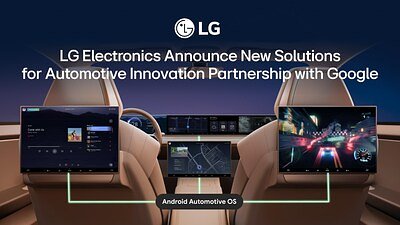
SEOUL, South Korea – May 28, 2026 – A fundamental shift in automotive interior design and functionality is underway, as LG Electronics, in a deepening partnership with Google, has unveiled a suite of solutions poised to dramatically simplify vehicle architecture while enriching the passenger experience. The announcement centers on a groundbreaking ability to control an entire vehicle's array of digital displays—from the instrument cluster to passenger entertainment screens—using a single, powerful computer chip.
This innovation, built upon Android Automotive OS (AAOS), tackles a major challenge for automakers: the spiraling cost and complexity of integrating the multiple screens that now define a modern car's cabin. By consolidating control, LG's solution promises to streamline manufacturing and open the door for more advanced, personalized in-car digital experiences, a development that has already earned strong recognition from Google and global car manufacturers.
The Breakthrough: Simplifying the Digital Cockpit
At the heart of LG's announcement is a technological leap that moves away from the conventional, fragmented approach to in-vehicle displays. Traditionally, each screen in a car, whether it's the driver's instrument panel, the central infotainment unit, or a rear-seat entertainment display, has required its own dedicated controller or System-on-Chip (SoC) to function. This has led to a complex web of hardware, increased power consumption, and higher production costs for automakers.
LG's new solution, powered by Qualcomm Technologies' next-generation Snapdragon® Cockpit Platform, upends this model. Leveraging a single high-performance SoC, the system can simultaneously manage multiple displays of varying sizes and aspect ratios. This is made possible by LG's proprietary resource allocation technology and system optimization, which efficiently manages the chip's processing power to deliver smooth, stable, and vibrant graphics across every screen without lag or interference.
This consolidation is a significant win for automakers striving to adopt the software-defined vehicle (SDV) model. By reducing hardware complexity and cost, manufacturers can more easily integrate expansive, panoramic dashboards and sophisticated multi-screen setups across a wider range of vehicle models, not just their premium flagships. The approach also simplifies the software development and update process, a critical component of the SDV philosophy.
A New Era of In-Car Personalization
Beyond the benefits for manufacturers, the new technology promises to transform the vehicle into a highly personalized and connected space for everyone inside. The system allows for a truly multi-user, multi-content environment. For instance, a driver can have a navigation map displayed on the main screen while the front passenger streams a movie on their dedicated display, and passengers in the back enjoy live television or games on their respective screens—all running concurrently and seamlessly.
This level of personalization is further enhanced by features like individual user logins. Each person can have their own profile with customized settings, content preferences, and app layouts, making the car feel uniquely theirs. The system also incorporates practical tools such as content sharing between screens and parental controls, allowing a parent in the front to manage what younger passengers are watching in the back.
To ensure safety and convenience, LG has also enhanced the voice command interface. In a cabin with large, panoramic dashboards, reaching for touch controls can be distracting. With simple spoken commands, users can now adjust screen layouts, launch applications, control key vehicle functions, and manage system volume, minimizing the need for physical interaction and allowing the driver to stay focused on the road.
The Strategic Alliance Shaping Software-Defined Vehicles
The collaboration between LG and Google is a powerful indicator of the automotive industry's trajectory. As vehicles become more defined by their software than their mechanical parts, partnerships between established automotive suppliers and tech giants are becoming essential. LG's Vehicle component Solutions (VS) Company has rapidly emerged as a key player, reporting sales of over $7.4 billion in 2023 and securing an order backlog exceeding $66 billion, signaling immense trust from automakers.
This solution is built on Android Automotive OS, an operating system that is rapidly gaining traction. Automakers like Volvo, General Motors, Ford, and Renault have already embraced AAOS to provide customers with a familiar, app-rich environment complete with integrated Google services like Maps and Assistant. By developing a solution that showcases the power and flexibility of AAOS in a complex, multi-display environment, LG and Google are strengthening the platform's appeal across the industry.
Patrick Brady, vice president of Android Automotive at Google, lauded the collaboration. "LG's solution clearly demonstrated how AAOS can enable more flexible, intelligent and engaging in-vehicle experiences," he stated. "Its seamless multi-display integration, intuitive voice controls and stable performance powered by a single SoC stood out, and we look forward to continuing our collaboration with LG to advance innovation for the SDV era."
Echoing this sentiment, Eun Seok-hyun, president of the LG Vehicle Solution Company, remarked, "Through continued collaboration with Google and other major global tech partners, LG will continue to deliver differentiated in-vehicle customer experiences."
A Crowded Field and a Clear Differentiator
LG and Qualcomm are not alone in the race to build the brain of the future car. The automotive semiconductor market is fiercely competitive, with established players like NXP Semiconductors, Renesas Electronics, and NVIDIA all offering powerful SoCs designed to manage the digital cockpit. These companies also provide solutions capable of driving multiple displays and enabling advanced AI features, creating a dynamic and innovative landscape.
However, the strength of the LG-Google solution lies in its deep, native integration of software and hardware. While competitors offer capable silicon, LG's system is optimized from the ground up to leverage the full potential of the Android Automotive OS ecosystem. This focus on a cohesive user experience, powered by a familiar and robust software platform, provides a compelling package for automakers looking to deliver the kind of seamless, connected, and personalized experience that modern consumers have come to expect from all of their devices.
Topics & Related
Automotive
Product Launch
Related Company Pulse