
- 97 TOPS: The ThinkEdge SE60n Gen 2 delivers up to 97 Tera Operations Per Second (TOPS) for AI processing.
- $317 billion: Worldwide spending on edge computing is forecast to reach $317 billion by 2026 (IDC).
- 4 new devices: Lenovo launched four new AI-driven ThinkEdge solutions for industrial applications.
Experts view Lenovo's expansion into edge AI as a strategic move to capitalize on the growing demand for real-time, on-device processing, positioning the company competitively in a rapidly evolving market.
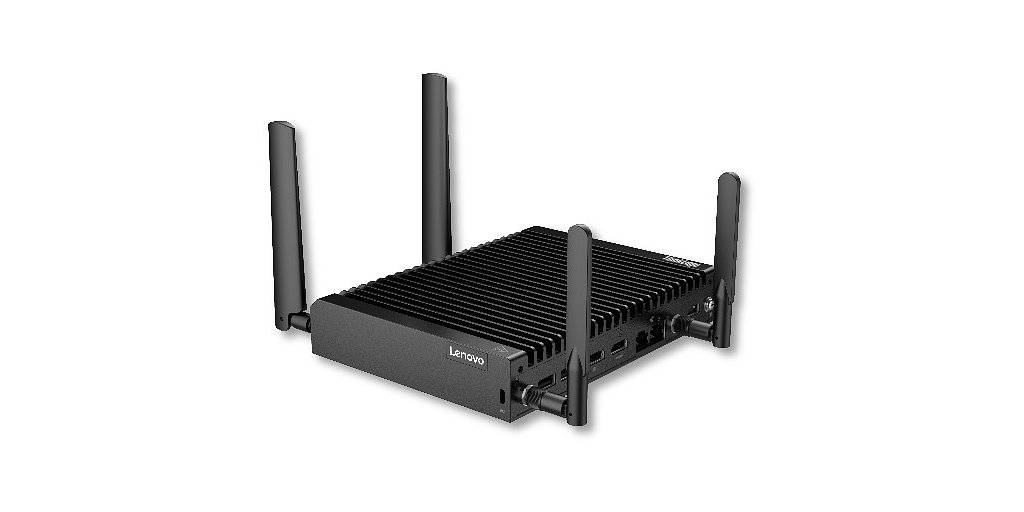
Lenovo's Edge AI Push: From Cloud to Factory Floor in Real Time
MORRISVILLE, NC – February 23, 2026 – Lenovo has dramatically expanded its industrial computing portfolio, launching a new generation of AI-driven ThinkEdge solutions designed to shift artificial intelligence from the cloud to the physical point of action. The announcement, highlighted by a showcase at the EuroShop 2026 retail fair in Düsseldorf, Germany, introduces four new devices aimed at embedding powerful data processing capabilities directly into factories, warehouses, retail stores, and urban infrastructure.
The new lineup includes the compact ThinkEdge SE10n Gen 2 gateway, the versatile AI-ready SE30n Gen 2, the high-performance SE60n Gen 2, and the company's first industrial all-in-one Panel PC, the ThinkEdge SE50a. This strategic push addresses a growing enterprise need to analyze data and make decisions locally, a paradigm known as edge computing, which promises to reduce latency, bolster data privacy, and enhance operational resilience where real-time insights are critical.
The New Frontier: Processing Power Where It's Needed
For years, the dominant model for AI has been cloud-centric, with massive data centers handling the heavy lifting of processing and analysis. However, for many industrial and commercial applications, this model introduces critical delays and dependencies on network connectivity. Lenovo's new portfolio is engineered to dismantle these barriers by delivering robust, on-device AI.
“Edge computing is where we turn insights into outcomes, and our next-generation ThinkEdge solutions place the power of AI exactly where decision making happens,” Marc Godin, Vice President & General Manager of WW OEM Solutions, stated in the announcement.
At the heart of this new generation are Intel Core processors, with the flagship ThinkEdge SE60n Gen 2 featuring Intel Core Ultra processors equipped with integrated AI accelerators. This allows the device to deliver up to 97 Tera Operations Per Second (TOPS), a metric that quantifies its immense capacity for running complex AI models. This level of performance enables demanding applications like multi-camera visual inspection, predictive analysis for machinery, and autonomous workflows without relying on a connection to a remote server. The fanless, ruggedized designs are built for 24/7 operation in harsh environments, withstanding the dust, temperature fluctuations, and vibrations common on a factory floor or in a bustling warehouse.
A Strategic Play in a Crowded Market
Lenovo's aggressive expansion into edge AI places it in a competitive and rapidly growing market. Worldwide spending on edge computing is forecast by IDC to reach an estimated $317 billion by 2026, with hardware initially representing the largest share of investment. This lucrative landscape has attracted major technology players, including HPE, Siemens, and Advantech, all of whom are vying for dominance.
HPE recently bolstered its ProLiant edge server line for rugged environments, while Siemens is expanding its Industrial Edge ecosystem with a focus on software and AI integration, often in partnership with NVIDIA. Advantech, another key competitor, is also leveraging NVIDIA's powerful processors to target robotics and healthcare AI. Lenovo's strategy appears to be providing a comprehensive, scalable portfolio that can meet customers at any point in their edge journey. The new lineup ranges from the lightweight ThinkEdge SE10n Gen 2, an intelligent gateway for basic connectivity and data capture, to the powerhouse SE60n Gen 2 for complex AI inferencing.
This tiered approach allows businesses to “start small and scale edge intelligence with confidence as their use cases evolve,” as Sanjeev Menon, Vice President & General Manager of Desktop Computing Business, noted. By offering a full stack of solutions—from gateways to high-performance computers and operator interfaces like the new ThinkEdge SE50a Panel PC—Lenovo aims to provide a more integrated and manageable ecosystem. This can be a crucial differentiator in a market where total cost of ownership, ease of deployment, and fleet manageability are as important as raw processing power.
Reshaping Industries from Retail to Robotics
The true impact of this technology is measured by its real-world applications. The decision to showcase the new portfolio at EuroShop 2026, a major international retail fair, underscores the immediate relevance of edge AI in transforming customer experiences and operations. In a retail setting, these devices can power real-time inventory tracking, use visual inspection to prevent loss at self-checkout, or enable smart shopping carts that provide personalized offers.
Beyond the retail floor, the applications are vast. In manufacturing, the ThinkEdge systems can analyze sensor data for predictive maintenance, preventing costly equipment failures. They can run quality control inspections on an assembly line with greater speed and accuracy than humanly possible. The new ThinkEdge SE50a Panel PC, an all-in-one computer available in multiple screen sizes, provides a direct interface for frontline workers to interact with these AI-driven insights, enhancing control and visibility at the point of action.
In healthcare, similar technology can support real-time medical imaging analysis, while in smart cities, it can be used for intelligent traffic management or monitoring public spaces for safety. By processing sensitive data locally—such as video feeds or proprietary operational data—enterprises not only act faster but also mitigate the security risks and costs associated with transmitting large volumes of information to the cloud. With availability for the new devices slated between April and July 2026, industries are on the cusp of deploying a new class of intelligence that lives not in a distant data center, but right where the work gets done.
Topics & Related
AI & Machine Learning
Enterprise IT
Manufacturing & Industrial
Artificial Intelligence
Edge Computing
Industry Conference
AI & Software Platforms
Related Company Pulse