
- 750+ units: Over 750 Leidos B220-HT explosive trace detection (ETD) systems already deployed across the European Union.
- 2026 deadline: Late-2026 compliance deadline for G1 Standard certification in Europe.
- Software update: G1 compliance achievable via a software update, avoiding costly hardware replacements.
Experts view Leidos' early G1 certification as a strategic advantage, reinforcing its market leadership in aviation security by ensuring client compliance and minimizing disruption ahead of regulatory deadlines.
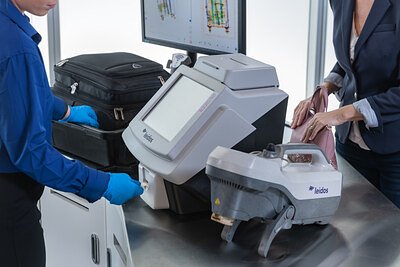
Leidos Secures Europe's Skies, Fortifies Market Position
RESTON, VA – December 02, 2025 – In a move that sends a clear signal to the aviation security market, Leidos announced its B220-HT explosive trace detection (ETD) system has achieved the stringent G1 Standard certification from the European Civil Aviation Conference (ECAC). While the press release highlights a key regulatory milestone, the story behind the transaction reveals a shrewd strategic maneuver to fortify its significant European footprint well ahead of a critical late-2026 deadline. For institutional investors and industry analysts, this is more than a compliance update; it’s a case study in proactive market positioning and risk mitigation.
The certification directly impacts over 750 Leidos B220-HT units already deployed at passenger screening checkpoints across the European Union. These airports now have a clear and guaranteed path to compliance, insulating them from the operational chaos and financial strain of a last-minute technology overhaul. By getting ahead of the curve, Leidos has not only solidified its relationships with existing clients but has also established a powerful competitive advantage in the ongoing battle for the airport security technology market.
Deciphering the G1 Standard
To understand the significance of Leidos’ move, one must first grasp the shifting landscape of European aviation security. The ECAC, which harmonizes aviation practices among its 44 member states, is driving a fundamental evolution from a reactive to a proactive security posture. Historically, major security upgrades have followed specific threats or attacks. The new G1 Standard, however, represents a forward-looking effort to raise the performance baseline and address emerging threats before they materialize.
The G1 Standard mandates significantly stricter detection capabilities for all ETD systems used at EU passenger checkpoints. It raises the bar for identifying a broad range of explosives and chemicals from trace particulate samples, a critical function in high-throughput airport environments. Equipment is subjected to a rigorous Common Evaluation Process (CEP) to verify that it meets these elevated performance benchmarks. Come late 2026, any ETD system that is not G1 compliant will be obsolete for use in these settings.
This regulatory shift is not happening in a vacuum. It is part of a continent-wide push to strengthen security protocols, ensuring that technology keeps pace with the increasing sophistication of potential threats. For manufacturers, achieving G1 certification is now the price of admission to the lucrative European market.
A Strategic Move in a Competitive Field
Leidos is not the only player in this high-stakes game. The aviation security sector is a competitive field dominated by a handful of specialized technology giants, including Smiths Detection and Rapiscan Systems. Smiths Detection, for instance, recently announced G1 approval for its IONSCAN 600 system, signaling that the race for compliance is well underway.
However, Leidos' early certification for the widely deployed B220-HT is a masterstroke of client retention and market defense. With more than 750 units already integrated into airport operations, the announcement provides immediate assurance and a simple pathway forward. This preemptive action effectively neutralizes a key point of vulnerability that competitors could have exploited. Airport operators are notoriously risk-averse; the certainty Leidos now offers is a powerful currency.
This proactive certification serves as a powerful marketing tool, transforming a regulatory hurdle into a competitive differentiator. As the 2026 deadline looms, airports using non-compliant or uncertified systems will face mounting pressure to upgrade or replace their equipment. Leidos is now positioned not just as a provider of compliant technology, but as a stable partner that anticipates regulatory changes and protects its clients from disruption.
The Airport Perspective: Upgrades over Upheaval
The financial and operational implications for airports are profound. The prospect of replacing hundreds of security machines represents a massive capital expenditure and a logistical nightmare. Leidos' solution, however, sidesteps this scenario. The G1 compliance for the B220-HT is achievable via a software update, a detail that is critical for airport operators and their financial backers. This extends the life and value of their existing hardware investments.
As Michael Van Gelder, a senior vice president at Leidos, stated, "We look forward to working with our customers to roll out the required software changes ahead of the deadline." This messaging underscores a transition focused on partnership and continuity rather than costly replacement. Software-based upgrades can be scheduled during off-peak hours, minimizing impact on passenger flow and avoiding the extensive staff retraining and infrastructure adjustments associated with new hardware.
This approach aligns with the broader financial pressures on the aviation industry. While airports are making significant investments in next-generation technology, they are also keen to maximize the lifecycle of existing assets. A cost-effective software path to G1 compliance is an elegant solution that balances enhanced security with fiscal prudence, making it an attractive proposition for airport authorities managing tight budgets.
Beyond Trace Detection: The Checkpoint of Tomorrow
While the G1 certification is a significant event, it’s a single piece in the much larger mosaic of the evolving airport security checkpoint. This ETD upgrade is occurring in parallel with other transformative technological shifts. Across Europe, a phased mandate is driving the adoption of Computed Tomography (CT) scanners for cabin baggage by 2026. These systems provide detailed 3D images, enhancing threat detection and promising a future where passengers no longer need to remove liquids and electronics from their bags.
Artificial intelligence (AI) and machine learning are being woven into the fabric of the modern airport. AI algorithms are sharpening the accuracy of automated threat detection in baggage, while AI-powered video analytics are being tested to identify anomalous behavior in passenger queues. Simultaneously, biometrics are streamlining the passenger journey, using facial recognition to create a more seamless and secure identity verification process from check-in to boarding.
In this context, Leidos' move to future-proof its ETD systems is essential. As checkpoints become more integrated and data-driven, every component must meet the highest standards of performance and interoperability. Having a G1-compliant ETD system ensures that this crucial layer of security remains robust and relevant amidst a wave of innovation. It reinforces the principle that even as revolutionary technologies like AI and CT scanning transform the passenger experience, the foundational need for reliable, advanced threat detection remains paramount.