
- $10 million gift from alumnus David Jackson ’67 to fund the Jackson Laboratory.
- 34 students participated in the FYRE pilot program, successfully designing functional prototypes.
- 2028 target for full implementation of FYRE for all first-year engineering students.
Experts agree that Lehigh's shift to hands-on, project-based learning in the FYRE program aligns with a growing consensus that engineering education must integrate practical skills with theoretical knowledge to produce industry-ready graduates.
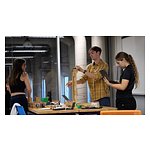
Lehigh Reimagines Engineering with $10M Gift for Hands-On Program
BETHLEHEM, PA – March 17, 2026 – Lehigh University is set to fundamentally reshape its engineering curriculum, propelled by a transformative $10 million gift from alumnus David Jackson ’67 and his family. The donation will create the Jackson Laboratory, a cutting-edge, open-concept studio designed to house the university's innovative First-Year Rossin Engineering (FYRE) program. This initiative represents a decisive move away from traditional, theory-heavy instruction towards a model where first-year students immediately engage in hands-on problem-solving, building, and creating.
The new lab will be established within the university's historic Packard Laboratory, symbolizing a bridge between Lehigh’s storied engineering past and its ambitious future. The move is a cornerstone of the university's 'Inspiring the Future Makers' strategy, which aims to produce graduates who are not just versed in theory but are practice-ready innovators on their first day in the workforce.
“The Jackson Laboratory will solidify Lehigh as a leader in cultivating critical thinkers and doers, engineers who are best prepared to create, to lead and to succeed,” said Joseph J. Helble ’82, president of Lehigh University, underscoring the strategic importance of the investment.
From Theory to Practice on Day One
The FYRE program marks a radical departure from the standard first-year engineering experience found at many universities. For decades, the introductory year has been dominated by foundational but abstract courses in calculus, physics, and chemistry, with practical engineering applications often delayed until the sophomore or junior year. FYRE upends this model.
“FYRE is a complete revamping of what we’ve traditionally done in engineering education both at Lehigh and as a discipline,” said Steve DeWeerth, Lehigh’s Lew and Sherry Hay Dean of Engineering. The program immediately immerses students in project-based learning, research experiences, and collaborative challenges that have direct societal relevance, from developing sustainable infrastructure to designing new healthcare technologies.
A pilot version of the program involving 34 students has already demonstrated the model's potential. In intensive modules, students with little prior experience have designed and built functional machines, including prototypes for healthcare vending machines and automated agricultural equipment. This hands-on work is designed not to replace fundamental science and math, but to provide immediate context for their importance. Instead of relying solely on exams, the program uses competency-driven assessments and digital portfolios to track student progress.
The goal is to accelerate the development of a professional engineering identity. By tackling authentic problems from the outset, students begin to see themselves not just as learners, but as active engineers. This approach is intended to better prepare them for the complex, interdisciplinary challenges that define the modern workplace.
A Philanthropic Vision for Future Makers
The $10 million gift from David Jackson ’67, Patricia Jackson, Suzanne Jackson, and the Suzanne and David Jackson Foundation is driven by a clear vision for what engineering education should be. As a chemical engineering graduate, David Jackson recognized a gap between academic learning and real-world application.
“It’s one thing to learn a calculus theorem, memorize it, and regurgitate it for a quiz,” David Jackson said. “It’s something else altogether to make something or fix something that’s broken.”
His sentiment reflects a growing consensus that effective engineering education must integrate doing with knowing. The Jackson Laboratory will be the physical embodiment of this philosophy. The open-concept studio will be equipped with 3D printers, laser cutters, and other evolving technologies, providing students with the tools to bring their ideas to life. The space is designed to be flexible and collaborative, with surrounding areas for faculty engagement and group presentations to help students hone crucial communication and leadership skills.
This philanthropic investment is not merely about funding a new building; it is about endorsing a pedagogical shift. By backing the FYRE program, the Jackson family is investing in a model that prioritizes creativity, practical skills, and the development of a problem-solving mindset, complementing the university's rigorous theoretical education.
Answering the Call for a New Kind of Engineer
Lehigh's initiative is at the forefront of a national trend. Across the country, industry leaders and academic institutions are re-evaluating how to best prepare the next generation of engineers. The demand is for graduates who possess not only technical depth but also a suite of transferable skills: creativity, critical thinking, teamwork, and the ability to communicate complex ideas to diverse audiences. The traditional, siloed approach to education is increasingly seen as insufficient for producing these well-rounded professionals.
Experiential learning, once a supplemental part of the curriculum, is now becoming central. By making a hands-on, project-based curriculum the standard for all first-year engineering students, Lehigh is making a bold statement. The FYRE program, which will expand to include every first-year student in the P.C. Rossin College of Engineering and Applied Science by 2028, is designed to be a comprehensive and inclusive model, not an optional track for a select few.
This approach aims to produce graduates who are more adaptable, more resilient, and better equipped to add value to employers from day one. By grappling with ambiguity and working in teams to create tangible solutions early in their academic careers, students develop the confidence and competence needed to thrive in a rapidly changing technological landscape.
Bridging Legacy and Innovation
The decision to house the state-of-the-art Jackson Laboratory within Packard Laboratory, the hub of Lehigh Engineering since 1929, is deeply symbolic. It represents a commitment to building the future upon a foundation of historical strength. This fusion of old and new reflects the university's belief that innovation does not require discarding tradition, but rather re-energizing it.
The impact of this new space is expected to be profound, transforming the student experience and the very culture of the engineering college. Provost Nathan Urban described the vision for the lab’s role in shaping the next generation of Lehigh engineers.
“This lab will be where students do not just study engineering, it will be the place where they become engineers,” Urban stated. The Jackson Laboratory is envisioned as more than just a workshop; it will be the heart of the first-year engineering community—a vibrant, visible hub where creation, collaboration, and learning are on constant display, inspiring students and demonstrating the power of engineering in action.