
- $330 million: Federal and provincial governments' investment in Bécancour's port infrastructure to support the battery sector.
- $3 billion: Value generated by Laurentide Controls' interventions in Eastern Canada since 2023, aiming for $100 billion by 2033.
- 20,000 sq. ft.: Size of Laurentide's new service center in Bécancour, designed to support industrial decarbonization and green energy projects.
Experts would likely conclude that Laurentide Controls' strategic investment in Bécancour reinforces the region's role as a critical hub for North America's energy transition, mitigating risks and fostering long-term industrial growth despite short-term market fluctuations.
Laurentide's Bécancour Bet: Powering Quebec's Energy Transition Hub
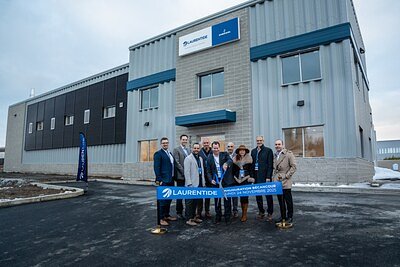
BÉCANCOUR, QC – November 25, 2025 – Laurentide Controls, a Quebec-based industrial optimization firm, officially opened its sixth service center here today, a 20,000-square-foot facility designed to support the region's heavy industrial base. While any such investment is a welcome economic boost, the true significance of this opening lies in its strategic placement at the absolute epicenter of Quebec's ambitious energy transition. This is not just another industrial service hub; it is a calculated and crucial bet on the future of Bécancour as a North American nexus for battery manufacturing, green hydrogen, and industrial decarbonization, providing a critical layer of support for an economic transformation in progress.
A Strategic Anchor in an Industrial Valley
The choice of Bécancour is no accident. The city is the centerpiece of the Vallée de la transition énergétique (VTE), an official innovation zone designated by the Quebec government in 2023 to fast-track the battery supply chain and green energy technologies. Billions in public and private capital are flowing into the region, funding massive projects like the Ultium Cam cathode plant—a joint venture between General Motors and POSCO Future—and Nemaska Lithium's operations. Just last year, the federal and provincial governments jointly committed nearly $330 million to expand the local port infrastructure, specifically to handle the demands of this burgeoning battery sector.
However, the path to electrification is not a straight line. Recent market softness in the North American electric vehicle sector has led to a pause in the second phase of the Ultium Cam plant and the subsequent cancellation of a planned Vale nickel sulfate facility that was to be its supplier. Yet, this is where Laurentide's move becomes particularly insightful. Rather than being deterred by short-term market fluctuations, the company is embedding itself for the long haul, establishing the operational backbone required by these industrial giants. Its services—automation, reliability, and process control—are fundamental to the success of these capital-intensive industries, regardless of production timelines. The presence of a sophisticated local service partner de-risks these massive investments, shoring up investor confidence and making the region more attractive for the next wave of development.
Beyond the Toolbox: The Business of Uptime
For the industrial players setting up shop in Bécancour, the greatest operational threat is downtime. In a highly automated, continuous-process facility like a battery materials plant, a single valve failure or control system glitch can halt production, potentially costing millions per day. Laurentide's new center is designed as an antidote to this risk. By providing local valve and pump repair, assembly, and advanced instrumentation support, the company drastically reduces response times and logistical costs for plants that were previously serviced from hubs in Montreal.
But the strategy goes far beyond simple repair. As Steve Dustin, President and CEO of Laurentide Controls, explained at the opening, "By establishing ourselves here, we strengthen our proximity, support local businesses, and invest in solutions that foster competitiveness, productivity, and sustainability." This philosophy is quantified through the company's "Value Blueprint" initiative. Launched in 2023, this proprietary model aims to measure the direct financial impact of its interventions in terms of improved reliability, productivity, and energy savings. The company claims to have already generated over $3 billion in such benefits for its Eastern Canadian clients, with an audacious goal of reaching $100 billion in cumulative value by 2033. For business leaders and sustainability professionals, this shifts the conversation from a cost-based service transaction to a partnership focused on demonstrable ROI, providing a clear framework for justifying investments in the optimization required by the energy transition.
Cultivating Talent to Close the Skills Gap
The rapid industrialization of Bécancour has created a significant challenge: a shortage of skilled labor. The influx of multi-billion-dollar projects has stretched the local talent pool thin, a problem that threatens to bottleneck the region's growth potential. Laurentide Controls is addressing this critical issue head-on by integrating training and workforce development directly into its new facility. The center will not only house repair services but also a customer experience hub for hands-on training and system simulations.
This investment in human capital is a strategic imperative. It helps ensure that a local workforce can operate and maintain the sophisticated systems being deployed in the new plants, creating a more resilient and self-sufficient industrial ecosystem. This approach creates a virtuous cycle: advanced industries attract skilled service providers, who in turn help develop a deeper local talent pool, making the region even more attractive for future investment. The importance of this role was highlighted by Alain Lemieux, President and CEO of the Vallée de la transition énergétique, who noted, "The Laurentide Controls centre in Bécancour will play a strategic role in our region: not only will it offer technical services, but it will also serve as an important hub for training and support for regional development."
Walking the Talk on Sustainability
In a region branded as the "Energy Transition Valley," corporate credibility hinges on a genuine commitment to sustainability. Laurentide Controls is bolstering its position by integrating green practices into its own operations. The new Bécancour building features a locally manufactured solar wall to reduce its heating and cooling energy consumption, a tangible demonstration of its focus on energy performance. Furthermore, the company is undertaking a progressive conversion of its service fleet to electric vehicles, a move that aligns perfectly with provincial incentives like the "Roulez Vert" program and the VTE's core mission of transport electrification.
By adopting the very technologies its clients are helping to build, the firm reinforces its role as a genuine partner in the transition. This commitment extends to its supply chain, with the company prioritizing local sourcing during the center's construction to strengthen regional economic integration. It is a holistic approach that demonstrates an understanding that long-term success in the green economy requires embedding sustainability into every facet of the business, from the services offered to the buildings they are offered from. This practical application of sustainable principles provides a powerful model for other service and supply chain businesses looking to thrive in Quebec's evolving industrial landscape.