
- 5 new branches by end of 2027 in Madison area
- $100 donation per checking account opened at new locations (up to $50,000 total)
- $7.5 billion credit union expanding its footprint
Experts would likely conclude that Landmark Credit Union's aggressive expansion in Madison reflects a strategic bet on the enduring value of physical banking combined with targeted community investment.
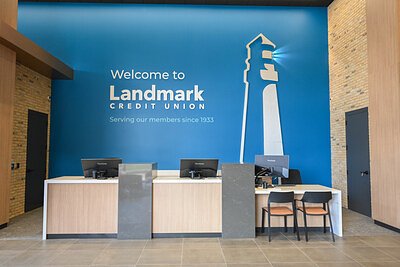
Landmark's Madison Gambit: A Bet on Bricks, Mortar, and Community
MADISON, Wis. – June 29, 2026 – In a move that signals a confident bet on both regional growth and the enduring value of physical banking, Landmark Credit Union today announced an aggressive expansion plan for the Madison area. The Wisconsin-based cooperative will establish five new branches by the end of 2027, a significant investment that quintuples its physical footprint in one of the state's most dynamic economic hubs.
The expansion commences immediately with the grand opening of a nearly 3,700-square-foot flagship branch at 1712 Monroe Street. This new location, replacing a smaller nearby office, is positioned to serve the bustling neighborhoods surrounding Camp Randall Stadium and represents the first tangible step in a much broader strategy.
"Madison is an important market for Landmark, and the opening of our Monroe Street branch reflects our commitment to serving this immediate and expanded community for years to come," said Tim Mackay, President and CEO of Landmark Credit Union. "While Landmark has maintained a single Madison branch presence for more than a decade, this is the first step in a broader investment in the region as we increase access to financial services and continue building relationships with the people, families and businesses that call this community home."
A Strategic Push into a Competitive Market
Landmark's expansion is a meticulously planned offensive in a competitive financial landscape. The decision to add four more branches over the next 18 months—in Sun Prairie, Middleton, Waunakee, and on East Washington Avenue—demonstrates a clear strategy to embed itself within Dane County's key growth corridors. This move goes far beyond simply planting flags; it's about creating a comprehensive service network.
The planned locations are a mix of new construction and strategic leasing. The Sun Prairie and Waunakee branches will be newly built facilities tailored to growing communities, while the Middleton branch will occupy a prime 4,000-square-foot leased space on University Avenue. The East Washington Avenue location, near the state Capitol, is particularly noteworthy. It will not only offer retail and investment services through the Landmark Investment Center (LIC) but will also become a full-service hub for the institution's commercial banking team, signaling a direct play for a larger share of the local business market.
This physical expansion is part of a larger, assertive growth pattern for the $7.5 billion credit union. The Madison initiative comes on the heels of a recent agreement to acquire American National Bank-Fox Cities, a move that will significantly bolster its presence in Northeast Wisconsin. For institutional observers, this pattern suggests Landmark is not just defending its territory but actively seeking to become a dominant statewide player, leveraging its cooperative model to compete directly with regional and national banks. By investing heavily in brick-and-mortar infrastructure, Landmark is making a calculated wager that in an increasingly digital world, tangible, convenient, and community-focused service points still hold immense value for acquiring and retaining members.
Beyond Banking: A Model for Integrated Community Investment
What sets Landmark's Madison expansion apart from a standard corporate growth story is its deeply integrated social mission. The credit union has forged a significant partnership with the United Way of Dane County, tying its business objectives directly to a critical community need. For every new checking account opened at its five new Madison-area locations, Landmark will donate $100 to United Way's 'Reducing School Mobility' initiative, pledging up to $50,000 over the next two years.
This initiative is not a token charitable gesture; it targets one of the most acute challenges facing the region. The 'Reducing School Mobility' program provides direct support to families experiencing housing instability, helping them maintain their housing and, crucially, allowing their children to remain in their schools. The social and academic disruption caused by frequent moves is a well-documented barrier to educational success. Landmark's investment aims to provide a stabilizing force for these families, preventing the upheaval that can derail a child's development.
This partnership creates a powerful symbiotic relationship: as Landmark succeeds in growing its member base, the community directly benefits. The model reframes the customer acquisition process into a vehicle for social good, offering a compelling proposition for socially conscious consumers who want their financial choices to reflect their values. By earmarking funds for a specific, high-impact program, the institution demonstrates a sophisticated understanding of local issues, moving beyond generalized corporate philanthropy to targeted, measurable intervention. This approach could serve as a new playbook for financial institutions looking to demonstrate authentic community commitment.
Bricks vs. Clicks: A Hybrid Strategy for a New Era
In an era where fintech startups and neobanks champion a digital-only future, Landmark's substantial investment in physical branches might seem counterintuitive. However, a closer look reveals a nuanced hybrid strategy that acknowledges the complexities of modern banking. The new branches are not simply teller windows and deposit slips; they are designed as comprehensive financial hubs offering a suite of services from retail banking and advanced ATMs to mortgage lending, commercial banking, and access to the Landmark Investment Center.
This strategy recognizes that while many day-to-day transactions have moved online, major life decisions—securing a mortgage, planning for retirement, or launching a business—often benefit from face-to-face consultation and trusted local relationships. By building these modern, accessible facilities, Landmark is betting that "high-touch" service remains a key differentiator, especially for a not-for-profit financial cooperative built on the principle of member service.
The institution's presence in Madison isn't new—it entered the market through a 2013 merger with Badger Campus Credit Union—but this expansion marks a profound escalation of its commitment. Backed by a 90-year history, the credit union is leveraging its scale and experience to deliver a member-centric alternative in a crowded market. The expansion is a bold declaration that for Landmark Credit Union, the future of banking isn't a choice between bricks and clicks, but a thoughtful integration of both, grounded in the specific needs of the communities it aims to serve.