
- 16 million views: The film This Is Not An Ad has amassed over 16 million views across Instagram and YouTube.
- 4 decades: Last Chance for Animals (LCA) has been advocating for animal rights for over 40 years.
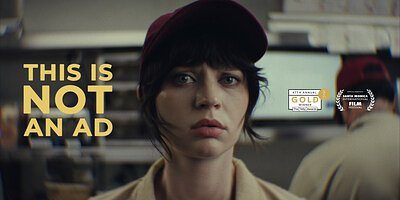
- 2 awards: The film has won a Gold Telly Award for Social Impact and premiered at the Santa Monica Film Festival.
Experts in activism and media agree that this campaign effectively uses psychological storytelling to challenge consumer culture and animal cruelty, marking a significant evolution in advocacy strategies.
LA Billboards Blur Reality and Ads in New Sci-Fi Activist Campaign
LOS ANGELES, CA – May 20, 2026 – Commuters and pedestrians across Los Angeles are encountering a jarring new sight on city billboards this month. What at first glance appear to be standard advertisements for fashion or makeup peel back to reveal unsettling, visceral imagery hidden beneath. This is not a glitch; it is a meticulously planned public art campaign designed to make people look twice and question the polished surfaces of consumer culture.
The campaign is the real-world extension of This Is Not An Ad, a four-minute psychological thriller from the international non-profit Last Chance for Animals (LCA). The film, written and directed by Dustin Brown, has already become a viral phenomenon, amassing over 16 million views across Instagram and YouTube and igniting online discussions with its surreal visuals and potent social commentary. Starring Sierra McCormick of American Horror Story fame, the short has earned both popular and critical acclaim, recently premiering at the Santa Monica Film Festival and securing a Gold Telly Award for Social Impact.
The New Face of Activism
For over four decades, Last Chance for Animals has been on the front lines of animal advocacy, earning a reputation as the “FBI of Animal Rights” for its rigorous undercover investigations into animal cruelty. Their methods have historically included direct action, legislative lobbying, and evidence-based public awareness campaigns. This new initiative, however, marks a significant evolution in the organization's strategy, trading protest signs for production design and picket lines for psychological horror.
By embracing narrative filmmaking and immersive public art, LCA is venturing into the realm of “artivism,” a hybrid form of advocacy that prioritizes storytelling to engage audiences on an emotional and intellectual level. The goal is to sidestep the desensitization that can accompany traditional activist messaging. Instead of presenting facts and figures alone, the campaign creates an experience designed to linger in the viewer's mind.
“Storytelling like this has the power to go beyond preaching to the choir, reaching new audiences and revealing the often-hidden reality of animal suffering,” said LCA president and founder Chris DeRose in a statement. “It opens the door for audiences to think more deeply about issues they may otherwise avoid.” This approach acknowledges that in a media-saturated landscape, a compelling narrative can often be more persuasive than a direct appeal, breaking through the noise to plant a seed of critical thought.
Unmasking Consumerism's False Reality
The film itself follows a fast-food cook, played by McCormick, whose grip on reality begins to fray as she experiences disturbing visions that distort the advertisements surrounding her. The glossy, smiling faces on posters and screens melt away to reveal something far more sinister, blurring the line between hallucination and the grim truths of production. The narrative is directly inspired by LCA’s own undercover investigations into the industries behind the food we eat, the clothes we wear, and the products we use.
The project is a direct critique of modern branding and its power to construct a sanitized version of reality. Director Dustin Brown explains that the film grew from this central contradiction. “When branding becomes ubiquitous, the ad disappears, and we're left with the false reality it creates,” Brown stated. “I hope the film unsettles, lingers, and encourages audiences to peel back that false reality. Meaningful change begins with the act of seeing clearly.”
The film’s horror isn't derived from supernatural monsters, but from the suggestion that the real horror is the one we participate in unknowingly every day. It leverages the sci-fi and thriller genres to explore the psychological dissonance of living in a world where the origins of consumer goods are intentionally obscured. By making the familiar strange and unsettling, the film and its accompanying billboard campaign challenge viewers to confront the ethical implications of their consumption habits, from factory farming to animal testing and the fur trade—all core issues for LCA.
A Director with a Social Conscience
The project's artistic and thematic success is anchored by its director, Dustin Brown. A graduate of the prestigious American Film Institute (AFI) Directing Program, Brown has built a career creating character-driven, socially conscious films that have been recognized at major festivals like Cannes and BAFTA. His work demonstrates a consistent passion for using narrative to explore complex social issues.
This Is Not An Ad is not his first foray into animal advocacy through film. His previous short, “Casa de Carne,” a viral hit with over 10 million views, posed a stark ethical question about meat consumption and earned a Gold Telly Award for Social Responsibility. Another project, a stop-motion animation titled “Super Cow,” tells the story of a dairy cow’s escape and won Best Short Film at the 2023 Santa Monica Film Festival. He has also collaborated with organizations like the Humane Society on anti-fur shorts.
Brown's involvement highlights a growing movement of filmmakers who are lending their talents to non-profit causes, creating high-quality, “impact-driven” content that rivals mainstream entertainment. His established voice in this space lends credibility to LCA’s campaign, ensuring the final product is not just a message, but a compelling piece of cinema designed for maximum emotional and psychological impact.