
- $35 savings: Customers can save up to $35 on a tank of gas with Kroger's 4X Fuel Points promotion.
- 35-gallon cap: The promotion targets households with larger vehicles, offering a substantial reward.
- 2,700+ stores: Kroger's extensive physical footprint supports the promotion's reach.
Experts would likely conclude that Kroger's 4X Fuel Points promotion is a strategic move to drive customer loyalty, increase spending, and gather valuable data, ultimately strengthening its competitive position in the grocery sector.
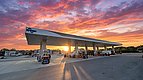
Kroger's Fuel Point Gambit: A Strategic Play for Summer Supremacy
CINCINNATI, OH – June 08, 2026 – As Americans gear up for summer road trips and backyard barbecues, The Kroger Co. has fired a significant shot in the ongoing battle for consumer loyalty. The grocery giant today announced a series of 4X Fuel Points events, promising customers savings of up to $35 on a tank of gas. While the headline speaks directly to budget-conscious households grappling with the economic realities of 2026, the strategy behind the promotion reveals a far more intricate game plan. This isn't just about cheaper gas; it's a calculated move to drive traffic, deepen digital engagement, and build a competitive moat in a sector defined by razor-thin margins and shifting consumer habits.
In a retail environment where customer allegiance is increasingly fleeting, Kroger is doubling down on one of the most effective tools in its arsenal. The promotion, which quadruples the points earned on grocery purchases on specific days throughout June and July, is designed to be both highly visible and deeply impactful on the household budget. As Mary Ellen Adcock, Kroger's executive vice president and chief merchant and marketing officer, stated, "We're focused on helping customers maximize value every time they shop." This focus on value, however, serves a dual purpose: providing immediate relief to shoppers while simultaneously reinforcing the ecosystem that makes them long-term, profitable Kroger customers.
Decoding the Deal: The Real Value Proposition
For the consumer, the appeal is straightforward, but the mechanics reveal the scale of Kroger's strategic intent. The company's standard loyalty program awards one fuel point for every dollar spent. A discount of $0.10 per gallon is typically earned for every 100 points, with a maximum redeemable discount of $1.00 per gallon. To reach that maximum requires accumulating 1,000 points.
Under the 4X promotion, this calculus changes dramatically. The $250 a family might spend on groceries over one or two large shopping trips suddenly yields 1,000 points, unlocking the full $1.00-per-gallon discount. When applied to the 35-gallon fill-up limit, this translates directly into the advertised $35 savings. While the average passenger car has a tank size of 12 to 16 gallons, the 35-gallon cap is a significant lure for the growing number of households driving larger SUVs and trucks, making the reward feel substantial and directly combatting one of the most volatile expenses for American families.
This isn't a marketing gimmick; it's a tangible, achievable reward, but one that is meticulously designed to encourage a specific spending threshold. By setting the maximum reward at a level that requires a $250 spend, Kroger incentivizes basket-building and stock-up trips, pulling forward consumer spending and consolidating it within its stores, away from competitors.
The New Battlefield: Loyalty in the Age of Omnichannel Retail
The grocery fuel rewards program is a well-established concept, but its strategic importance has only grown in the current economic climate. Kroger’s aggressive 4X promotion should be viewed as a direct competitive maneuver. Its primary rival, Albertsons Companies (which operates Safeway, Vons, and other banners), runs a similar points-based system. However, Albertsons' redemptions are often capped at a 25-gallon fill-up, giving Kroger a distinct advantage in the perceived value offered to customers with larger vehicles.
Meanwhile, retail behemoth Walmart has opted for a different model, offering its Walmart+ members a flat per-gallon discount at partner gas stations. While simple, this approach doesn't directly tie fuel savings to in-store grocery spending in the same powerful way Kroger's program does. Kroger's system creates a virtuous cycle: the more you spend on groceries, the more you save on fuel, which in turn reinforces the decision to do your primary grocery shopping at Kroger.
This strategy is central to winning what retail analysts call the "share of wallet." In a high-inflation era, consumers are more likely to consolidate shopping trips to save time and gas. A compelling fuel rewards program can be the deciding factor that determines whether a shopper visits a Kroger or a competing store. The promotion drives traffic not only to Kroger's 2,700-plus physical stores but also to its digital channels, as the 4X offer is valid for pickup and delivery orders, further embedding the company into the customer’s omnichannel shopping habits.
A Data-Fueled Engine for Growth and De-Risking
Perhaps the most critical aspect of this promotion is the one least visible to the average shopper: the data. To participate, customers must clip a digital coupon in the Kroger app or on its website. This simple action is a crucial touchpoint in Kroger's sophisticated data strategy. It provides a clean signal of customer engagement and allows the company to track the promotion's effectiveness on a granular level.
This data is the lifeblood of Kroger's future growth. The company has repeatedly emphasized that its digitally engaged households are its most valuable, spending nearly three times more than their non-digital counterparts. Each coupon clip, every personalized offer redeemed, and every online order placed feeds a massive data engine. This engine powers Kroger Precision Marketing, the company's retail media arm, which has become a significant alternative profit business.
By understanding exactly which customers respond to a 4X fuel promotion, Kroger can refine its future offers, personalize marketing campaigns, and sell more effective advertising to its CPG partners. The promotion effectively subsidizes this data acquisition. In essence, while the customer sees a discount on gas, Kroger sees a rich, detailed portrait of their shopping behavior, which is arguably more valuable in the long run than the margin on a single grocery basket.
This data-centric approach is a powerful form of de-risking. By fostering deep, digitally-trackable relationships with its most valuable customers, Kroger builds a defensive moat against competitors and economic headwinds. It creates a stickiness that goes beyond simple price competition, evolving into a personalized value ecosystem that is difficult for customers to leave and for competitors to replicate.
In the grand scheme of the 2026 retail landscape—a landscape still being shaped by the uncertain fate of the Kroger-Albertsons merger and persistent consumer price sensitivity—this summer promotion is a microcosm of modern business strategy. It demonstrates how a legacy retailer is leveraging its physical footprint, digital infrastructure, and loyalty programs as an interconnected system to drive predictable behavior, secure market share, and fuel future growth in an increasingly complex world.