
- $4 billion: Projected global market value for nuclear waste solutions by 2030
- 35%: Target share of nuclear power in South Korea's energy mix by 2038
- 2060: Planned completion date for South Korea's permanent deep geological repository
Experts would likely conclude that South Korea is strategically positioning itself as a global leader in nuclear waste management, leveraging its domestic expertise to export cutting-edge solutions while reinforcing its commitment to safe and peaceful nuclear energy use.
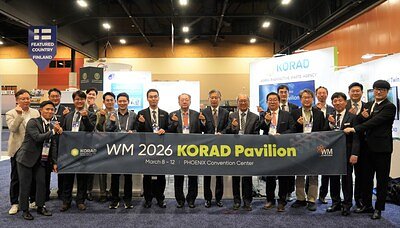
Korea's Nuclear Gambit: Exporting Waste Solutions to a Waiting World
PHOENIX, AZ – March 12, 2026 – Amid the sprawling exhibition halls of the Waste Management Symposia (WM 2026), the world's largest gathering on radioactive waste, the delegation from the Korea Radioactive Waste Agency (KORAD) was not just attending a conference. They were launching a new chapter in South Korea's national strategy: positioning the nation as a global leader in solving one of the most complex challenges of the nuclear age.
While experts from over 30 countries discussed the safe disposal of hazardous materials, KORAD’s presence signaled a deliberate pivot from being a domestic manager of waste to an international exporter of cutting-edge solutions. By showcasing its technology alongside partner companies, KORAD is betting that the expertise forged by its own ambitious nuclear program can be a valuable commodity in a market projected to be worth nearly $4 billion by 2030.
A New Era of Nuclear Diplomacy
South Korea's global ambitions in waste management are inextricably linked to its renewed commitment to nuclear energy. Under the nation's 11th Basic Plan for Electricity, nuclear power is set to comprise over 35% of the energy mix by 2038. With plans to build new large-scale reactors and deploy its first commercial small modular reactor (SMR) by 2035, the country is cementing its status as a nuclear powerhouse. This domestic expansion creates an urgent and growing need for a permanent, safe solution for radioactive waste.
This domestic imperative is now fueling an international opportunity. KORAD's appearance in Phoenix is a key part of a broader strategy to export not just reactors—with a national goal of securing contracts for 10 units by 2030—but the entire ecosystem of nuclear technology, including the critical back-end of the fuel cycle. The agency's bilateral meetings with leading international organizations, including Finland's Posiva and Sweden's SKB, are more than just courtesy calls; they are foundational steps toward building alliances and establishing technical credibility on the world stage.
This push into the global market operates within a complex web of international regulations, primarily governed by the Treaty on the Non-Proliferation of Nuclear Weapons (NPT) and standards set by the International Atomic Energy Agency (IAEA). By engaging in technology transfer, South Korea is not only pursuing economic gains but also exercising a form of soft power, reinforcing its commitment to the peaceful and safe use of nuclear energy while helping other nations manage its byproducts.
The Deep Dive: Engineering a Millennia-Long Solution
At the heart of KORAD's technical showcase is its ambitious plan for a deep geological repository (DGR)—a sophisticated, multi-layered underground facility designed to isolate high-level radioactive waste for tens of thousands of years. This approach is widely considered the gold standard for permanent disposal, and KORAD is closely following the blueprint of global pioneers.
Finland's Onkalo facility, the world's first DGR, provides a tangible example of what South Korea aims to achieve. Built by Posiva, Onkalo entombs spent nuclear fuel in copper-and-iron canisters nearly half a kilometer deep in stable bedrock, buffered by bentonite clay. KORAD's roadmap, presented at the conference, details a similar multi-barrier system, emphasizing passive safety features that rely on geology and engineering rather than active human intervention.
A crucial component of this long-term vision is the development of an Underground Research Laboratory (URL). This facility will serve as a subterranean testbed to validate disposal technologies, study rock mechanics, and perfect the engineering required for the final repository. The enactment of South Korea's High-Level Radioactive Waste Special Act in 2025 provided the legal mandate for this endeavor, setting a timeline to have interim storage facilities by 2050 and a permanent repository by 2060. KORAD's detailed R&D plan for the URL demonstrates a methodical, science-first approach to tackling this immense engineering challenge.
Fostering a High-Tech Export Ecosystem
KORAD's strategy extends beyond its own institutional capabilities. The joint exhibition pavilion in Phoenix, featuring partners Godo Tech, GeoGreen21, and FNC Technology, highlights a concerted effort to cultivate a robust domestic industry and elevate small and medium-sized enterprises (SMEs) onto the global stage. This model of a government agency acting as a facilitator and promoter for private industry is a hallmark of South Korea's economic development strategy.
Companies like FNC Technology exemplify the specialized expertise being nurtured. FNC offers a suite of services from decommissioning engineering and cost analysis to advanced radiation shielding and environmental impact assessments. Their work on a digital twin for disposal systems, leveraging AI and big data to enhance safety and efficiency, showcases the kind of high-tech innovation that KORAD aims to export. By providing these SMEs with a platform at a premier international conference, KORAD is helping them overcome the significant barriers to entry in the highly regulated and capital-intensive global nuclear market.
This symbiotic relationship is designed to create a virtuous cycle: KORAD's international partnerships open doors, while the specialized technologies of its SME partners provide the tangible solutions that foreign clients need. The success of this initiative could create a powerful new export sector for South Korea, built on decades of investment in nuclear science and engineering.
As the world grapples with the dual challenges of climate change and energy security, nuclear power is experiencing a renaissance. With that revival comes the non-negotiable responsibility of managing its waste. KORAD's proactive and comprehensive strategy, on display at WM 2026, demonstrates a nation ready to turn that responsibility into a global mission.
"We will intensify personnel and technology exchanges with the world's leading nations in radioactive waste management to ensure the safe stewardship of radioactive waste," said KORAD President & CEO Sungdon Cho. "And by advancing KORAD's own radioactive waste technologies, we will actively drive the overseas export of Korean-developed radioactive waste solutions by our small and medium-sized enterprises."