
- The early childhood educational technology market is projected to reach over $55 billion by 2034.
- One in three students in third grade already believes that STEM fields are not “for them.”
- The program includes 60 project-based lessons and 36 curated storybooks.
Experts agree that integrating STEM concepts with literacy and social-emotional learning through play-based, project-driven methods is a highly effective approach to building foundational skills and fostering a positive STEM identity in young children.
Kid Spark Fuses Storybooks and STEM to Tackle Early Learning Gaps
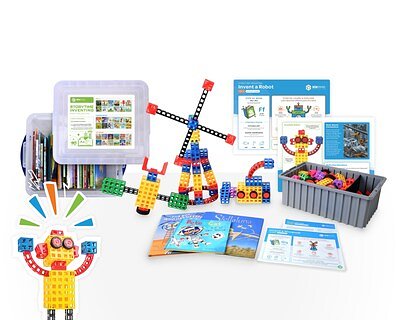
WEBB CITY, MO – April 13, 2026 – Nonprofit Kid Spark Education has launched a transformative new program designed to reshape learning for the nation's youngest students. The Early Childhood STEM & Literacy Program, targeting children in Pre-K through 1st grade, weaves together hands-on engineering, literacy, and social-emotional learning in a bid to build foundational skills and an “inventive mindset” from the very beginning of a child's educational journey.
In a rapidly growing educational technology market, which is projected to reach over $55 billion for early childhood alone by 2034, Kid Spark’s approach stands out by directly confronting a critical challenge: early student disengagement. This initiative arrives as a proactive measure against troubling educational trends and aims to redefine what it means to be literate in a technology-driven world.
Addressing a Critical Gap in Early Education
Research has consistently shown that early learning experiences are formative in shaping a child's identity as a learner. By the time students reach third grade, one in three already believes that STEM fields are not “for them,” while many also struggle with reading at their grade level. These early gaps in confidence and proficiency can create long-term obstacles to academic and professional success.
Kid Spark’s program is engineered to prevent these gaps from forming. By integrating STEM concepts with engaging, age-appropriate stories and lessons, it seeks to simultaneously bolster vocabulary, comprehension, and problem-solving abilities. The goal is to cultivate a positive “STEM identity” before self-doubt can take root.
"In the 21st century, being literate means more than the ability to read, write, and do math," said Ryan Neden, Executive Director of Kid Spark Education, in the organization's announcement. "It also means developing a STEM identity and an inventive mindset, where children learn how the world works and gain the skills and confidence to contribute to it. When these foundations are built early, children are better prepared for future learning and the careers that await them."
Fusing Storybooks with Hands-On Invention
The program’s innovative pedagogy moves beyond traditional rote memorization by centering on play-based, project-driven learning. While competitors like LEGO Education and Osmo also offer hands-on STEM experiences, Kid Spark differentiates itself with a deeply integrated, curriculum-based fusion of STEM, literacy, and social-emotional learning into a single, cohesive package.
The core of the program includes several key components:
- Early Inventors STEM Lab: A hands-on kit filled with durable, reusable engineering materials designed to be accessible and engaging for young children, allowing them to build and create solutions to problems.
- Comprehensive Curriculum: A robust library of over 60 project-based lessons. These are divided into STEM Foundations Lessons, which introduce core math and engineering concepts, and Storytime Inventing Lessons.
- Storytime Inventing Book Collection: This unique component features 36 curated children's storybooks. Each story serves as the launchpad for a hands-on building experience, turning a passive reading session into an active problem-solving challenge. This method helps strengthen literacy skills while making abstract STEM concepts tangible and relatable.
This approach aligns with expert consensus on the power of play and storytelling in early childhood education. By framing engineering challenges within a narrative, the program makes learning more memorable and emotionally resonant, allowing children to test ideas and develop critical inquiry skills in a meaningful context.
A Blueprint for Equity and Inclusion
A central tenet of Kid Spark Education’s mission as a national nonprofit is to dismantle barriers to high-quality education. The new program is designed from the ground up with equity and accessibility in mind, moving beyond a one-size-fits-all model.
To ensure the program reaches communities that need it most, the organization operates a STEM Grants Initiative. This program helps remove financial barriers for schools and afterschool programs in underserved communities, providing cost-free or reduced-cost access. Furthermore, the entire curriculum is aligned with the principles of Universal Design for Learning (UDL), ensuring that its lessons are accessible to learners with diverse needs and abilities.
A landmark feature of this commitment is a partnership with Special Olympics Washington. Together, the organizations co-developed 12 specialized Storytime Inventing lessons that celebrate empathy, teamwork, and perseverance. These lessons use themes of sport and inclusion to connect with students on a social and emotional level.
"These lessons help students see that inclusion isn't just an idea, it's something they can bring to life through reading and invention," explained Ellie Testerman, Director of Education at Kid Spark Education. "They learn they can design solutions that make STEM and sport more inclusive for everyone."
Built on a Foundation of National Standards
To ensure seamless integration into classrooms, the Early Childhood STEM & Literacy Program is aligned with a host of national education standards. This includes the Next Generation Science Standards (NGSS), Common Core State Standards (CCSS), the Head Start Early Learning Outcomes Framework, and the Collaborative for Academic, Social, and Emotional Learning (CASEL) Framework.
This alignment provides educators with the confidence that the program meets rigorous educational benchmarks. The focus on inquiry-based problem-solving supports NGSS, while the deep integration of storybooks and vocabulary-building activities supports Common Core literacy goals. The holistic approach to child development, blending cognitive skills with social-emotional growth, fits squarely within the Head Start and CASEL frameworks.
Recognizing that even the best curriculum is only as effective as the teacher delivering it, Kid Spark provides comprehensive professional learning and ongoing support. These resources are designed to equip educators—regardless of their prior STEM experience—with the tools and confidence needed to facilitate engaging, developmentally appropriate instruction for every student in their classroom.