
- AI Data Center Market Growth: Forecasted to grow at a compound annual rate of over 25%, reaching over $100 billion by the early 2030s.
- Power Demand for AI: Training a large language model can require racks of servers drawing over 80 kilowatts (kW) of power.
- U.S. Data Center Construction Spending: Tripled in the last three years due to AI-driven demand.
Experts would likely conclude that KDC's strategic pivot into AI-driven data center expansion is a well-timed move, capitalizing on the explosive growth in AI infrastructure demand, though it will require navigating intense competition and complex power and land constraints.
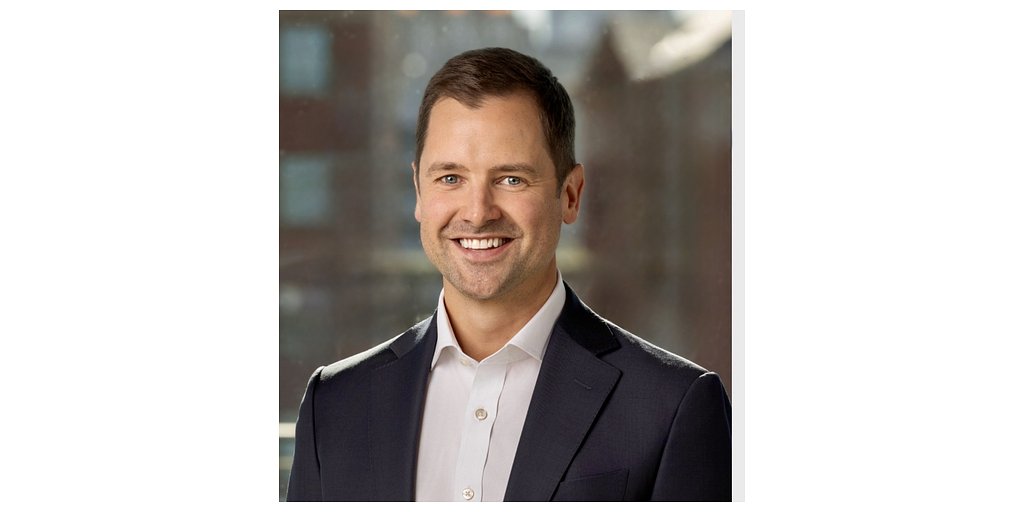
KDC Bets Big on AI, Taps Veteran to Lead Data Center Expansion
DALLAS, TX – February 09, 2026 – KDC, a real estate development firm long known for its sprawling corporate campuses and build-to-suit office projects, is making a significant push into the digital frontier. The Dallas-based company announced a major expansion of its national data center development platform, a strategic pivot underscored by the hiring of industry veteran Robert Child as its new Executive Vice President of Data Center Development. The move signals a clear intent to capitalize on the voracious, and rapidly accelerating, demand for the physical infrastructure that powers artificial intelligence and cloud computing.
The AI Gold Rush: A New Frontier for Real Estate
The digital revolution, once a phenomenon of software and services, is now aggressively reshaping the physical world. The engine of this change is the data center, and the fuel is the explosive growth of AI. Industry projections paint a staggering picture: the AI data center market is forecast to grow at a compound annual rate of over 25%, ballooning into a market worth well over $100 billion by the early 2030s. This isn't just growth; it's a fundamental transformation.
Unlike traditional computing, AI workloads are incredibly power-hungry. Training a large language model can require racks of servers drawing over 80 kilowatts (kW) of power, a stark contrast to the single-digit densities of a decade ago. This insatiable appetite for energy and cooling has created an unprecedented building boom. In the U.S. alone, spending on AI-supporting data center construction has tripled in just the last three years. “Demand driven by artificial intelligence and cloud computing continues to accelerate,” said Eric Hage, President of KDC, in a statement accompanying the announcement. This acceleration is forcing developers to rethink everything from site selection to energy procurement.
For established real estate firms like KDC, this represents both a challenge and a monumental opportunity. As the traditional office market faces headwinds, the data center sector offers a high-growth alternative. The pivot involves shifting from building spaces for people to building highly specialized, secure, and power-rich environments for machines—the new digital backbone of the global economy.
The Architect of Expansion: Robert Child
To navigate this complex and competitive landscape, KDC has brought in a specialist. Robert Child’s appointment is a clear signal that the firm is not merely dipping its toes in the water but preparing for a full-scale plunge. With over 15 years of experience dedicated to mission-critical facilities, Child brings a deep well of expertise and relationships crucial for scaling the operation.
His resume includes leadership roles at CyrusOne, a major data center REIT, where he guided global enterprise clients through their digital transformations. Before that, he managed business development for Structure Tone’s Mission Critical group, helping deliver ground-up data centers for some of the world's largest hyperscale and enterprise clients. This background gives him a unique perspective on the entire lifecycle of these complex projects, from site selection and capital alignment to final delivery.
“KDC already has a strong foundation in build-to-suit data center development, and Rob’s experience positions us to meaningfully expand the platform,” Hage noted. Child himself articulated a vision to build upon KDC's existing strengths. “Our vision is to add to KDC’s best-in-class data center development platform by leveraging existing strengths, capital, flexibility, development expertise, and certainty of execution,” Child stated. His mission is clear: to transform KDC’s solid foundation into a national powerhouse capable of meeting the demands of the world's most sophisticated technology users.
From Corporate Campuses to Digital Hubs: KDC’s Strategic Pivot
While the expanded focus on data centers is a strategic shift, it's not a complete departure for KDC. Founded in 1990, the firm has built its reputation on delivering large, complex build-to-suit projects for a blue-chip client list that includes JPMorgan Chase, Toyota, and State Farm. This history of managing massive, mission-critical developments provides a strong base of experience in project management, execution, and client relations.
KDC is no stranger to the data center sector, having previously partnered with industry giant Digital Realty Trust and developed facilities for State Farm across the United States. Over its 35-year history, the company has delivered more than a dozen significant data center projects. Now, it is dramatically increasing the scale and scope of this business line. The firm's active pipeline already extends coast to coast, with a notable concentration in the country's most active data center corridors.
Projects are currently underway in Texas, Georgia, and North Carolina, the epicenters of the current data center boom. In Texas, KDC is reportedly planning a large campus in Taylor, near Samsung's new semiconductor plant, and is partnering with the University of Dallas for a campus in Irving. This existing activity provides a running start for Child’s national expansion strategy.
The New Battlegrounds: Power, Land, and Regional Hotspots
KDC’s expansion places it directly in the most competitive and dynamic real estate markets in the nation. The battle for data center supremacy is no longer just about land; it's about power. The availability of massive amounts of electricity has become the single most important factor in site selection, creating new regional hotspots.
Georgia, particularly the Atlanta market, recently surpassed Northern Virginia—the world's largest data center market—in net absorption, driven almost entirely by its ability to provide cheaper, more available power. With a construction pipeline of over 2,100 megawatts, Atlanta is a primary target for hyperscalers like Amazon and Microsoft.
Texas, especially the Dallas-Fort Worth area, is another key battleground. Its independent power grid (ERCOT) and favorable tax incentives have fueled a 200% expansion in data center supply since 2020. With nearly 1,650 MW of inventory and another 605 MW under construction, the region is a magnet for investment.
North Carolina is rapidly emerging as a critical hub, strategically located between the major markets of Virginia and Georgia. With Duke Energy actively managing grid expansion and the state offering significant tax exemptions, it has attracted billions in planned investments from tech giants like Google and Amazon.
In this high-stakes environment, KDC will compete with established data center construction specialists like Turner Construction, Holder Construction, and DPR Construction. However, with its deep development expertise, strong capital position, and now, the strategic leadership of Robert Child, the firm is positioning itself not just to participate in the AI building boom, but to become one of its key architects.