
- March 31, 2026: Kartoon Studios to debut AI-animated shareholder presentation featuring Winnie-the-Pooh and Piglet
- Proprietary AI tools include 'Gadget A.I.' and 'STAN A.I.' in collaboration with NVIDIA
- Public domain status of Winnie-the-Pooh since 2022 enables new interpretations
Experts view Kartoon Studios' AI integration as a strategic industry shift that could redefine animation production while raising important workforce adaptation challenges.
Kartoon Studios' AI Leap: Pooh Bear to Unveil Animation's Future
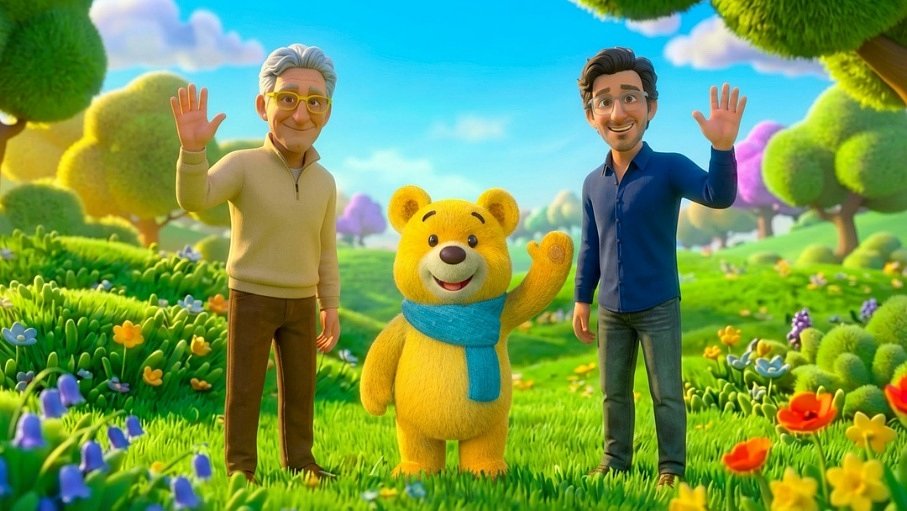
BEVERLY HILLS, CA – March 27, 2026 – In a move that blends childhood nostalgia with frontier technology, Kartoon Studios has announced it will forgo the traditional slide deck for its upcoming shareholder update. Instead, on March 31st, the company will debut a first-of-its-kind AI-animated video presentation where iconic characters from the Hundred Acre Wood, including Winnie-the-Pooh and Piglet, will interview the company’s top executives about its growth strategy.
This innovative presentation is more than just a novel approach to investor relations; it's a public demonstration of Kartoon Studios' strategic pivot towards an AI-driven production model. The company (NYSE American: TOON) is betting that this technology will not only redefine its own creative pipeline but also set a new standard for speed, cost, and imagination across the animation industry.
“Animation has always been about imagination,” said Andy Heyward, Founder, Chairman and CEO of Kartoon Studios, in the official announcement. “Today, artificial intelligence is opening the door to an entirely new generation of storytelling and production tools. This presentation is more than a shareholder update — it is a demonstration of how Kartoon Studios intends to harness AI to help power the next era of animated content creation.”
The Engine Behind the Magic
While featuring beloved characters in a corporate update is a clever hook, the real story lies in the technology powering the presentation. This event is the public-facing component of a much deeper, long-term investment in artificial intelligence. Kartoon Studios has been quietly building a proprietary suite of AI tools designed to overhaul its entire production workflow.
At the heart of this initiative is the "Gadget A.I." toolkit, a system developed in-house to assist in every stage of creation, from initial development and storyboarding to final post-production. This is complemented by the 'STAN A.I.' platform, a collaborative effort with tech giant NVIDIA, which focuses on streamlining labor-intensive animation tasks. These platforms leverage advanced technologies like video synthesis and deep learning to automate processes such as in-betweening—the creation of frames between key poses—character rigging, and background generation.
The company isn't just using AI for shareholder meetings. Its upcoming slate is heavily infused with this new tech. The "Hundred Acre Wood" series itself is being produced with a unique, AI-assisted "yarn-based" animation style. Furthermore, Kartoon Studios is developing other AI-native projects, including an anime-style series titled "Bitcoin Brigade: Adventures in Satoshi City," signaling a broad commitment to integrating this technology across its diverse portfolio.
Nostalgia Meets Neural Networks
The choice of Winnie-the-Pooh as the face of this technological leap is a calculated and strategic masterstroke. A.A. Milne’s original stories and characters entered the public domain in the United States in 2022, severing Disney’s exclusive hold on the earliest iterations and opening the door for new interpretations. Kartoon Studios has seized this opportunity, not to create a derivative work, but to build what it calls its "largest and most ambitious production to date"—a multi-year series, holiday specials, and an animated movie.
By placing this globally recognized and cherished intellectual property at the forefront of its AI demonstration, the company is bridging the gap between the familiar and the futuristic. It's a powerful way to introduce a potentially disruptive technology using the comforting and accessible lens of a classic brand. This approach aims to showcase AI not as a cold, robotic replacement for artistry, but as a new paintbrush capable of bringing beloved characters to life in novel ways for a new generation. The premiere of the series on Prime Video via Kartoon Channel!'s subscription service will be the ultimate test of this strategy's appeal to modern audiences.
An Industry at a 'Critical Crossroads'
Kartoon Studios' public embrace of AI places it at the vanguard of an industry-wide transformation, but it is by no means alone. From animation giants like Pixar and Disney to visual effects houses like Framestore, studios are increasingly exploring and implementing AI to enhance efficiency and creativity. The technology is being used to automate repetitive tasks, generate complex 3D models, and even produce background art, allowing human artists to focus on higher-level creative challenges like storytelling and character performance.
However, this rapid technological shift has sent ripples of anxiety through the animation workforce. Many artists, animators, and voice actors fear that AI's ability to automate tasks could lead to significant job displacement, particularly for entry-level roles. The concerns are so acute that The Animation Guild (IATSE Local 839) has labeled this moment a "Critical Crossroads" for the industry and, along with SAG-AFTRA, has been actively negotiating contract provisions to protect its members. These protections seek to ensure that AI is used as a tool to assist human artists, not replace them, and that consent and compensation are required for the use of an artist's work or likeness in training AI models.
As Kartoon Studios prepares to pull back the curtain on its AI-animated world, the stakes extend far beyond a single company's stock performance. The March 31st presentation will be scrutinized by investors, competitors, and, most importantly, the creative community. It serves as a high-profile test case for the future of entertainment production—a future where human creativity and artificial intelligence are increasingly intertwined. The world will be watching to see not just a business update, but a glimpse of how the stories of tomorrow will be told.