
- 1,000-horsepower: The Karma Kaveya super-coupe, powered by Factorial's solid-state batteries, boasts 1,000 horsepower.
- 375 Wh/kg: Factorial's FEST® technology achieves an energy density of 375 Wh/kg, nearly double some conventional batteries.
- 2027 Launch: The Karma Kaveya with solid-state batteries is scheduled for a late 2027 debut.
Experts view this partnership as a strategic milestone in advancing solid-state battery technology, positioning the U.S. as a leader in the global EV race while demonstrating the scalability and performance potential of next-generation battery solutions.
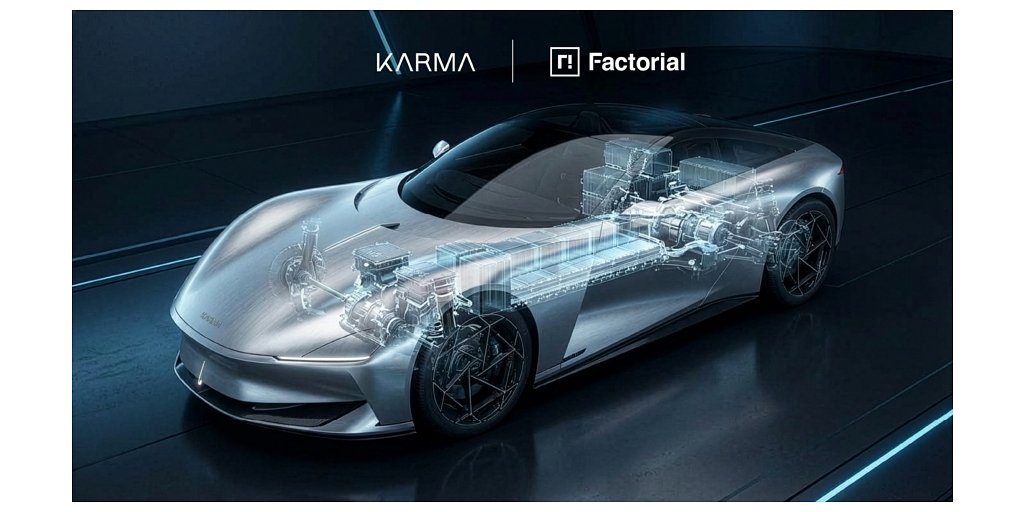
Karma and Factorial Ignite US Solid-State EV Battery Production Race
IRVINE, CA & BOSTON, MA – February 05, 2026 – In a significant move aimed at redefining the American electric vehicle landscape, ultra-luxury automaker Karma Automotive and battery innovator Factorial have announced the launch of the first U.S.-based solid-state battery production program for passenger vehicles. The collaboration will see Factorial’s pioneering FEST® solid-state battery technology integrated into Karma’s forthcoming Kaveya super-coupe, a 1,000-horsepower electric beast scheduled for a late 2027 debut.
This partnership represents more than just a new power source for a high-end vehicle; it signals a deliberate strategy to establish a fully domestic supply chain for next-generation battery technology. By pairing Karma's California-based design and manufacturing with Factorial's Massachusetts-developed battery platform, the venture aims to validate solid-state power in a production vehicle and strengthen America's position in the global EV technology race.
Luxury's Leap into the Next Generation
The choice of an ultra-luxury, high-performance vehicle like the Karma Kaveya as the launchpad for this technology is a calculated one. The premium automotive segment, with its emphasis on peak performance and tolerance for higher initial costs, often serves as the ideal proving ground for cutting-edge innovations before they can be scaled for the mass market. Solid-state batteries, which promise greater energy density, faster charging, and enhanced safety over conventional lithium-ion cells, are perfectly suited to meet the extreme demands of a supercar capable of speeds over 200 mph.
This move also brings clarity to Karma's product roadmap. The company had previously delayed the Kaveya's launch from a planned 2025 date, a decision that now appears strategic. The automaker was waiting for a battery solution that could deliver an experience befitting its ultra-luxury branding.
“Karma Automotive was imagined to push the boundaries of what the ultra-luxury vehicle experience can be, and Kaveya is the vehicle that re-introduced Karma to the market in November 2023,” said Marques McCammon, President and Chief Executive of Karma Automotive. “However, in 2025 we delayed launch because we did not yet see a clear path to fully delivering the uncompromising driving experience that should be expected from an American ultra-luxury vehicle company. Now through the partnership with Factorial and the integration of FEST®, we cannot only deliver that experience, but also open a pathway to stronger, more stable electrified drive systems for Karma owners and the broader industry.”
A Potential Game-Changer in Manufacturing
At the heart of the partnership is Factorial's FEST® (Factorial Electrolyte System Technology) platform. While the performance benefits are clear, its greatest strategic advantage may lie in its manufacturing process. Factorial claims its technology is engineered to be compatible with up to 80 percent of existing lithium-ion battery manufacturing equipment. This “drop-in” capability could dramatically lower the barrier to entry for solid-state production, bypassing the need for automakers and battery suppliers to build entirely new, multi-billion-dollar factories from scratch.
This compatibility addresses one of the biggest hurdles to the widespread adoption of solid-state technology: scalability and cost. By leveraging existing infrastructure, the companies aim to accelerate the path from development to commercial production.
“Launching our first U.S. passenger-vehicle program with Karma is a meaningful milestone for Factorial,” said Siyu Huang, CEO of Factorial. “FEST® was built to scale, and this milestone not only highlights the energy and performance solid-state technology can deliver but also underscores the global leadership of U.S. technology innovators. High-performance luxury vehicles require cutting-edge innovation, and this collaboration showcases what’s possible when performance leads.”
Factorial's technology has already shown impressive results in validation tests. Automotive-sized cells have demonstrated an energy density of 375 Wh/kg—nearly double that of some conventional batteries—and the ability to fast-charge from 15% to 90% in just 18 minutes at room temperature. The company’s progress is further validated by partnerships with global automotive giants including Mercedes-Benz, Stellantis, and Hyundai.
A Crowded Race for Battery Dominance
While the Karma-Factorial announcement is a landmark for the U.S. passenger vehicle market, it unfolds within a fiercely competitive global landscape. The race to commercialize solid-state batteries is a sprint involving startups and legacy titans alike. In the U.S., companies like QuantumScape, backed by Volkswagen, and Solid Power, which partners with BMW and Ford, are also running pilot production lines with aggressive commercialization targets.
Globally, the competition is even more intense. Toyota aims to have a solid-state powered EV on the road by 2027, while South Korea’s Samsung SDI is targeting mass production that same year. This crowded field underscores the immense perceived value of cracking the solid-state code, which is seen as the key to unlocking the full potential of electric mobility.
The Karma-Factorial partnership, with its clear 2027 vehicle launch date, places it firmly among the frontrunners aiming to move solid-state technology from the lab to the highway.
Bolstering America's EV Supply Chain
This all-American collaboration aligns perfectly with a broader U.S. industrial strategy to onshore critical manufacturing and reduce reliance on foreign supply chains, particularly in the battery sector. Bolstered by federal incentives like the Inflation Reduction Act, billions of dollars are flowing into domestic battery production. The U.S. is making a concerted effort to compete with established Asian manufacturers through technological innovation and strategic government support.
By uniting a U.S. vehicle manufacturer with a U.S. battery developer to create a cutting-edge American product, the partnership serves as a powerful proof of concept for this national strategy. It demonstrates a viable path for domestic innovation to not only exist but to lead in one of the most critical technology sectors of the 21st century. The success of this venture could create a ripple effect, encouraging further investment and collaboration within the U.S. and paving the way for a more resilient and self-sufficient electric vehicle ecosystem.