
- 24,000 MWh: Terra Firma Energy's flexible generation sites delivered over 24,000 megawatt-hours of electricity into the UK grid in their first year of operations.
- 6,700 homes: This output is enough to power approximately 6,700 homes for a year.
- £125 billion: Embracing intelligent flexibility could save the UK up to £125 billion by 2050, according to Energy Systems Catapult.
Experts agree that flexible generation assets are critical for maintaining grid stability and supporting the UK's transition to renewable energy, particularly during periods of high demand or low renewable output.
UK's Energy Security Bolstered by Flexible Power Success Story
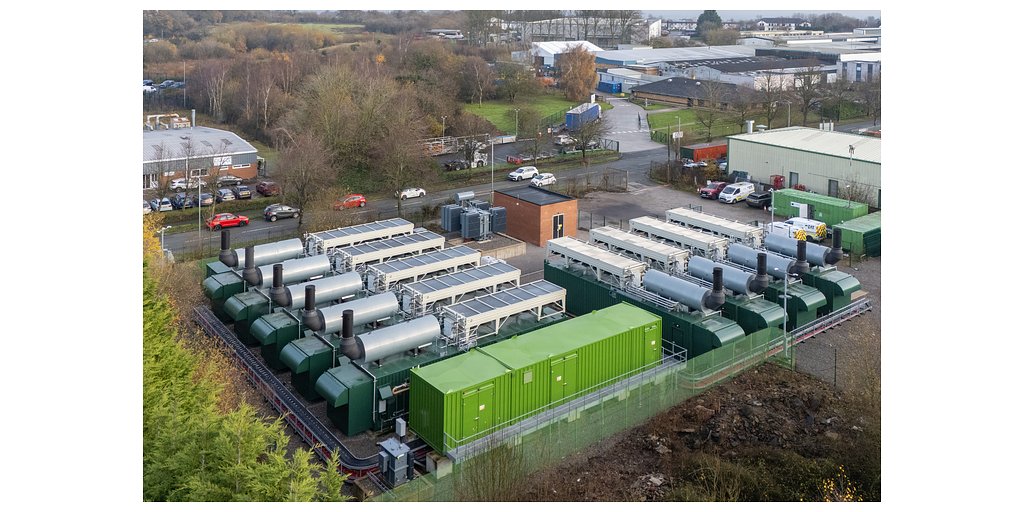
LONDON, UK – February 06, 2026 – As the United Kingdom navigates the turbulent waters of its energy transition, a new class of power asset is proving indispensable. Terra Firma Energy has announced a highly successful first year of operations for its flexible generation sites in Wrexham and Droitwich, delivering over 24,000 megawatt-hours (MWh) of electricity into the national grid. This output, equivalent to powering approximately 6,700 homes for a year, highlights the critical, often unseen, role such facilities play in keeping the country's lights on.
The two sites have been instrumental in supporting the UK power system, particularly during periods of high demand and grid stress, including an exceptionally cold start to 2026. Their performance underscores a fundamental challenge of the modern energy era: balancing a grid increasingly reliant on intermittent renewable sources like wind and solar.
The Grid's Essential Balancing Act
At the heart of the UK’s power network is a constant, delicate balancing act managed by the National Grid Electricity System Operator (ESO). The ESO’s primary mission is to match electricity supply with demand in real-time, maintaining a stable grid frequency of 50Hz. Deviations from this frequency, caused by sudden demand spikes or dips in generation, can lead to widespread instability and, in worst-case scenarios, blackouts.
This is where flexible generation assets, like Terra Firma Energy's 20MW plant in Wrexham and 5MW plant in Droitwich, become vital. These facilities are designed to ramp up or down quickly, providing rapid-response power that can be dispatched through mechanisms like the wholesale markets and the ESO's Balancing Mechanism. They serve as a crucial backstop, filling the gaps when the wind doesn't blow or the sun doesn't shine, or when traditional power stations unexpectedly go offline.
The ESO has increasingly recognized the importance of these smaller, agile assets. In a significant policy shift, it has progressively lowered the minimum threshold for participation in the Balancing Mechanism from 100MW to just 1MW, opening the market to a wider array of providers and enhancing the system's overall resilience.
Powering the Future, Saving Billions
The need for this flexibility is set to explode. The UK government, through its Department for Energy Security and Net Zero, has set a target of securing between 51 and 66 gigawatts of flexible capacity by 2030. This is a direct response to projections that electricity demand will soar by 50% by 2035, driven by the mass adoption of electric vehicles and heat pumps.
Without a robust network of flexible power, this transition would be untenable. According to analysis from industry experts at Energy Systems Catapult, embracing "intelligent flexibility" across the energy system could save the UK as much as £125 billion by 2050. Further research from Cornwall Insight suggests that greater consumer and system flexibility could slash household wholesale electricity costs by over 50% by 2040. These are not just abstract figures; they represent tangible savings on consumer bills and a more efficient, affordable path to Net Zero.
Terra Firma Energy's success demonstrates a viable model for growth in this critical sector. By constructing, owning, and operating these assets, the company is positioning itself as a key partner in the UK's energy evolution. This strategy is further enhanced by collaborations, such as a partnership with EDF to optimize its portfolio's performance and maximize its value within the complex UK power markets.
Building Resilience for Tomorrow
The strong performance of the Wrexham and Droitwich sites is just the beginning of the company's planned contribution. In its recent operational update, Terra Firma Energy confirmed that its development pipeline remains robust, with construction advancing at new sites in Hereford and Wingrave. The near completion of civil works at the Hereford site marks a key milestone in expanding this network of essential grid support.
Zach Dodds-Brown, Development Director at Terra Firma Energy, commented on the year's performance, stating, “The past 12 months have demonstrated the strength of our assets, our operating model, and our team. Wrexham and Droitwich have proven their value in supporting the UK power system, and we remain focused on delivering reliable, flexible capacity as the energy transition continues.”
This focus on reliability is paramount. The UK's flexible generation market is a dynamic space, comprising not only gas-fired peaker plants but also large-scale battery storage systems and sophisticated demand-side response programs. Each technology plays a part, but engine-based flexible generation, like that operated by Terra Firma Energy, is uniquely capable of providing sustained power over several hours, a crucial capability during extended periods of low renewable output or extreme weather. As the UK decommissions its traditional thermal power plants, the "ancillary services" these flexible assets provide—such as voltage control and system inertia—become even more critical for maintaining grid stability. With a significant weather front and potential for snowfall forecast for later this month, the reliance on these dependable assets to prevent system tightness and secure the nation's power supply will once again be brought into sharp focus.