
- 150,000 metric tons of CO2 annually: The facility is permitted to inject this amount underground.
- 1.8 million metric tons over 12 years: Total permitted CO2 storage capacity.
- 3,400 feet deep: The CO2 will be stored beneath this depth in the Arbuckle Group formation.
Experts would likely conclude that PureField's integrated carbon capture and sequestration system represents a significant advancement in sustainable biofuel and food production, setting a new standard for low-carbon industrial processes.
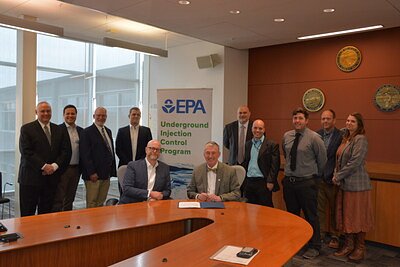
Kansas Plant to Bury CO2, Aims for World's Greenest Biofuel
RUSSELL, KS – April 10, 2026 – A quiet revolution in sustainable manufacturing is taking root in the heart of Kansas. PureField Ingredients has secured a landmark approval from the U.S. Environmental Protection Agency (EPA) to begin permanently storing carbon dioxide deep underground, a move that positions its Russell facility to produce some of the lowest-carbon food and fuel products in the world.
The approval grants PureField the first-ever Class VI well permit in Kansas, a stringent classification reserved for the geologic sequestration of CO2. This regulatory green light unlocks the final component of the company's highly integrated system, which transforms locally grown wheat into high-demand food ingredients and ultra-low-carbon ethanol. Following final commissioning, the company will begin capturing CO2 from its fermentation process and injecting it more than 3,400 feet below the surface.
"This is a defining moment for PureField to meet our commitment to serve Kansas farmers and our customers in the U.S. and around the world," said Aaron Buettner, CEO of PureField Ingredients, in a statement. He emphasized that the project creates a "structurally advantaged platform" by combining an advanced feedstock with permanent carbon storage.
A New Frontier in Carbon Reduction
The EPA's decision marks a significant milestone not just for PureField, but for the entire Midwest. The Class VI permit, issued by EPA Region 7, is the first of its kind in the four-state region and represents the culmination of a multi-year, capital-intensive review process. The regulations are designed to ensure that captured CO2 remains permanently isolated and poses no threat to underground sources of drinking water.
Under the permit, PureField Carbon Capture, LLC, a subsidiary of the company, is authorized to inject up to 150,000 metric tons of CO2 annually into the Arbuckle Group, a vast and porous rock formation. The total permitted volume is 1.8 million metric tons over a 12-year injection period. The chosen geological layer is sealed by nearly 3,000 feet of impermeable rock, including thick layers of shale and salt, providing a secure, long-term storage solution.
The project is subject to rigorous oversight. The EPA requires extensive testing and monitoring, including a network of observation wells and seismic sensors, which will continue for 50 years after the final injection. This long-term commitment underscores the gravity of ensuring the CO2 is permanently sequestered.
The 'Nothing Wasted' Business Model
At the core of PureField's strategy is a unique, fully integrated system designed to maximize the value of every grain of wheat. The process begins with processing Kansas-grown wheat to extract high-quality functional proteins, which are in high demand for plant-based foods and bakery products.
The residual wheat starch, a byproduct of the protein extraction, is then converted into low-carbon ethanol. The CO2 generated during this fermentation stage—which would traditionally be released into the atmosphere—is captured, dehydrated, and compressed. Finally, a five-mile pipeline will transport the captured CO2 to the injection well for permanent underground storage. The remaining co-products are processed into valuable animal feed, completing a circular model where nothing is wasted.
This integrated approach sets the company apart from conventional biofuel producers. By creating multiple, distinct value streams from a single agricultural input, the platform builds economic resilience while achieving a significant environmental advantage. It's a model of industrial symbiosis that could serve as a blueprint for other agricultural processing facilities.
Redefining 'Green' Fuel and Food
The addition of carbon capture and sequestration (CCS) is a game-changer for the facility's environmental credentials. Biofuels already have a lower carbon footprint than gasoline, but PureField's combination of a wheat-starch feedstock and CCS technology is expected to dramatically lower its carbon intensity (CI) score—a measure of greenhouse gas emissions per unit of energy.
The company is now positioned to produce ethanol with one of the lowest CI scores globally, potentially achieving a net-zero or even net-negative rating under certain methodologies. This ultra-low-carbon fuel is highly sought after in markets with aggressive climate policies, such as California's Low Carbon Fuel Standard (LCFS), which creates a premium for cleaner fuels. The project's economics are further bolstered by federal incentives, including the 45Q tax credit for carbon sequestration and the 45Z credit for clean fuel production.
Beyond fuel, the project enhances the sustainability profile of PureField's food ingredients. The U.S. currently imports approximately 70% of its functional wheat protein. By boosting domestic production, the Russell facility not only strengthens the national food supply chain but also offers food manufacturers a more sustainable, locally sourced ingredient for the growing plant-based market.
Sowing Seeds for Economic Growth
While the project's climate implications are global, its economic impact is deeply local. The Russell facility provides a durable demand channel for approximately 20 million bushels of Kansas wheat and sorghum annually, offering a stable market for local farmers.
"With CCS in place, PureField will be able to deliver more sustainable products at scale, while reinforcing our commitment to Russell and the surrounding region," Buettner noted. He highlighted that the project strengthens the company's role as a long-term employer and creates a foundation for future investment in the rural community.
This initiative is part of a broader trend seeing the American heartland emerge as a hub for industrial decarbonization. Other major agricultural and biofuel companies, including ADM and Poet, are also making significant investments in CCS to lower the carbon footprint of their operations. This industry-wide pivot is transforming the biofuels sector from a renewable energy source into a key player in the carbon-removal economy. With its first-in-state permit and unique wheat-based model, PureField is now at the forefront of that transformation.