
- 4 electric reachstackers sold across China (Inner Mongolia, Tianjin, Shanghai, Hong Kong).
- 120 tonnes of CO2 saved annually per electric container handler vs. diesel.
- Up to 10 hours of operation on a single charge with Gen 2 battery technology.
Experts would likely conclude that Kalmar's localized, high-tech electrification strategy aligns with China's green logistics push, offering both environmental and economic advantages.
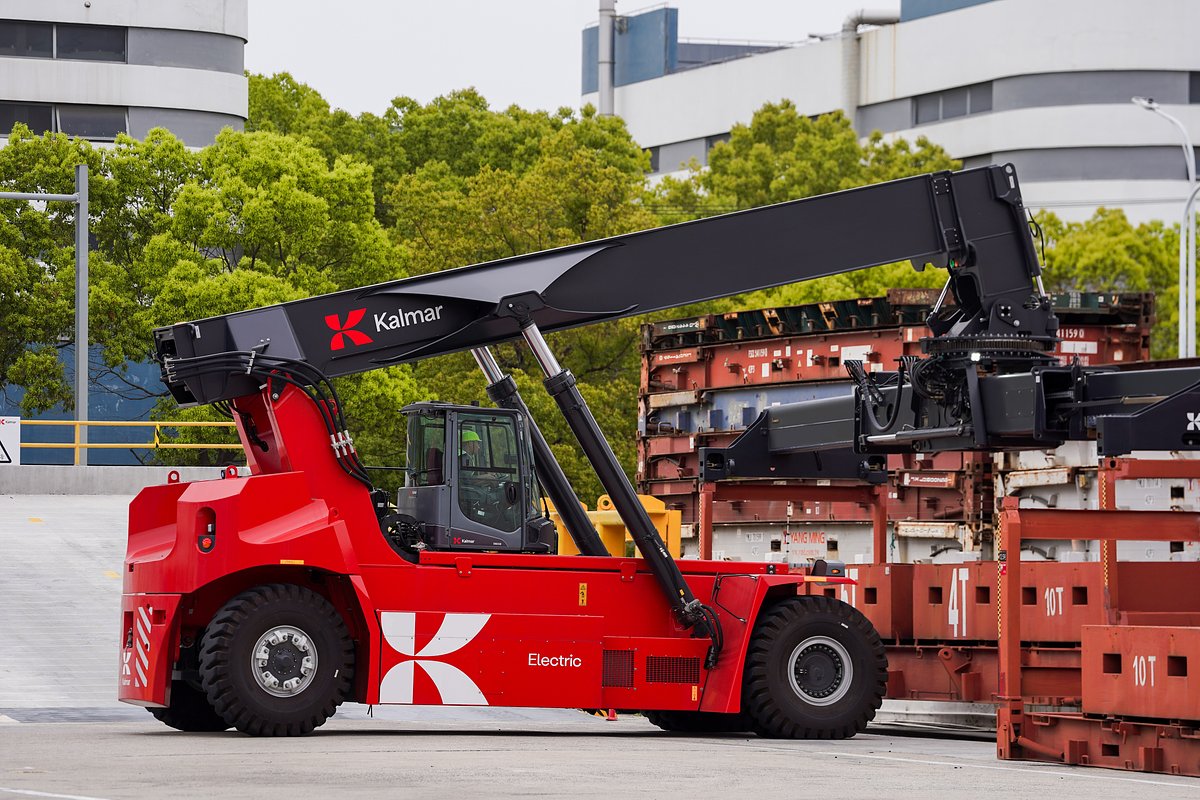
Kalmar's Electric Gambit: Local Tech Powers China's Green Logistics Push
HELSINKI, Finland – June 29, 2026 – Kalmar, a global leader in heavy material handling, has announced the sale of four advanced electric reachstackers to customers across China. While four machines may seem like a modest number, the orders from Inner Mongolia, Tianjin, Shanghai, and Hong Kong represent a significant milestone. They are not merely transactions; they are a clear signal of an industrial transformation gaining momentum, powered by a confluence of next-generation technology, strategic local manufacturing, and China's unwavering commitment to decarbonizing its colossal logistics sector.
These machines, the first to feature Kalmar’s new high-capacity battery system and native Chinese fast-charging, underscore a pivotal shift away from diesel in one of the world's most demanding operating environments. For Kalmar, these sales are the fruit of a deliberate strategy to build for the market, within the market. For the industry, they offer a glimpse into a future where operational efficiency and environmental stewardship are no longer competing priorities, but two sides of the same coin.
The Engine of Change: China's Push for Greener Ports
The recent orders are set against the backdrop of China's ambitious national agenda to build a greener economy. The country’s 14th Five-Year Plan (2021-2025) has intensified the focus on sustainable development, with ports and industrial hubs being critical arenas for change. Beijing has launched numerous pilot initiatives, including 20 zero-carbon projects announced in 2024, five of which specifically target port operations. This top-down policy push creates a powerful incentive for companies to electrify their fleets.
“We have witnessed a surge in demand across China for electrified cargo handling equipment as companies across a wide range of industries seek to achieve higher operational efficiency alongside carbon emission reductions,” noted Alex Tang, Vice President of Kalmar Greater China. This surge is driven by more than just regulation. The economic case for electrification is becoming undeniable. With volatile diesel prices and the high maintenance costs associated with internal combustion engines, the lower total cost of ownership for electric equipment presents a compelling argument. A single electric container handler can save approximately 120 tonnes of CO2 and nearly half a tonne of other pollutants annually compared to its diesel counterpart, translating into cleaner air for workers and nearby communities, as well as tangible progress toward corporate sustainability goals.
Beyond the Battery: The Tech Redefining Heavy Lifting
At the heart of Kalmar's new offering is a significant technological leap. The four reachstackers are the first units equipped with the company’s second-generation (Gen 2) lithium-ion battery technology. Launched in mid-2025, this new system offers enhanced energy capacity and superior thermal stability, enabling the heavy-duty machines to operate for up to 10 hours on a single charge. This extended operating window addresses one of the primary historical barriers to electrifying high-intensity port equipment, providing the flexibility and uptime required in 24/7 logistics environments.
Critically, the machines feature native GB/T fast-charging capability. GB/T is China’s mandatory standard for electric vehicle charging, and its inclusion eliminates the need for cumbersome adapters or modifications. This seemingly small detail is a masterstroke of market-specific engineering, allowing customers to plug directly into the local power grid for seamless and rapid recharging. This synergy of advanced battery chemistry and localized charging standards delivers a powerful combination of performance, safety, and operational simplicity. The result is a machine that not only matches the productivity of its diesel predecessors but often exceeds it, delivering consistent power without the performance degradation, noise, or emissions.
The Shanghai Strategy: Building Success from the Ground Up
Kalmar’s ability to deliver this tailored technology is deeply intertwined with its investment in local manufacturing. The reachstackers were produced at Kalmar’s recently expanded plant in Shanghai, a facility that celebrated its 20th anniversary last year. The expansion, completed in May 2026, was specifically designed to optimize the production of electric vehicles, centralizing post-assembly tasks and creating a safer, more efficient layout for EV-specific requirements.
This plant is the linchpin of Kalmar's strategy in Asia. It began producing electric reachstackers in December 2023 and has since become a crucial hub for serving the rapidly growing demand across the Asia-Pacific region and beyond. “These orders also highlight the strategic importance of our recently expanded Shanghai plant, which strengthens our local manufacturing capabilities and our ability to respond to the growing demand in the Chinese market for fully electric cargo-handling equipment,” said John Zhang, Managing Director of the Kalmar Shanghai Plant.
This local-for-local approach provides a significant competitive advantage. In a market where competitors like Konecranes are also rolling out powerful electric offerings, the ability to manufacture, customize, and deliver complex machinery within the region is a powerful differentiator. It allows Kalmar to be more agile, manage supply chains more effectively, and build deeper relationships with its customer base.
The Real-World ROI: Efficiency from the Port to the Hinterland
The diverse locations of the new orders—from the global shipping hubs of Shanghai and Hong Kong to the industrial heartlands of Tianjin and Inner Mongolia—demonstrate the broad applicability of this technology. This is not just a solution for coastal megaprojects; it is a viable option for a wide range of logistics and industrial operations. For these customers, the investment is a calculated move toward long-term resilience and profitability.
The benefits extend far beyond the fuel pump. Electric powertrains have fewer moving parts, leading to significantly lower maintenance requirements and less downtime. The quieter, smoother operation improves the working environment for operators, reducing fatigue and enhancing safety. In dense urban environments like Hong Kong, where the logistics sector is rapidly modernizing, the demand for reliable, sustainable, and quiet equipment is surging.
As these four machines are delivered and begin their operational lives, they will serve as powerful case studies for the industry. They represent a practical, market-ready solution that addresses the core challenges of modern logistics: the need to move more goods, more efficiently, with a smaller environmental footprint. The transition is no longer a distant vision; it is happening now, one container at a time, powered by innovation that is built to meet the market where it matters most.