
- $151B Contract Value: The SHIELD IDIQ contract has a potential value of $151 billion over 10 years.
- 2,100+ Competitors: JTSi is one of over 2,100 firms qualified to compete for task orders under the contract.
- 19 Technical Areas: The program covers 19 distinct technical domains, including AI, cybersecurity, and data analysis.
Experts view the SHIELD program as a critical shift toward an agile, technology-driven defense strategy, leveraging AI and digital engineering to counter evolving missile threats.
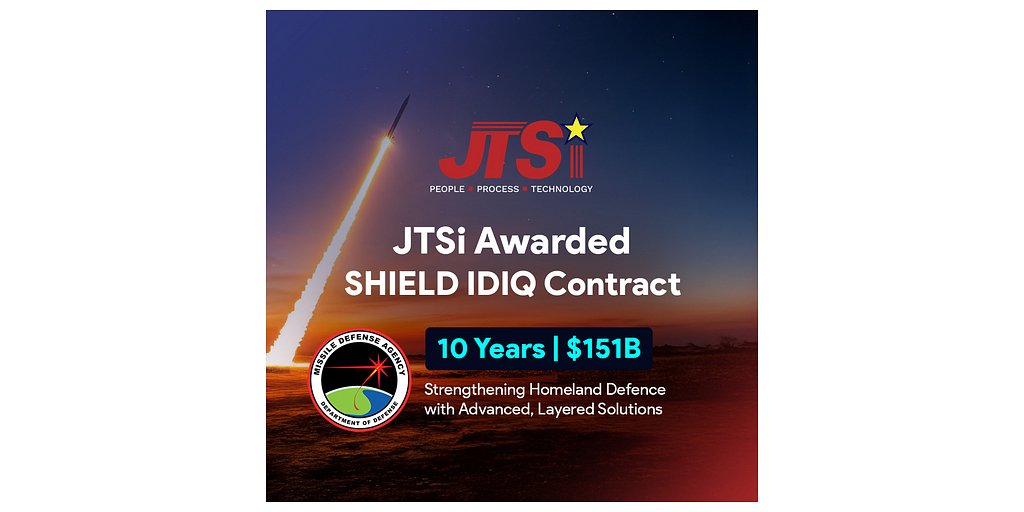
JTSi Joins $151B Digital Shield to Overhaul US Missile Defense
RESTON, VA – May 18, 2026 – Johnson Technology Systems Inc. (JTSi), a specialized IT and engineering services firm, has secured a coveted position on a massive $151 billion contract vehicle, placing it in the running to help build the nation's next-generation missile defense system. The award, announced by the U.S. Missile Defense Agency (MDA), grants JTSi a spot on the Scalable Homeland Innovative Enterprise Layered Defense (SHIELD) indefinite-delivery/indefinite-quantity (IDIQ) contract.
This contract positions the Reston-based company to compete for a wide array of projects aimed at rapidly delivering innovative capabilities to the warfighter. The SHIELD program is central to the Pentagon's strategy for protecting the U.S. homeland from a new generation of advanced missile threats, marking a significant step towards a more agile, technologically advanced defense posture.
The Digital Overhaul of Homeland Defense
The SHIELD contract is the primary procurement vehicle for the “Golden Dome for America” initiative, a sweeping effort to create a comprehensive, layered, and multi-domain defense architecture. The program’s core objective is to move beyond legacy systems and forge an integrated shield capable of detecting, tracking, and neutralizing a wide spectrum of aerial threats—from traditional ballistic missiles to advanced hypersonic and cruise missiles.
This initiative comes in direct response to a rapidly evolving global threat landscape where potential adversaries are developing weapons that are faster, more maneuverable, and harder to detect. The SHIELD program acknowledges that a static defense is no longer sufficient. Instead, it seeks to leverage cutting-edge commercial technology, emphasizing artificial intelligence (AI), machine learning (ML), digital engineering, and open systems architectures.
By focusing on these areas, the MDA aims to create a dynamic and adaptable system that can be upgraded quickly to counter emerging threats. The program's scope is extensive, covering 19 distinct technical areas, including everything from science and technology research to prototyping, systems engineering, cybersecurity, and data analysis. This represents a fundamental philosophical shift: treating national defense as an integrated, software-defined enterprise rather than a collection of disparate hardware.
A Hunting License for High-Tech Defense Work
While the $151 billion ceiling is a headline-grabbing figure, it is crucial to understand the nature of the contract. The SHIELD IDIQ is a multiple-award vehicle, and JTSi is one of over 2,100 firms that have been deemed technically qualified to participate. This was by design; the MDA utilized an “acceptability-based evaluation” that awarded a position to all contractors who met a baseline set of criteria, creating a vast pool of potential innovators.
This structure means the $151 billion is not a guaranteed payment to any single company. Instead, it represents the total potential spending across all awardees over the contract’s 10-year period. JTSi, along with thousands of competitors ranging from defense giants to small, specialized firms, has effectively won a “hunting license.” The real work—and revenue—will come from competing for and winning individual task orders that the MDA will issue over the next decade.
This highly competitive environment is intended to foster innovation and drive down costs. Companies will have to prove their value on each proposal, demonstrating technical superiority and cost-effectiveness to secure work. For a company like JTSi, being on the vehicle is a critical first step that provides access to a decade's worth of opportunities that would otherwise be inaccessible.
JTSi's Ascent: From Niche Specialist to Key Contender
For JTSi, a firm founded in 2003, securing a place on the SHIELD contract is a significant validation of its long-term strategy and technical expertise. While not a household name like some larger defense primes, the company has quietly built a strong track record of delivering mission-critical IT services to the U.S. government, primarily the Department of Defense.
JTSi’s core capabilities in Enterprise Transformation, IT Modernization, Cybersecurity, and AI/ML initiatives align perfectly with the technological cornerstones of the SHIELD program. The company's past performance includes significant projects such as managing a multi-year cloud migration for the US Army and providing a full range of IT services for the Army's Armament Research, Development and Engineering Center (ARDEC). This history of successfully executing complex DoD contracts demonstrates the experience and reliability that the MDA sought in its awardees.
This award elevates JTSi from a niche provider to a direct contender for work on one of the nation's highest-priority defense programs. It showcases how specialized, mid-sized firms with deep expertise in high-demand areas like cloud computing and artificial intelligence are becoming increasingly vital to the national security mission. The win validates the company’s focus and positions it for substantial potential growth as it competes for task orders under the SHIELD umbrella.
The Future Battlefield: AI, Cyber, and Agile Development
Ultimately, the SHIELD program is about preparing for the future of conflict. The emphasis on agile processes and rapid prototyping is designed to break the slow, multi-decade development cycles that have often plagued major defense acquisitions. The goal is to field new capabilities in years, not decades, ensuring that U.S. defenses can keep pace with adversary advancements.
Artificial intelligence and machine learning are at the heart of this transformation. In a combat scenario involving hypersonic threats, human operators will have mere moments to make critical decisions. AI-enabled systems are essential for fusing data from a global network of sensors—in space, at sea, and on land—to provide a clear, real-time picture of an inbound threat and recommend an optimal response faster than any human could.
JTSi's expertise in these exact fields places it at the center of this new paradigm. The company’s ability to develop and integrate AI algorithms, secure complex cloud networks, and modernize legacy IT systems will be critical skills in the task order competitions to come. Securing a spot on the SHIELD IDIQ is a major milestone, but the true test will be in translating this opportunity into the tangible, innovative solutions that will form America's digital shield against the threats of tomorrow.