
- £9.9 billion ($13 billion): Estimated economic contribution to the UK from JPMorgan's new tower project.
- 12,000 employees: Capacity of the new headquarters in Canary Wharf.
- 7,800 jobs: Projected creation during the six-year construction phase.
Experts view JPMorgan's £13 billion investment as a strong vote of confidence in London's post-Brexit economic resilience and its enduring status as a global financial hub.
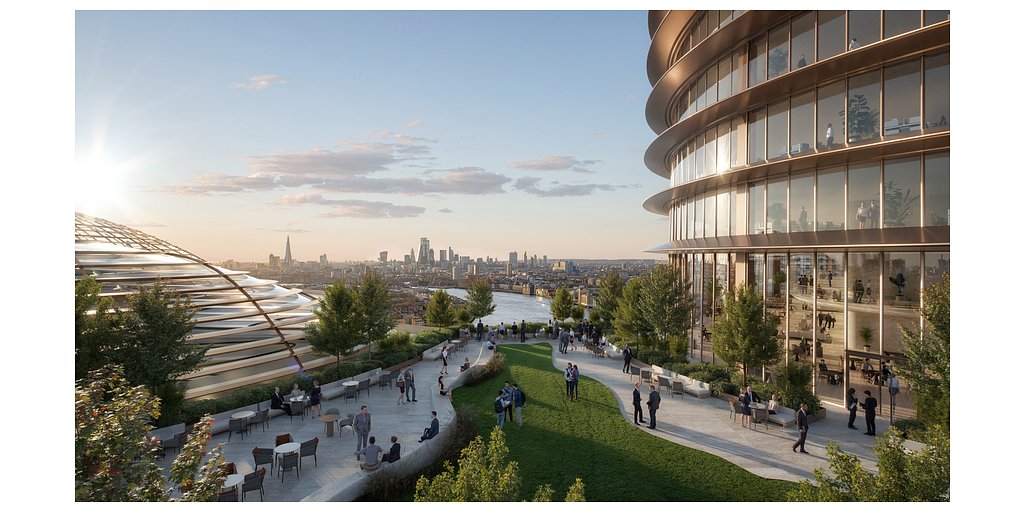
JPMorgan's London Bet: A £13B Tower Signals Post-Brexit Confidence
LONDON, UK – November 27, 2025
In a resounding declaration of faith in London's future as a premier global financial center, JPMorgan Chase has announced its intention to construct a colossal three-million-square-foot landmark tower in Canary Wharf. The project, estimated to contribute nearly £9.9 billion ($13 billion) to the UK economy, is more than just an expansion of office space; it is a multi-billion-pound strategic bet on the resilience and appeal of post-Brexit Britain.
The planned skyscraper, set to become the firm's principal headquarters for the UK and its EMEA operations, will consolidate operations and provide a world-class workspace for up to 12,000 employees. This move stands as one of the most significant single office commitments in the UK in over a decade, sending a powerful signal to international investors at a time of global economic recalibration.
A Calculated Vote of Confidence
The timing and tenor of the announcement are as significant as the structure itself. Coming on the heels of a UK budget that sought to create a more favorable environment for financial services, the decision was met with vocal support from the highest levels of government. Jamie Dimon, Chairman and CEO of JPMorgan Chase, directly linked the decision to the political climate, stating, “The UK government’s priority of economic growth has been a critical factor in helping us make this decision.”
This sentiment was echoed by UK Chancellor of the Exchequer, Rachel Reeves, who hailed the project as a “multi-billion pound vote of confidence in the UK economy and this government’s plans for growth.” The message is clear: major international players are seeing stability and opportunity in the UK's economic strategy.
Beyond political endorsements, the economic impact is projected to be substantial. An independent study commissioned by the bank projects the creation of over 7,800 jobs in construction and adjacent industries during the six-year build phase. This is on top of the nearly £7.5 billion the firm’s current London operations already contribute annually to the local economy, supporting a wider ecosystem of 38,000 jobs. The project serves as a powerful counter-narrative to concerns about a potential decline in foreign direct investment and reinforces London’s enduring magnetic pull for global capital and talent.
Redefining the Docklands Skyline
The new tower is poised to do more than just house bankers; it aims to fundamentally reshape its corner of Canary Wharf. Situated on the Riverside development site, which JPMorgan has owned since 2008, the building will be designed by the renowned British architects Foster + Partners, the same firm behind the bank's iconic global headquarters in New York. The choice signifies an ambition for architectural excellence and sustainability.
Crucially, the development extends beyond the building's walls. In collaboration with co-developer Canary Wharf Group, the plans include the creation of new public parkland, a redevelopment of the adjacent dock, and improved access to the River Thames. This aligns with Canary Wharf’s broader evolution from a monolithic financial district into a vibrant, mixed-use urban center with a growing residential population and enhanced public amenities.
Lutfur Rahman, Executive Mayor of Tower Hamlets, celebrated this community-focused aspect, highlighting the creation of a “new world-class park on the River Thames and the shared space for our community.” This focus on placemaking, with employee wellness facilities, terraces, and extensive public green space, reflects a modern understanding of corporate citizenship, where a headquarters must contribute to the vitality of its surrounding neighborhood. As London Mayor Sir Sadiq Khan noted, the investment is a testament to London's status as a “global powerhouse for finance, innovation, and talent.”
More Than Mortar: A Broader UK Strategy
Viewing the tower as a standalone real estate project would be a misinterpretation of JPMorgan's strategy. The skyscraper is the physical anchor for a much deeper, multi-faceted commitment to the United Kingdom. The announcement was coupled with the news that the firm will extend its Security & Resiliency Initiative (SRI) to the UK. This $1.5 trillion, 10-year plan, first launched in the US, is designed to finance and invest in strategic sectors like defense, energy independence, and critical supply chains, signaling a partnership in national economic security.
This strategic depth is further evidenced by other significant capital allocations. The firm recently announced a £350 million investment in its Bournemouth campus, which employs over 5,000 people. Furthermore, JPMorgan Chase has expanded its social investment in the UK, committing an additional £40 million over five years to connect young people and underserved communities with economic opportunities, bringing its total commitment since 2019 to £90 million. These initiatives, spanning from high finance and national security to grassroots job training in boroughs like Tower Hamlets, paint a picture of an integrated, long-term vision for the UK market.
The Blueprint for a New Era
The path from announcement to occupancy is a long one. Construction, expected to take six years, is contingent on receiving all necessary national and local approvals and, as the firm notes, a “continuing positive business environment.” However, the project has a head start; the Riverside site already has completed foundations and basement levels from a previous, shelved plan, which could streamline the initial construction phases. Once complete, the firm will consolidate employees into the new tower and its existing building at 60 Victoria Embankment, while considering its options for its current Canary Wharf office at 25 Bank Street.
The building's design by Foster + Partners, coupled with Canary Wharf Group's own ambitious goal to be a net-zero estate by 2040, suggests that sustainability will be a core tenet of the project. This commitment to environmental, social, and governance principles is no longer a peripheral concern but a central element in attracting talent and securing a firm's social license to operate. Ultimately, the new tower represents a complex, long-term collaboration between a global financial giant, multiple levels of government, and the local community—a project intended not just to house a company, but to help build the future of London’s economic landscape for generations to come.