
- 2026 Venice Biennale Preview Week: May 5–9, 2026
- 1922 Revisited: A live arts program re-engaging the Biennale’s 1922 exhibition of African sculpture
- Third Space Art Foundation: Leading the initiative to challenge colonial narratives in art
Experts would likely conclude that Jelili Atiku’s performance at the 2026 Venice Biennale represents a significant decolonial intervention, reclaiming African art from colonial frameworks and fostering global dialogue on historical justice.
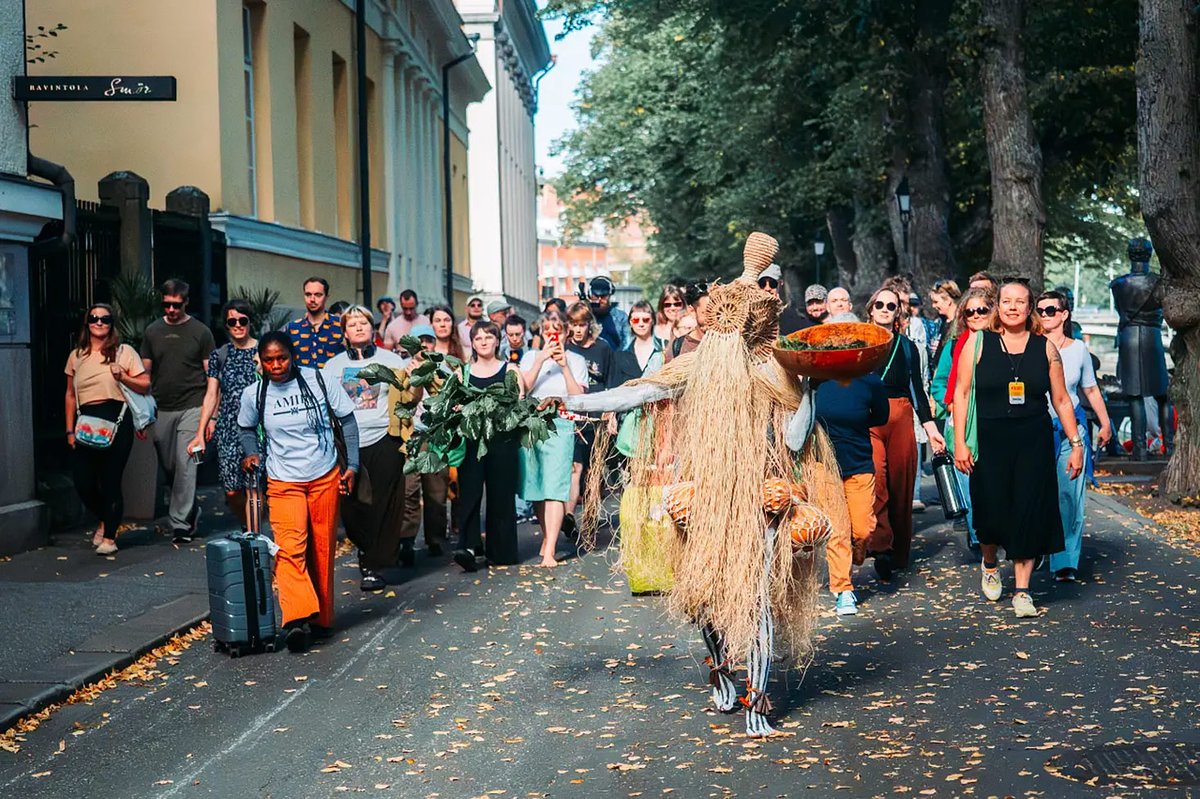
Jelili Atiku to Confront Colonial Past at Venice Biennale 2026
By Sam Lidman
VENICE, ITALY – April 23, 2026 – The cobblestone streets and ancient canals of Venice are set to become the stage for a profound act of cultural reclamation. Nigerian artist Jelili Atiku will present “Eyes No Dey Forget Wetin Heart See,” a major performance piece that directly confronts the colonial history of the Venice Biennale, during the preview week of the 2026 edition from May 5–9.
Presented by the Third Space Art Foundation, Atiku's performance is a central component of “1922 Revisited,” a live arts program curated by Dr. Janine A. Sytsma. The program brings together artists from across Africa and its diasporas to re-engage a pivotal, and problematic, moment in the Biennale’s past: the 1922 exhibition of African sculpture. Through a multiday sequence of enactments across the city, Atiku’s work aims to create a powerful counter-narrative, using ritual and public procession to challenge historical erasures and reclaim agency for African art on one of the world's most prestigious platforms.
A Pilgrimage to Reclaim Silenced Voices
At the heart of Atiku's intervention is a direct response to a century-old exhibition that presented African art largely through a colonial lens, divorced from its cultural and spiritual contexts. With this performance, Atiku states his intention is to “liberate African art from colonial contexts,” reclaiming “silenced voices” that have been marginalized by Western institutional frameworks. This is not merely an artistic display; it is a political and spiritual act of repossession.
The performance, which the artist describes as a “luminous pilgrimage,” will unfold as a deliberate, trance-like journey through the urban landscape of Venice. A mystical figure embodying the earth's energy will lead a procession, transforming public spaces into sites of ritual and reflection. This approach draws heavily on psychogeographic approaches, the study of how geography and environment shape emotion and behavior, to re-map Venice not just as a historic European city, but as a temporary ground for African spiritual expression and historical reckoning. The procession invites the public to participate, not as passive spectators, but as fellow travelers in a process of transformation and renewal, immersing them in the environment’s rhythm.
The Body as a Site of Resistance and Renewal
“Eyes No Dey Forget Wetin Heart See” is deeply rooted in the artist’s engagement with indigenous Yoruba cosmology and Orisha traditions. The performance integrates ritual movement, symbolic materials, and processional form to situate the human body as a primary site of memory and meaning. For Atiku, the body is not just a vehicle for performance but an archive of experience, a vessel for spiritual energy, and a tool for political resistance. Through this embodied practice, he seeks to connect the past with the present, invoking ancestral knowledge to address contemporary issues of social injustice and the lingering effects of colonialism.
This focus on the sensory and affective dimensions of art aligns seamlessly with the overarching theme of the 2026 Venice Biennale, “In Minor Keys.” The theme emphasizes a turn towards reflection, listening, and encounter, creating space for artistic experiences that operate outside of grand, dominant narratives. Atiku’s work, with its focus on ritual, public participation, and the creation of a collective, immersive experience, promises to be a powerful interpretation of this curatorial framework. It offers a mode of engagement that prioritizes feeling and spiritual connection over purely intellectual analysis, inviting audiences to experience art as a transformative force.
Forging a ‘Third Space’ for Global Dialogue
The presentation of Atiku’s work is spearheaded by the Third Space Art Foundation, an organization whose mission is intrinsically linked to the performance’s decolonial ambitions. Drawing its name from Homi Bhabha’s theory of a liminal ‘third space’ that challenges fixed hierarchies, the foundation works to catalyze critical inquiry and foster new frameworks for connection across cultural divides. By supporting a project that so directly confronts the power dynamics of the art world, the foundation is putting its theoretical principles into practice on a global stage.
The initiative is bolstered by a network of significant partnerships, including collaborations with the African Art in Venice Forum (AAVF) and the European Cultural Centre (ECC-Italy). This collaborative structure underscores the project’s importance, signaling a collective effort to support and amplify artistic practices that challenge the status quo. It positions “1922 Revisited” not as a fringe event, but as a central, critical dialogue within the ecosystem of the Biennale. In parallel with the live program, the foundation is also developing a companion publication, Harmonies of Repair, which will feature artist contributions and archival research, ensuring the project's intellectual and historical impact extends beyond the live enactments.
Art as Sustained Political Action
Jelili Atiku’s performance in Venice is not an isolated gesture but a continuation of a career defined by the intersection of art and activism. His broader practice, which spans performance, installation, and drawing, is grounded in a sustained engagement with indigenous knowledge systems as a tool for addressing pressing social and political issues. His work frequently confronts the overlapping forces of colonialism, environmental degradation, and state-sanctioned injustice in Nigeria and beyond.
By using ritual and public action, Atiku consistently creates spaces for dialogue and collective awareness where they are most needed—in the streets, among the people. His presence at the Venice Biennale brings this powerful, community-oriented practice into one of the most rarified environments in the art world. In doing so, “Eyes No Dey Forget Wetin Heart See” serves as a poignant reminder that the heart of art often lies not in the pristine gallery, but in the living, breathing world, where memory, spirit, and the fight for justice converge.
Topics & Related
Generative AI
ESG
Related Company Pulse