
- Record Revenue: RMB 38.87 billion in 2025, an 8.1% year-on-year increase
- Net Profit Surge: 26.6% quarterly growth in Q4 2025 to RMB 610 million
- Advanced Packaging Revenue: RMB 27 billion in 2025, driving overall growth
Experts would likely conclude that JCET's strategic focus on advanced packaging and high-growth sectors like AI and automotive electronics has solidified its position as a key player in the semiconductor industry, despite market volatility and geopolitical challenges.
JCET Hits Record Revenue on Advanced Packaging and AI Boom
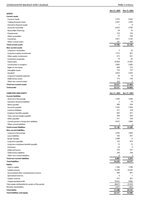
SHANGHAI – April 09, 2026 – JCET Group, a global leader in semiconductor back-end manufacturing, has announced a record-breaking performance for its 2025 fiscal year, posting full-year revenue of RMB 38.87 billion, an 8.1% increase year-on-year. The results, detailed in its annual report, mark the company's third consecutive year of revenue growth and underscore its successful strategy of focusing on high-value technologies amid a rapidly evolving global market.
Profit before tax grew 5.4% to RMB 1.74 billion, with net profit reaching RMB 1.57 billion. The strong annual performance was capped by a robust fourth quarter, where net profit surged 26.6% from the previous quarter to RMB 610 million. These figures place JCET's growth in line with key competitors like Amkor Technology and ASE Technology Holding, demonstrating its solid footing in a semiconductor industry experiencing a major upswing, largely fueled by the artificial intelligence revolution.
Advanced Packaging Powers the Growth Engine
A primary driver of JCET's financial success is its deep investment and operational excellence in advanced packaging. Revenue from this high-tech segment reached a new high of RMB 27 billion in 2025, with the company reporting that its advanced packaging capacity, including wafer-level packaging, ran at a high load throughout the year.
Advanced packaging has become a critical battleground for the semiconductor industry. As the physical limits of traditional chip scaling (Moore's Law) become more apparent, packaging technologies like 2.5D/3D integration, System-in-Package (SiP), and heterogeneous integration offer new pathways to boost performance, power efficiency, and functionality. These methods allow for the assembly of multiple smaller, specialized chips (chiplets) into a single, powerful unit, a design approach essential for modern AI accelerators and high-performance computing (HPC) processors.
JCET's focus on these technologies positions it as a key enabler for the world's leading chip designers. While the company faced what it described as "temporary cost pressures" from raw material price fluctuations and investments in new capacity, its ability to scale higher value-added businesses led to improving profitability quarter by quarter. This reflects a broader industry trend where the value creation in semiconductors is shifting from pure wafer fabrication to the sophisticated engineering of the final package.
Capitalizing on High-Growth Megatrends
The company's strategic pivot towards high-growth application segments has paid significant dividends. JCET reported extraordinary year-on-year revenue increases in computing electronics (+42.6%), industrial and medical electronics (+40.6%), and automotive electronics (+31.7%).
This performance is particularly notable as it substantially outpaces general market growth forecasts for these sectors. For instance, while the overall automotive semiconductor market saw single-digit growth in 2025, JCET's 31.7% surge highlights its successful penetration into high-demand areas like intelligent driving systems, in-vehicle infotainment, and vehicle electrification. The company solidified this focus by completing production line readiness at its dedicated JCET Automotive (Shanghai) Co., Ltd. facility during the year.
Similarly, the 42.6% growth in computing electronics reflects the insatiable demand from the AI and HPC sectors. As data centers are built out to handle complex AI workloads, the need for advanced packaging solutions that can integrate powerful processors with high-bandwidth memory has exploded. JCET's ability to mass-produce new products for applications like co-packaged optics (CPO) and vertical power delivery modules makes it a silent but essential partner in the ongoing AI revolution.
Investing in the Future Amidst Market Volatility
To sustain its momentum, JCET significantly increased its commitment to innovation, boosting its research and development expenses by 21.4% year-on-year to RMB 2.09 billion. This investment is aimed squarely at the next frontier of semiconductor technology.
The company's R&D is focused on critical areas such as high-density multi-dimensional heterogeneous integration, advanced bonding technologies, and next-generation materials like glass substrates. These technologies are crucial for building the complex, high-performance packages that future generations of AI, autonomous vehicles, and embodied intelligence will require. To foster collaboration, JCET also hosted the Advanced Packaging Developers Conference (APDC) in Singapore, creating a platform to accelerate industry-wide innovation.
Mr. Li Zheng, CEO of JCET Group, commented on the company's strategy in the press release. "Over the past year, amid a shifting demand mix and cost volatility, JCET remained focused on application-led upgrades in advanced packaging and continued to steadily improve the quality of its operations," he stated. Looking to 2026, he emphasized capitalizing on growth in HPC, storage, and embodied intelligence by "speeding the translation of technology breakthroughs into mass-production capability and incremental revenue."
This forward-looking investment strategy is set against a backdrop of global complexity. The semiconductor industry continues to navigate geopolitical tensions, particularly surrounding US-China trade relations, which have made supply chain resilience a paramount concern for all major players. Furthermore, the industry faces potential headwinds from factors like "memflation"—soaring memory prices driven by AI demand that could squeeze other market segments. JCET's global manufacturing footprint, with facilities in China, Korea, and Singapore, provides a degree of geographic diversification that may prove crucial in managing these risks and maintaining a flexible and adaptable supply chain for its global clientele.